A sliced breakfast cake weighing around 475–550 g is handy when housemates or visitors are sitting down to eat at the same time: you can serve the slices straight away. With an unsliced cake, you can choose how thick to cut each slice, but you’ll need to do the cutting during lunch. Whichever option you choose, compare the nutritional information, ingredients, allergens and storage instructions too. Terms such as ‘wholemeal’ and ‘no added sugars’ won’t answer those questions for you.
Who is this choice for?
People working from home who want to share breakfast cake
You want to be able to serve slices to housemates or visitors at lunchtime, or spread a larger pack across several lunches. Sliced packs weighing around half a kilo are a convenient option for serving.
Shoppers comparing nutritional information
You compare the sugars, fibre, ingredients and serving size of each variety, rather than relying on words such as ‘wholemeal’ or ‘zero’ alone.
Shoppers checking ingredients for others
Before sharing the cake, you want to know whether the ingredients and allergen information are suitable for everyone eating with you. It’s the label on the variety you choose that matters, not just the product name.
What should you look for when choosing?
First, work out whether everyone will eat at the same time and how much cake you want to serve. Then compare the portions and the label on the specific pack.
| What to consider |
What to check |
Who it matters to |
| Quantity |
Check the net weight and whether the cake is sliced; compare packs on a like-for-like basis. |
When several people are joining me, I want enough slices to serve without opening several small packs. For around 36% of consumers, having enough to share is the top priority. |
| Nutritional information |
Compare sugars and fibre per 100 g and, where provided, per serving; check the ingredients list too. |
I want to know what’s in my usual slice, even if the pack says ‘wholemeal’ or ‘no added sugars’. This nutritional profile is the main consideration for around 29% of consumers. |
| Portions and serving |
Check whether the cake is sliced, unsliced or individually wrapped, and read how to store it after opening. |
If we’re eating between work meetings, I want to be able to serve slices quickly. If everyone is eating at a different time, I want portions that are easy to store. Around 21% of consumers prioritise this convenience. |
| Ingredients and allergens |
Read the current ingredients list, allergen information and any warnings about sweeteners. |
I want to check that the variety is suitable for everyone at the table before sharing it. For around 14% of consumers, this check is the top priority. |
Common mistakes
-
Taking ‘wholemeal’ as a verdict on the whole lunch
A claim on the front of the pack doesn’t tell you how much sugar or fibre a particular slice contains. The Netherlands Nutrition Centre gives an average of 11.2 g of sugar for a 30 g slice of breakfast cake; individual varieties may differ.
Compare the nutritional values per 100 g and per serving of the products you’re choosing between.
-
Reading ‘no added sugars’ as ‘sugar-free’
According to the product information at Jumbo, one Peijnenburg variety examined, which has no added sugars, still contains naturally occurring sugars and includes xylitol. The product information warns that excessive consumption may have a laxative effect.
Check the ‘of which sugars’ line and the ingredients list. Keep products containing xylitol out of reach of pets.
-
Opening a large pack without a storage plan
A large pack is less practical if the cake stays open for too long and its texture deteriorates. For the 550 g sliced pack examined, storage in a tightly sealed tin or container in a cool, dry place is recommended.
If everyone will be eating it over several days, compare individually wrapped slices too. Seal a large pack carefully after opening.
-
Assuming every product contains iodised baker’s salt
An agreement within the baking industry doesn’t tell you which salt was used in a specific breakfast cake. NBC states that using iodised baker’s salt is not a legal requirement.
Don’t assume a particular iodine content: check the product’s ingredients list if the type of salt used is relevant to your choice.
Brands to consider
Peijnenburg
A brand to consider if you want to compare a large sliced plain pack with a wholemeal variety with no added sugars.
- PLUS lists a 550 g sliced plain pack; the product information examined gives 3.1 g of fibre and 38 g of sugars per 100 g.
- The wholemeal variety with no added sugars examined lists 17 g of fibre and 4.9 g of sugars per 100 g, but contains xylitol. Read the warnings on the pack you choose.
Jumbo
A supermarket own-brand range where you can compare larger sliced and unsliced packs.
- The Jumbo range includes, among other options, a 475 g sliced pack and a 550 g plain pack.
- Check the ingredients, allergens and nutritional information on the page or pack for the exact variety you choose.
PLUS
A supermarket own-brand range with different sizes, so you can compare sliced and unsliced breakfast cake.
- The PLUS range includes, among other options, sliced plain cake in a 485 g pack and unsliced plain cake in a 550 g pack.
- According to PLUS, the 500 g Korenlanders baker’s breakfast cake examined contains wheat and rye and may contain nuts. Always check allergens for each product.
Koek & Bakker
The ALDI own-brand range examined, for anyone considering sliced breakfast cake in a zero or wholemeal variety.
- ALDI lists a 485 g sliced pack for both varieties examined.
- ‘No added sugars’ doesn’t tell you how much sugar the variety contains; check the nutritional information for that.
Bolletje
A brand to compare if you’re looking for a 500 g sliced plain breakfast cake.
- The variety examined at PLUS is sliced and weighs 500 g.
- PLUS lists lupin, wheat and rye as allergens for this variety; the product may also contain nuts. Check this before sharing the cake.
Breakfast cake for this lunch occasion
These two large g’woon packs let you choose between pre-sliced portions and a cake where you decide how thick to cut each slice.
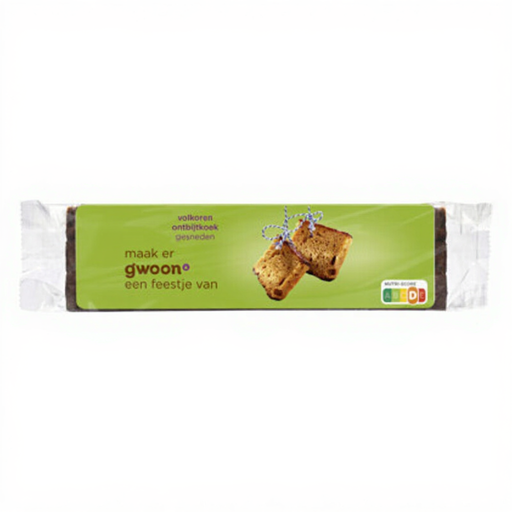 Image unavailable
g’woon wholemeal breakfast cake, sliced, 485 g
For a lunch where you want to offer several people a slice without having to cut the cake. It’s pre-sliced and the pack contains 485 g.
Compare the nutritional values per 100 g and per serving on the pack. Before sharing, check the current ingredients and allergen information too, including the mention of rye.
View at Joybuy
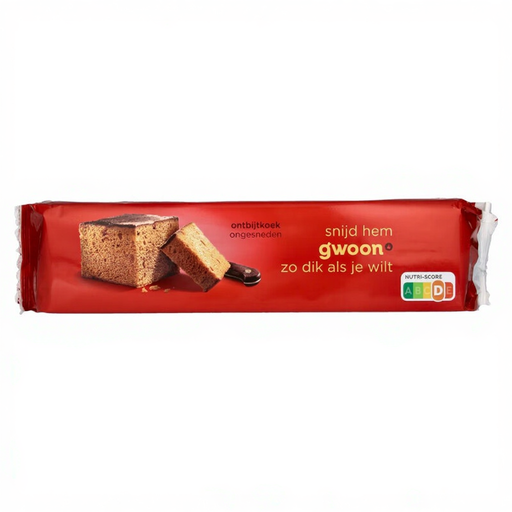 Image unavailable
g’woon breakfast cake, unsliced, 550 g
For a shared lunch where you want to decide how thick to cut the slices. This pack contains 550 g; remember that you’ll need to cut it before serving.
Check the nutritional values per 100 g and per serving on the pack, and read the current allergen information, including the mention of rye.
View at Joybuy
Frequently asked questions
What size breakfast cake is handy for sharing at lunchtime?
A sliced pack weighing around 475–550 g is a practical choice if several people want a slice at the same time. If you want to choose the thickness yourself, opt for an unsliced cake and allow time to cut it and store it after opening.
Is breakfast cake with no added sugars also sugar-free?
No. According to the product information at Jumbo, the Peijnenburg variety with no added sugars examined contains 4.9 g of sugars per 100 g and includes xylitol. Read both the nutritional information and the warnings on the pack of the variety you buy.
Which allergens should I check before sharing breakfast cake?
Check the current packaging for the product you’ve chosen. The varieties examined include ingredients such as rye, wheat and lupin; some products also state that they may contain nuts. Ingredients and warnings can vary between varieties.
Can I assume breakfast cake contains iodised baker’s salt?
No, don’t assume that without checking the label. There’s an industry agreement on baker’s salt, but it doesn’t tell you which type of salt was used in your pack. Read the ingredients list if this is relevant to your buying decision.


