What should you look for when choosing?
First, check exactly what the sugar claim says. Then compare the nutritional information per 100 g with the portion you actually plan to have, and check the ingredients.
| What to consider |
What to check |
Who it matters to |
| Added and total sugars |
Read the exact claim and compare ‘of which sugars’ per 100 g. ‘Less sugar’ isn’t the same as ‘no added sugars’. |
If I want to limit added sugar, I don’t want to rely on the word ‘zero’ alone. For around 50% of consumers, this distinction would be the first thing to consider when making a purchase. |
| Portion size |
Compare the weight of one slice or bar, and check how many portions are in the pack. |
When I want a late-night snack, I want to know in advance whether I’ll have one slice or a whole bar. A defined portion would be the top priority for around 30% of consumers. |
| Fibre and ingredients |
Check the fibre per 100 g, whether rye and gluten are listed, and the ingredients and warnings relating to polyols. |
I want to weigh up wholegrain rye or fibre against any ingredients I need to avoid. For around 20% of consumers, this would be the most important consideration. |
Breakfast cake on Joybuy
This bar may suit you if you’re considering a breakfast cake bar positioned as a lower-sugar option. If you’re specifically looking for a variety with no added sugars, check that the ingredients and nutritional information meet your requirements.
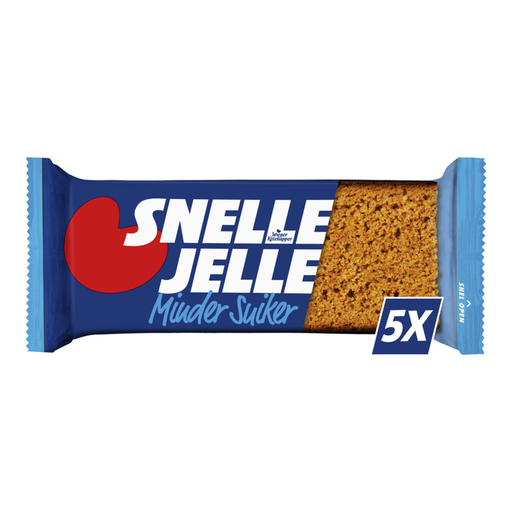 Image unavailable
Snelle Jelle Breakfast Cake Less Sugar-Free 250 g
For anyone considering a breakfast cake bar who isn’t looking exclusively for a variety with no added sugars. The pack states 250 g; before choosing, check the ingredients and sugars per 100 g and per bar. The words ‘Sugar-Free’ in the product name alone don’t confirm that it contains 0 g of sugars.
View on Joybuy
Frequently asked questions
Does ‘zero’ on breakfast cake mean it contains no sugars?
No, not necessarily. The Albert Heijn, Peijnenburg and PLUS varieties reviewed list 0 g of added sugars, but also 4.9 g of sugars per 100 g. So check the exact claim and the nutrition table.
How do I compare a slice of breakfast cake with a bar for a late-night snack?
First compare the nutritional information per 100 g, then check the weight of the portion you plan to have. Peijnenburg lists 28 g per slice for the wholegrain sliced variety reviewed, while Albert Heijn lists 30 g per portion for AH Ontbijtkoek zero and 42 g per AH Kruidkoekreep zero.
What should I look for if I want to avoid xylitol?
Read the ingredients list and don’t choose based on the sugar claim alone. The zero and no-added-sugars varieties containing xylitol reviewed carry a warning that excessive consumption may have a laxative effect.
Are the breakfast cakes mentioned gluten-free?
Don’t assume they are. The Albert Heijn, Peijnenburg, Jumbo and PLUS varieties reviewed list rye or other gluten-containing grains. If necessary, look for a product explicitly labelled gluten-free and check the current allergen label.
Does breakfast cake always contain iodine-enriched baker’s salt?
You can’t assume that every breakfast cake does. If the presence of iodine-enriched baker’s salt matters to your choice, check the ingredients for the specific variety or ask the manufacturer.


