
If you’re keeping an eye on sugars and fibre
If you’re mainly comparing nutritional content for a late-night snack, check sugars and fibre per 100 g. For varieties containing xylitol, also read the warning on the packaging.


When choosing breakfast cake for a late-night snack, don’t rely on the word ‘premium’ alone. First compare sugars and fibre per 100 g, then decide which flavour and portion format you prefer. Wholemeal doesn’t necessarily mean low in sugar, so check the ingredients and warnings on varieties containing xylitol, and read the packaging if you have allergies.
If you’re mainly comparing nutritional content for a late-night snack, check sugars and fibre per 100 g. For varieties containing xylitol, also read the warning on the packaging.
A ginger variety could be appealing if flavour is your priority. ‘Luxury’ says nothing about nutritional value, so check the ingredients, allergens and portion size too.
Sliced breakfast cake or individually wrapped portions are handy if you don’t want to cut a piece yourself late at night. Compare the weight of each portion.
Decide what matters most for your late-night snack: the nutritional content, a particular flavour or a convenient portion. Then compare the labels of the varieties that fit the bill.
| What to consider | Check | Who it matters to |
|---|---|---|
| Sugars and fibre | Compare sugars and fibre per 100 g. For varieties with sweeteners, read the ingredients and warnings. | If I’m mainly focused on nutritional content, I don’t want to assume that ‘wholemeal’ also means low in sugar. This is the top priority for around 45% of consumers. |
| Flavour | Check which flavouring ingredients are listed and whether the cake is sliced or unsliced. | For a treat late in the evening, I might deliberately choose a variety with ginger, for example. Flavour is the main priority for around 33% of consumers. |
| Portion format | Compare the weight per portion and choose between a sliced cake and individually wrapped portions. | If I want to grab a slice without cutting it, the packaging matters more to me. Convenient portions are the top priority for around 22% of consumers. |
Albert Heijn states that its wholemeal breakfast cake contains 41% wholemeal rye flour and 5.7 g of fibre per 100 g, but also 34 g of added sugars per 100 g.
When comparing wholemeal varieties, check both the fibre and sugar content on the label.
Peijnenburg’s wholemeal variety carrying this claim contains xylitol. The product information warns that excessive consumption may have a laxative effect; PLUS also warns that xylitol is unsuitable for animals.
Read the ingredients and warnings, and keep products containing xylitol out of reach of pets.
According to the Netherlands Food and Consumer Product Safety Authority, iodine may be present in bakery products through baker’s salt. The Netherlands Nutrition Centre says that bakers are not required to use baker’s salt.
Don’t assume a particular breakfast cake contains iodine unless this is confirmed on the label or by the manufacturer.
Peijnenburg offers classic, wholemeal and sliced breakfast cake varieties, among others. Compare the specific variety rather than the brand name alone.
The supermarket’s own-brand wholemeal and zero varieties have different labels you can compare side by side.
Jumbo’s breakfast cake range includes wholemeal, ginger and portion-sized varieties.
Koek & Bakker offers a sliced zero variety and an unsliced ginger breakfast cake.
Lidl lists a breakfast cake zero product; Tastino is another name you may come across when shopping for breakfast cake.
PLUS lists its own wholemeal breakfast cake, as well as product information for Peijnenburg Wholemeal with no added sugars.
These products give you a choice of sliced wholemeal breakfast cake, a raisin variety and two other Snelle Jelle varieties for a late-night snack. Compare the nutritional information and allergens on the packaging of the product you’re considering.
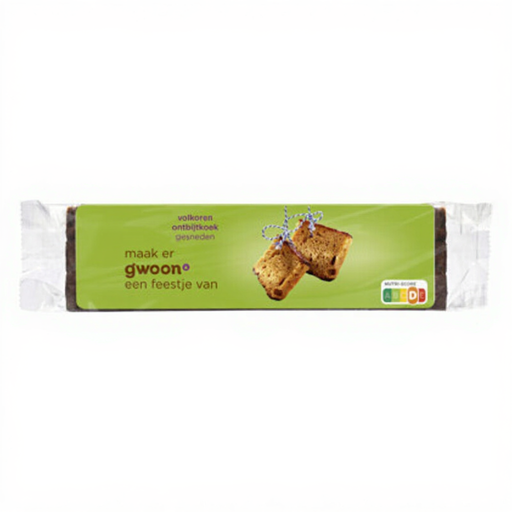 Image unavailable
A sliced variety if you want to grab a piece without cutting it yourself. Joybuy’s product information lists 43% wholemeal rye flour; check the packaging for the latest nutritional information and allergen details.
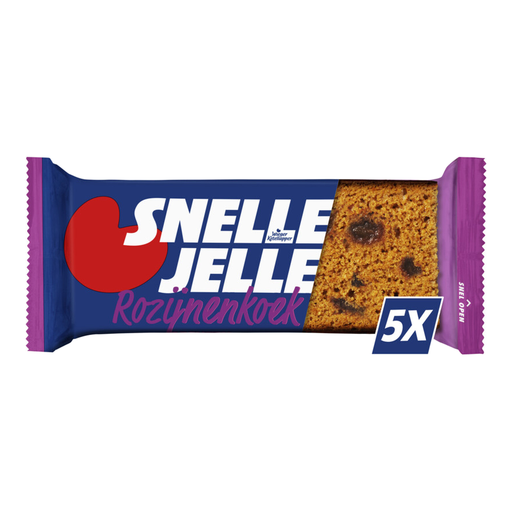 Image unavailable
For anyone looking for a raisin variety for a late-night snack. Compare sugars and fibre per 100 g on the packaging, and read the allergen information.
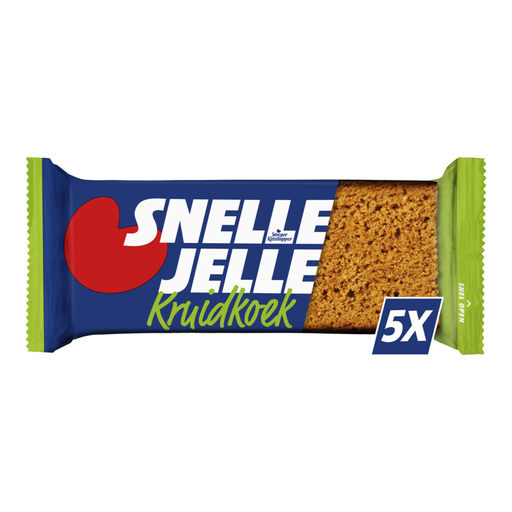 Image unavailable
A plain variety to compare with other breakfast cakes for a late-night snack. Before comparing portions, check whether the packaging lists nutritional values per 100 g or per portion.
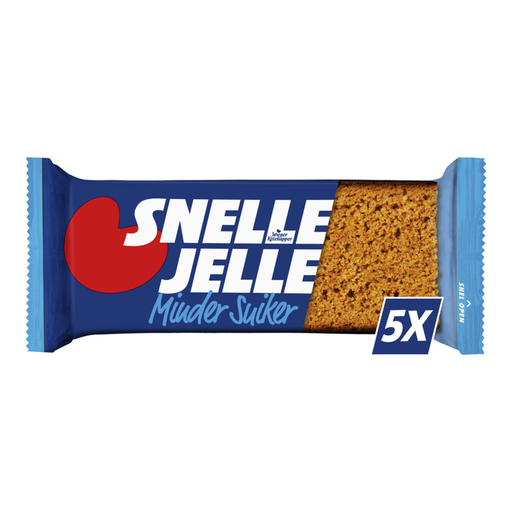 Image unavailable
If sugar content is an important factor for you, assess this variety by checking the ingredients and nutritional information on the packaging, rather than relying on the variety name alone. When comparing, also check whether the figures are given per 100 g or per portion.
No, don’t assume that a particular breakfast cake contains iodine. According to the Netherlands Food and Consumer Product Safety Authority, iodine may be present in bakery products through baker’s salt, but the Netherlands Nutrition Centre says that bakers are not required to use baker’s salt. Check the label of the product you choose or ask the manufacturer.
No. Albert Heijn states that its wholemeal breakfast cake contains 41% wholemeal rye flour and 5.7 g of fibre per 100 g, as well as 34 g of added sugars per 100 g. Check both figures on the label when comparing other varieties.
As well as checking the claim on the front, read the ingredients and warnings. Peijnenburg’s wholemeal variety contains xylitol and lists 4.9 g of sugars and 17 g of fibre per 100 g; the product information warns that excessive consumption may have a laxative effect.
Contact a vet immediately. PLUS warns that the xylitol in the Peijnenburg variety is unsuitable for animals and advises contacting a vet immediately if it is ingested.
Follow the storage instructions on the packaging for your variety. For its wholemeal breakfast cake with no added sugars, Peijnenburg recommends storing it in a cool, dry, dark place, preferably in a sealed tin or container.