
Label checkers
You want to choose breakfast cake for your holiday home based on the fibre and sugar content per slice, rather than relying on the wholemeal label alone.


Choose breakfast cake for your holiday home based on what matters most to your group. If nutritional values are your priority, compare the fibre and sugar content of the exact type you’re considering. If easy sharing matters more, choose pre-sliced cake or individually wrapped portions. For fussy eaters, it may be practical to have a familiar plain variety alongside another flavour or type. Check the ingredients, allergens and portion size on the packaging for every option.
You want to choose breakfast cake for your holiday home based on the fibre and sugar content per slice, rather than relying on the wholemeal label alone.
You’re looking for slices everyone can help themselves to at breakfast, or individually wrapped portions to take on a day out.
You’re buying for several holidaymakers and want to choose a pack size and quantity that suit the number of breakfasts you’re planning.
First decide whether ingredients, ease of sharing, quantity or flavour is the main reason for your choice. Then compare the exact varieties on their packaging.
| What to consider | What should you check? | Who is it important for? |
|---|---|---|
| Fibre and sugar | Compare the fibre and sugar content per 100 g and per slice for the exact variety. Read the ingredients list too. | If I want to choose a wholemeal variety for the group without losing sight of the sugar content, I need to be able to compare both figures. This would be the main consideration for around 36% of consumers. |
| Sharing and taking it with you | Check whether the cake is pre-sliced or individually wrapped, and how many slices the pack contains. | If everyone has breakfast at a different time or wants to take some with them, I want to be able to share out portions without having to slice the cake first. This would be the top priority for around 29% of consumers. |
| Stocking up for a group | Check the net weight, packaging format and storage instructions on the label. | For several breakfasts, I want to bring enough cake without opening more packs than necessary. Around 21% of consumers would prioritise the quantity. |
| A flavour the group will enjoy | Find out whether the group prefers plain, wholemeal or a particular flavour; try an unfamiliar flavour in a small quantity first. | If not everyone likes the same breakfast cake, I want to avoid choosing a variety that gets left uneaten. For around 14% of consumers, whether the group likes the flavour would be the most important factor. |
According to Peijnenburg’s product information, its regular pre-sliced wholemeal variety contains 39 g of sugars per 100 g; the wholemeal variety without added sugars that we looked at lists 4.9 g per 100 g. The wholemeal label alone doesn’t tell you how much sugar these varieties contain.
For the exact variety, compare both the fibre and the ‘of which sugars’ figures on the label, per 100 g and per slice.
The Lidl offer listed for Tastino breakfast cake ran from 28 September to 4 October 2026 and applied to an in-store product. It doesn’t tell you what will be available on your next visit.
Check the range at the shop where you plan to buy your groceries shortly before you set off.
Ingredients and warnings vary between breakfast cake varieties. For one variety we looked at, Peijnenburg lists the possible presence of nuts and milk; for its plain variety, PLUS lists the possible presence of wheat, barley and oats.
If you have allergies, read the label on the exact pack you’re buying, even if you’re familiar with the brand or flavour.
Peijnenburg offers wholemeal, plain and individually wrapped breakfast cake varieties, among others. Compare the nutritional information for each type.
This ALDI own-label brand offers pre-sliced zero and wholemeal varieties in 485 g packs for sharing.
PLUS offers a 485 g pack of pre-sliced plain breakfast cake, among other options. Use the product information for your chosen variety when comparing.
Tastino is a Lidl label for breakfast cake, listed as an in-store product.
This ALDI label offers a 550 g unsliced plain breakfast cake for anyone who wants to slice it themselves.
These Joybuy products include pre-sliced breakfast cake for sharing at breakfast, and a packaged variety for taking portions with you. Choose based on the packaging format, and compare the nutritional information and allergens on the exact pack.
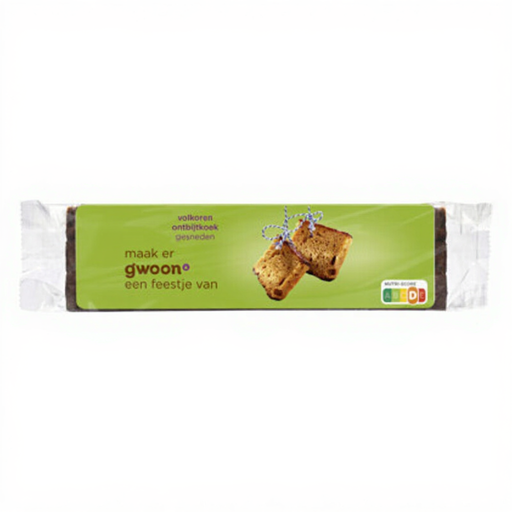 No image available
A pre-sliced variety you can take straight from the pack and serve at a shared breakfast.
Compare the fibre and sugar content on the label per 100 g and per slice. Also check the allergen information on the pack you buy.
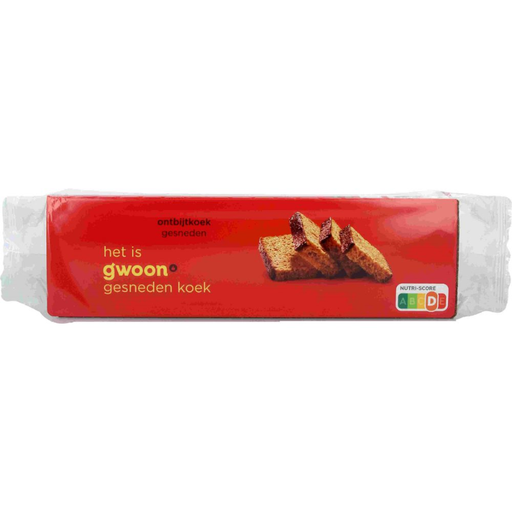 No image available
A pre-sliced pack for holidaymakers who want breakfast cake at different times.
If you’re choosing based on ingredients, compare the nutritional information and allergens on this variety’s label, not the wholemeal pack’s.
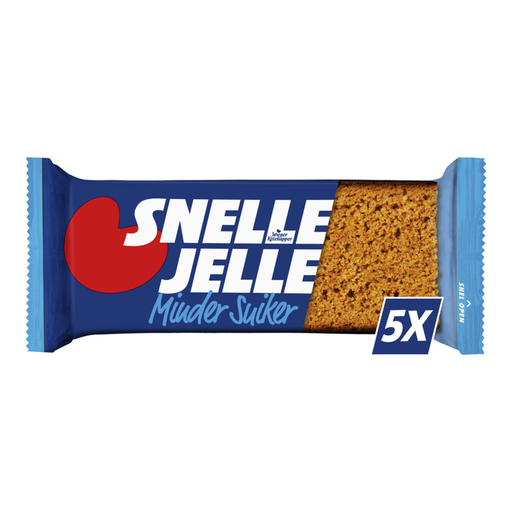 No image available
An option to consider if you want to take breakfast cake with you in portions; check how the chosen version is packaged.
Don’t assume from ‘Less Sugar-Free’ that the cake is sugar-free. Check the sugar content and ingredients on the packaging before comparing this variety with others.
No. According to Peijnenburg, the wholemeal variety without added sugars that we looked at contains 4.9 g of sugars per 100 g and 1.4 g per 28 g slice. For your chosen variety, check the ‘of which sugars’ figure on the label.
No, the wholemeal label doesn’t tell you the sugar content. Peijnenburg lists 39 g of sugars per 100 g for its regular pre-sliced wholemeal variety, compared with 4.9 g per 100 g for the wholemeal variety without added sugars that we looked at. So compare the full variety name and nutritional information.
Pre-sliced breakfast cake is handy when holidaymakers want to help themselves to a slice; individually wrapped portions are an option for taking with you. Jumbo lists ten individually wrapped 28 g slices in a Peijnenburg plain pack. Choose the packaging format that suits your planned breakfasts and days out.
Check the ingredients and allergen warning on the exact pack you’re buying. The varieties we looked at list different ingredients and possible traces of nuts, milk and other grains, among other things. Information for a similar variety isn’t a substitute.
No, the cited regulation doesn’t establish a general requirement for every type of breakfast cake. The Netherlands Food and Consumer Product Safety Authority states that iodine compounds may be present in bread, bread substitutes and other bakery products through added baker’s salt, at no more than 65 mg of iodine per kg of salt. Check the ingredients information to see whether your chosen breakfast cake contains baker’s salt.