
If you want to serve breakfast cake at the table
You want to serve slices to several people without having to cut the cake during your baking session. A large pre-sliced cake is ideal; Jumbo and PLUS both offer this type of pack.


If you want to serve breakfast cake straight away during a group baking session, choose a large pre-sliced cake. An unsliced cake lets you decide the shape and size of the pieces, while individually wrapped slices are more practical if everyone is taking home their own portion. Whether breakfast cake works in a spiced biscuit recipe depends on the role the ingredient plays.
You want to serve slices to several people without having to cut the cake during your baking session. A large pre-sliced cake is ideal; Jumbo and PLUS both offer this type of pack.
You want to cut the cake into slices, cubes or another shape for a serving platter or recipe. An unsliced version gives you that flexibility, but does require some preparation.
You need information about the ingredients and allergens in the exact version you have chosen. Product information from PLUS and Peijnenburg shows that declarations for rye, other gluten-containing cereals, milk and nuts vary from product to product.
First, decide whether you want to serve the breakfast cake straight away, cut it yourself or give everyone an individually wrapped portion. Then check that the quantity and label are suitable for the people you’re sharing it with.
Choose this format: if you want to serve slices without having to cut them first.
The trade-off: the slices aren’t individually wrapped.
Choose this format: if you want to decide the size or shape of the pieces yourself.
The trade-off: you’ll need to cut the cake before you can serve it.
Choose this format: if everyone needs to be able to take their own portion with them.
The trade-off: you get set slices rather than one cake that you can cut into pieces yourself.
| What to consider | What to check when buying | Who it matters to |
|---|---|---|
| Serving straight away | Check whether the cake is pre-sliced and whether the net weight is right for the number of people. Jumbo offers a 475 g pre-sliced cake; PLUS offers one weighing 485 g. | If I want to serve slices during the session, I don’t want to have to get a knife and chopping board out first. For around 50% of consumers, being able to share straight away is the top priority. |
| Ingredients and allergens | Read the label on the version you’ve chosen. Compare nutritional information, such as sugar content, on the same basis, for example per 100 g. | When I’m buying for a group, I want to know whether everyone can eat the cake I’ve chosen. Ingredients and allergens are the main concern for around 30% of consumers. |
| Portion format | Choose an unsliced cake if you want to cut the pieces yourself, or check the number and weight of the individually wrapped slices. Peijnenburg states that its 10-pack contains ten 28 g slices. | If I want to cut pieces for a serving platter or give everyone their own pack to take home, that determines which packaging I choose. This type of portioning is the main priority for around 20% of consumers. |
Breakfast cake is available in various formats, including pre-sliced and unsliced cakes, as well as packs of individually wrapped slices. Each format suits a different way of sharing.
Think about how many people will be eating and whether you want to serve slices, cut them yourself or give everyone a portion to take away. Then compare the net weights.
A topping, filling or separate snack may call for different formats and quantities. So, a pack that’s handy for sharing isn’t automatically the right choice for your recipe.
First, consider how the breakfast cake will be used in your recipe, then choose the format and quantity you need.
According to PLUS, its pre-sliced plain version contains rye flour and may contain wheat, barley and oats. Peijnenburg lists different potential allergens for its individually wrapped slices. You also shouldn’t assume that breakfast cake contains iodine from baker’s salt without checking.
Before sharing, check the ingredients and allergens on the current packaging of the exact version you’ve chosen.
Offers large cakes and individually wrapped slices. This is useful if you’re deciding between a cake to serve at the table and portions to take away.
Offers breakfast cake in pre-sliced and unsliced formats, including plain versions in different weights.
Offers a 485 g pre-sliced plain breakfast cake if you want to serve slices straight away.
At ALDI, the range includes an unsliced ginger version that you can cut into pieces yourself.
Lidl offers a 485 g pre-sliced plain breakfast cake and a pre-sliced wholemeal version.
These breakfast cakes suit two ways of sharing: serving pre-sliced pieces straight away or portioning an unsliced cake yourself. If you’re using one in a spiced biscuit recipe, first check which format and quantity the recipe calls for.
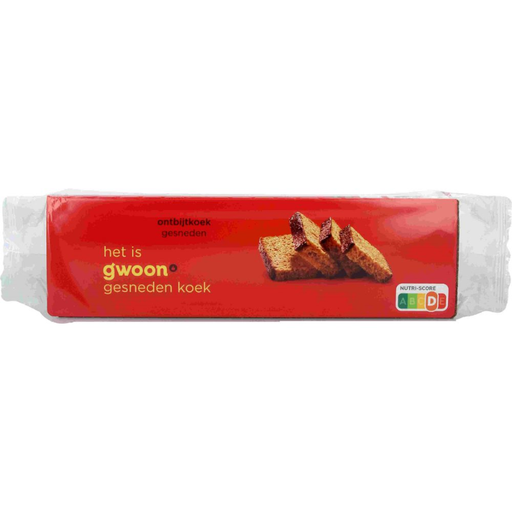 Image unavailable
For anyone who wants to serve slices without cutting the cake first. The pack contains 485 g of sliced breakfast cake.
Before sharing, check the ingredients and allergens on the current packaging.
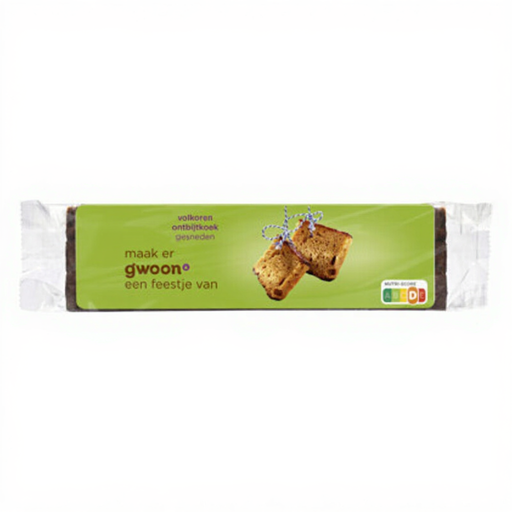 Image unavailable
For anyone looking for a wholemeal version in ready-to-serve slices. The pack contains 485 g of sliced breakfast cake.
Check the current packaging for ingredients and allergens; don’t assume these based on the ‘wholemeal’ description.
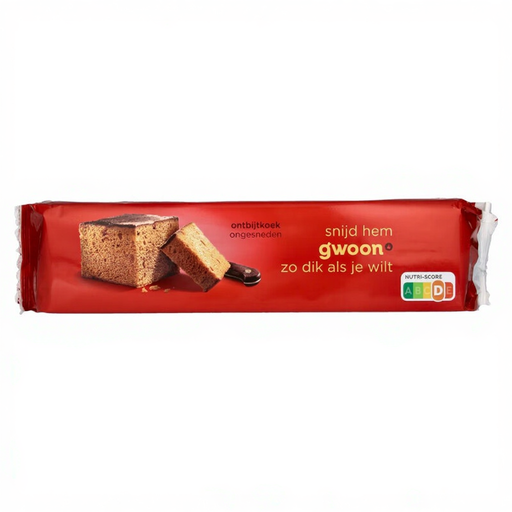 Image unavailable
For anyone who wants to choose the size and shape of the pieces. The cake is unsliced and weighs 550 g.
You’ll need to cut it before serving. Also check the ingredients and allergens on the current packaging.
A large pre-sliced breakfast cake is handy if you want to put slices on the table straight away; individual packs are better when everyone is taking a portion with them. Jumbo offers pre-sliced cakes weighing 475 g and 550 g, while Peijnenburg states that its 10-pack contains ten individually wrapped 28 g slices.
Read the allergen information on the specific pack you’re serving. According to PLUS, its pre-sliced plain version contains rye flour and may contain wheat, barley and oats; Peijnenburg lists the possible presence of milk, hazelnuts, almonds and other gluten-containing cereals for its 10-pack.
No, don’t automatically assume that breakfast cake contains baker’s salt or iodine. If this matters to your choice, check the ingredients on the pack you’ve chosen. The Netherlands Nutrition Centre explains that even bread doesn’t have to be made with baker’s salt; this information doesn’t tell you which breakfast cakes are made with it.