
Organisers catering for a mixed festival crowd
You want a straightforward selection that lets visitors choose between sliced wholemeal cake and an option suited to a different preference or way of serving.


For a mixed festival crowd, it’s better to offer a small selection than to expect one breakfast cake to suit everyone. Start with a sliced wholemeal option, then add a variety with no added sugars or individually wrapped portions, depending on people’s needs. Always check the label on the exact product: wholemeal tells you nothing about its sugar content, and different packaging doesn’t answer questions about ingredients or allergens.
You want a straightforward selection that lets visitors choose between sliced wholemeal cake and an option suited to a different preference or way of serving.
You compare the sugar content per 100 g and per portion. If you’re considering a variety with no added sugars, you also check the ingredients and allergen information.
You’re looking for a portion that’s easy to hand out and take away. Individually wrapped slices may be suitable, provided the product information also meets your needs.
First decide which need matters most when serving the cake. Then compare the nutritional information, ingredients and packaging of each option.
| What to consider | What to check when buying | Who is this important for? |
|---|---|---|
| Wholemeal and fibre | Compare the wholemeal description, and the fibre and sugar content per 100 g. | If I want to offer a wholemeal option, I need to be able to distinguish it from other breakfast cakes without losing sight of its sugar content. For around 25% of consumers, choosing wholemeal comes first. |
| Sugars | Read the claim on the packaging, compare sugars per 100 g and per portion, and check the ingredients. | I’m mainly looking for a variety with no added sugars, or I want to compare the sugar content of different options. Around 31% of consumers give this sugar-related choice top priority. |
| Portions and serving | Check whether the cake is sliced or individually wrapped, and how many portions the pack contains. | If visitors are taking their cake with them, I want to be able to hand out pre-portioned slices without having to cut them on the spot. For around 19% of consumers, ease of serving matters most. |
| Ingredients and allergens | For the exact product, read both the ingredients list and the ‘contains’ and ‘may contain’ statements. | If I need to consider specific ingredients or the possible presence of allergens, I can’t rely on the variety’s name alone. For around 25% of consumers, this check is the first requirement when choosing. |
Peijnenburg lists 39 g of sugars per 100 g for its sliced wholemeal breakfast cake, while Jumbo lists 35.5 g per 100 g for its wholemeal variety. So the wholemeal description doesn’t tell you how much sugar a particular cake contains.
Compare the wholemeal description and the ‘of which sugars’ figure separately, both per 100 g and per portion.
Peijnenburg lists xylitol as an ingredient in its sliced wholemeal variety with no added sugars, and warns that the product may contain nuts and milk.
As well as checking the claim, read the full ingredients list and allergen information on the pack you’ve chosen.
Peijnenburg’s Original 10-pack contains individually wrapped slices, but that doesn’t automatically make it a wholemeal variety or one with no added sugars.
Choose this packaging when taking portions away and handing them out are your priorities. If nutrition is also important, compare the information separately.
Individual wrappers also mean more packaging to collect after serving.
Peijnenburg offers several options within its breakfast cake range: sliced wholemeal, a wholemeal variety with no added sugars, and individually wrapped plain slices.
Jumbo offers a 280 g wholemeal breakfast cake as a sliced option to use as a base.
PLUS offers a 485 g sliced wholemeal breakfast cake for serving from a larger pack.
ALDI offers a sliced wholemeal breakfast cake from Koek & Bakker, as well as a pre-sliced Zero variety. Both weigh 485 g.
Albert Heijn’s range overview includes both AH breakfast cake and Peijnenburg varieties, including wholemeal options and individually wrapped portions.
These Joybuy products suit two practical choices for a festival: a sliced wholemeal cake to share, and a breakfast cake option for portions on the go. For both, check the label if sugars or allergens are important to your choice.
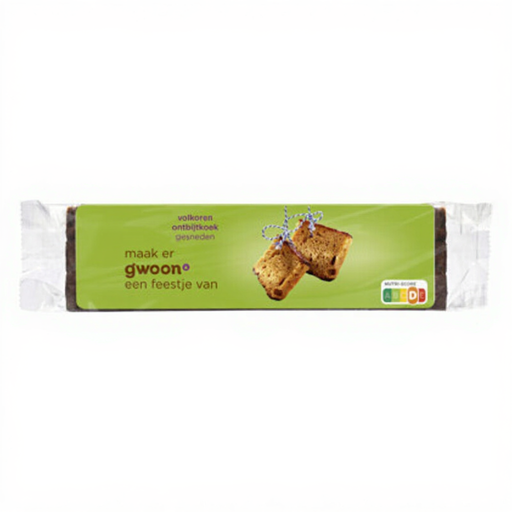 No image available
A sliced option for serving wholemeal breakfast cake from one pack. Joybuy’s product information lists 43% wholemeal rye flour. Check the nutritional information and allergen statement on the packaging before comparing this variety with other cakes.
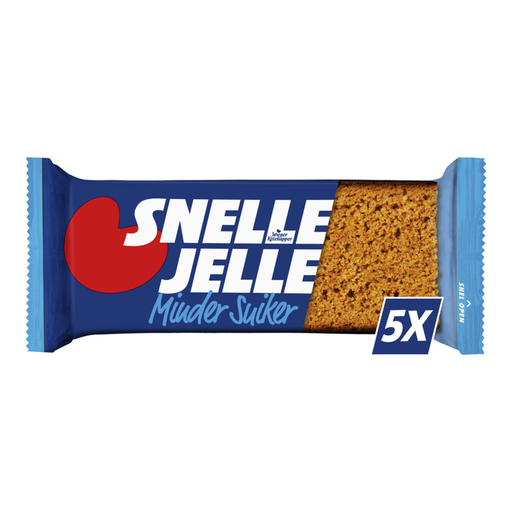 No image available
An option to consider when individual portions for taking away and handing out are important. The product name includes a sugar claim; don’t assume this means the cake contains no sugars or no added sugars. Check the claim, nutritional information and allergen details on the exact pack.
No. Wholemeal describes the grain ingredients used, not the amount of sugars in the cake. The Netherlands Nutrition Centre lists 11.1 g of sugar for a 30 g slice of wholemeal breakfast cake and points out that values vary by brand. So compare each product’s figures per 100 g and per portion.
Don’t assume that wholemeal breakfast cake is gluten-free. Jumbo lists gluten, rye and wheat for its wholemeal variety; PLUS lists rye and cereals containing gluten. Check the label on the exact pack for every variety you choose.
Follow the storage instructions on the pack you’ve chosen. For g'woon sliced wholemeal breakfast cake, Joybuy advises storing it in a cool, dry place and closing the pack securely after opening. For other varieties, check their own labels.
Read the ingredients list for the specific product and look for the name of the salt used. The Dutch Commodities Act Decree on the Addition of Micronutrients to Foodstuffs defines bakers’ salt as iodised table salt. Don’t assume that every breakfast cake contains bakers’ salt just because of its product category.