If you don’t eat breakfast cake every day, you could choose a pack of around 265–300 g or individually wrapped portions, so you’re less likely to have an opened loaf sitting around for too long. Portion size also matters when you’re planning a bike ride: according to the Netherlands Nutrition Centre, a large portion or a product high in fibre, fat or protein is less suitable just before an intense ride.
Who might find a smaller size useful?
Cyclists in smaller households
If you only eat breakfast cake occasionally, you can compare a loaf of around 265–300 g or individually wrapped portions with a larger pack. The main thing is to think about how much you’ll use before an opened loaf has been sitting around for too long.
Cyclists keeping an eye on portion size
If you want to take something with you or eat before setting off, a small, measured portion can help you choose. Check the nutritional information too: the Netherlands Nutrition Centre advises against large portions and products high in fat, protein or fibre just before exercise.
Cyclists with dietary restrictions
If you need to avoid gluten or certain allergens, don’t choose on size alone. Check the current packaging, even if the product name mentions a dietary feature.
What should you look for when choosing?
Start with a size you’ll actually finish, then consider the portion for your ride and always check the packaging for any dietary restrictions.
| What to consider |
What to check when buying |
Who is this important for? |
| Size and leftovers |
Compare the pack weight, number of slices and whether any portions are individually wrapped. |
If I don’t eat breakfast cake often, I want to avoid having a large loaf open for a long time. That’s why a compact size is a priority for around 45% of consumers. |
| Portion for your ride |
Check the portion size and nutritional information per 100 g and per portion, especially the fibre content. |
Before setting off, I want to choose a portion that suits when I’ll be cycling. Around 36% of consumers say this is their top priority. |
| Gluten and allergens |
Read the current allergen information and, if needed, look for a clear gluten-free label. |
If I need to avoid an ingredient, a suitable label matters more than a convenient pack size. This is the first requirement for around 19% of consumers. |
Common mistakes
-
Relying only on ‘no added sugars’
This claim doesn’t tell you how much fibre or how many polyols a breakfast cake contains. That matters if you’re considering eating a portion just before an intense ride.
Read the nutritional information and ingredients list, then work out which portion is practical for you on a normal training day.
-
Assuming a small pack will automatically mean fewer leftovers
Even a small loaf can be left sitting around after opening if you only use a few slices. Individually wrapped portions may be a more practical choice in that case.
Compare the number of slices with how often you eat breakfast cake, and check whether the slices are individually wrapped.
-
Mistaking a small regular breakfast cake for a gluten-free option
According to PLUS, the regular individually wrapped Peijnenburg portions reviewed contain rye and cereals containing gluten. Choosing a smaller size doesn’t change the ingredients.
If needed, choose a product clearly labelled as gluten-free, and check its current packaging for other allergens too.
Brands to consider
Peijnenburg
Albert Heijn and PLUS list, among other options, a 265 g sliced pack, a 280 g pack of individually wrapped portions and a 285 g gluten-free breakfast cake.
- These sizes give you different ways to choose a smaller pack or individually wrapped portions.
- Check the ingredients for each variant: according to PLUS, the regular pack of individually wrapped portions contains rye and cereals containing gluten, while the gluten-free variant lists milk and lupin.
Jumbo
Jumbo lists a 280 g own-brand wholemeal breakfast cake and a separate 300 g gluten-free breakfast cake.
- The 280 g size is worth comparing if you’re looking for a smaller loaf.
- Check the ingredients, allergens and nutritional information on the packaging for your chosen variant.
Koek & Bakker
ALDI lists sliced wholemeal breakfast cake and a Koek & Bakker Zero variant, both in 485 g packs.
- The sliced varieties let you choose how many slices to have at a time.
- At 485 g, these packs are larger than the sizes of around 265–300 g discussed here.
Tastino
Lidl Netherlands listed Tastino breakfast cake in sizes ranging from 465–550 g.
- These weights give you a useful point of comparison if you’re also considering larger packs.
- A 465–550 g pack isn’t a small loaf of around 265–300 g; check the current range before relying on it being available.
Breakfast cake at Joybuy
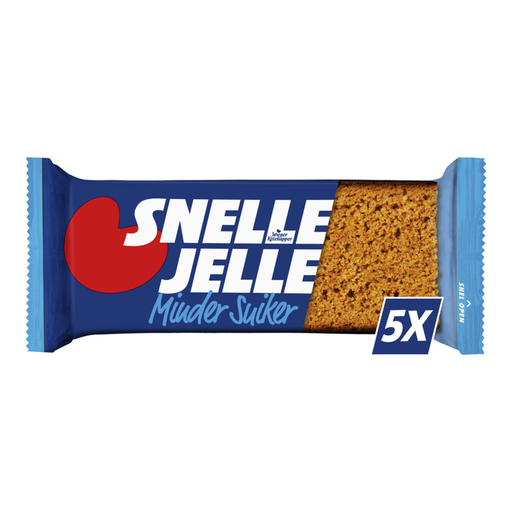
This 250 g breakfast cake is a compact option to consider if you don’t want to buy a large loaf. Check the current packaging to see whether the portions and ingredients suit your cycling plans.
 No image available
Snelle Jelle breakfast cake 250 g
At 250 g, this pack is worth considering if you’re looking for a smaller size. Check the current packaging for the number of portions, ingredients and nutritional information before choosing a portion to eat around your ride.
View at Joybuy
Frequently asked questions
What should I look for if I want to eat breakfast cake just before cycling?
Avoid having a large portion just before setting off, and consider whether the ingredients suit that mealtime. The Netherlands Nutrition Centre advises avoiding products high in fat, protein or fibre just before exercise. Try a small portion first on a normal training day.
Is breakfast cake with no added sugars automatically a good choice for a ride?
No, that claim doesn’t tell you everything about a product. Check the portion size, fibre and any polyols in the nutritional information too, especially if you’re going for an intense ride soon after eating.
How should I store an opened loaf of breakfast cake?
Follow the storage advice on the packaging of the product you buy. The Peijnenburg products described here should be stored somewhere cool and dry, preferably in a sealed tin or container. Individually wrapped portions are an alternative if you don’t want to open a whole loaf each time.
Does all breakfast cake contain iodine from baker’s salt?
You can’t tell from the product category alone. If the type of salt used or the iodine content matters to you, check the current packaging or ask the manufacturer about the specific product.


