
Coffee drinkers looking for wholegrain
If you’d like a breakfast cake made with wholegrain rye to enjoy with your coffee, the type of flour used and the fibre content on the label are useful points of comparison.


Choose plain if you’re looking for a familiar breakfast cake to enjoy with coffee, or wholegrain if the grain base and fibre content matter to you. If you’d also like a version with no added sugars, check the wording on the packaging and compare the nutritional information: no added sugars doesn’t mean sugar-free.
If you’d like a breakfast cake made with wholegrain rye to enjoy with your coffee, the type of flour used and the fibre content on the label are useful points of comparison.
If no added sugars is important to you, compare the sugar content in the nutrition table too, and check which ingredients and any sweeteners the product contains.
For coffee at work or on the go, a pre-sliced pack, bar or individually wrapped portion may be more convenient than a cake you have to slice yourself.
Decide whether the type of flour, the no added sugars claim or convenience with coffee matters most to you. Then compare products on a like-for-like basis: per 100 g and, if the portions differ, per slice or bar too.
| What to consider | What should you check? | Who might this matter to? |
|---|---|---|
| Wholegrain and fibre | Check which grain and type of flour are listed in the ingredients. Compare fibre per 100 g and per typical portion. | If breakfast cake is a regular part of my coffee break, I want to know whether I’m choosing a wholegrain version and how much fibre there is in a slice. Around 42% of consumers say this is their priority. |
| No added sugars | Check the exact wording, the sugar content in the nutrition table and any sweeteners or warnings. | I’m looking for breakfast cake with no added sugars, but I don’t want to assume that a Zero claim also means sugar-free. This label detail is a priority for around 33% of consumers. |
| Flavour and packaging | Decide whether you’d like a plain version, then compare a pre-sliced pack, bar or individual portion by weight, number of pieces and shelf life. | At home with coffee, I might prefer a familiar plain cake; on the go, a portion that’s easy to take with me matters more. Around 25% of consumers prioritise these practical and flavour preferences. |
Wholegrain describes the grain base, not every nutritional value of a breakfast cake. Sugar, fibre and salt content may still influence your choice.
As well as checking the type of flour, read the nutrition table and compare products per 100 g and per portion.
No added sugars doesn’t rule out sugars that are naturally present. For one pre-sliced breakfast cake, Jumbo lists sweeteners and a warning that excessive consumption may have a laxative effect; that warning doesn’t automatically apply to other versions.
Check the exact wording, ingredients and warnings for the product you want to buy.
Peijnenburg lists rye flour for its Naturel Gesneden, but wholegrain rye flour for its Volkoren Gesneden. The names therefore refer to different recipes.
Check the ingredients list for the version you’ve chosen if you’re specifically looking for wholegrain rye.
Peijnenburg offers a range that includes plain, wholegrain and individually wrapped breakfast cake.
Albert Heijn’s own-brand range includes pre-sliced wholegrain breakfast cake and a Zero version.
Jumbo’s range includes breakfast cake in pre-sliced packs and smaller formats.
ALDI sells pre-sliced wholegrain breakfast cake and pre-sliced breakfast cake Zero under this brand.
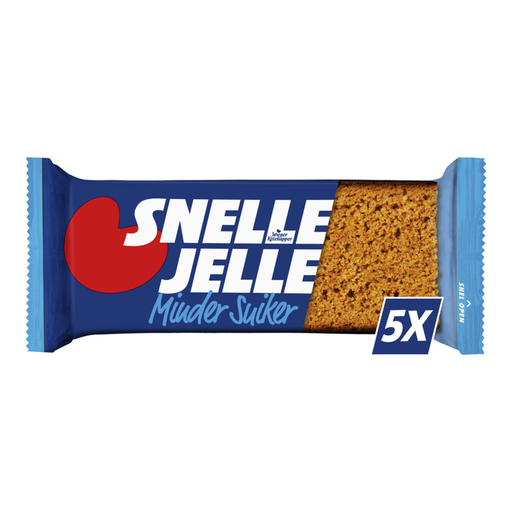
This breakfast cake may suit you if you’re looking for a packaged option to enjoy with coffee at work or on the go. Assess the nutritional information and ingredients for this version separately from the plain and wholegrain options above.
 No image available
If you’re having coffee on the go, the packaging may be a factor; check the number of portions in this pack.
The product name states 250 g. Check the latest ingredients and nutritional information before comparing sugars per 100 g or per portion. The words Less Sugar-Free in the product name do not, on their own, prove that this breakfast cake is sugar-free or contains no added sugars.
If you have allergies, check the allergen information on the latest packaging.
No. Wholegrain tells you about the grain base used; you should also compare fibre, sugars, salt and portion size on the label. The Netherlands Nutrition Centre gives 1.3 g of fibre per 30 g slice as a reference for wholegrain breakfast cake, not as a value for every version.
No. No added sugars doesn’t mean that the breakfast cake contains no naturally occurring sugars. Read the nutrition table and ingredients list for the version you’ve chosen, and check whether it lists sweeteners or warnings about use.
Check the allergen information on the latest packaging for the specific breakfast cake. The Netherlands Food and Consumer Product Safety Authority stresses that allergens must be clearly listed on the label; don’t rely solely on the product category or an online description.
No. The name breakfast cake doesn’t tell you which type of salt was used in a specific product. Check the ingredients on the latest packaging rather than relying on a general assumption.