
Picky Christmas market visitors
You’re looking for a familiar sweet flavour and a size that’s easy to carry or share. A specific nutritional claim isn’t your main reason for choosing.


If you’re catering for picky visitors at a Christmas market, start by deciding what matters most: a familiar flavour, a verifiably wholemeal option or a variety labelled ‘no added sugars’. Then compare the ingredients and nutritional information for that specific cake. Wholemeal alone tells you nothing about its sugar content, and ‘no added sugars’ does not mean sugar-free. Treat breakfast cake as a snack, not as an equivalent substitute for wholemeal bread.
You’re looking for a familiar sweet flavour and a size that’s easy to carry or share. A specific nutritional claim isn’t your main reason for choosing.
You want to take breakfast cake as a snack and compare the ingredients and fibre content of the exact varieties, ideally per 100 g.
You’re looking for a variety labelled ‘no added sugars’, but you also check the total sugar content and the ingredients on the label.
Before heading to the Christmas market, decide whether ingredients, flavour or ease of carrying matter most to you. Then check the packaging of your chosen variety: a claim on the front doesn’t replace the ingredients list and nutritional information.
| What to consider | What to check when buying | Who is this most important for? |
|---|---|---|
| Wholemeal, fibre and sugars | Read the ingredients and compare fibre and sugars per 100 g. Check any claim about added sugars on the exact variety. | If I’m looking for a wholemeal cake, I don’t want to rely on the name alone: the fibre and sugar content also needs to suit my choice. These features are a priority for around 50% of consumers. |
| Flavour and familiarity | Check the flavour and ingredients; don’t assume regular and wholemeal breakfast cake taste the same. | When I’m sharing cake with picky visitors, I mainly want to choose a flavour they’ll recognise. Flavour is the top priority for around 30% of consumers. |
| Packaging and carrying | Check whether the cake is sliced or individually wrapped, and how much you want to take with you. | I want to be able to carry or share portions without awkward packaging. For around 20% of consumers, this is the most important consideration. |
According to the Netherlands Nutrition Centre, an average 30 g slice of breakfast cake contains 11.2 g of sugars and 1.1 g of fibre. The nutritional values of a specific wholemeal variety may differ, but the name ‘breakfast cake’ doesn’t make it equivalent to wholemeal bread.
Choose breakfast cake as a snack or treat. If you’re looking for something to eat for breakfast, consider separately what you’d like to have.
Wholemeal and a claim about added sugars answer different questions. For example, Jumbo lists 36.5 g of sugars per 100 g for one wholemeal breakfast cake; that figure applies to that variety, not to every wholemeal breakfast cake.
Compare the ingredients, sugars and fibre of the exact varieties on the same per-100 g basis.
The Netherlands Nutrition Centre identifies bread made with iodised baker’s salt as an important source of iodine in the Netherlands. This doesn’t mean that the breakfast cake you buy contains the same salt.
Don’t assume iodine is a product feature without checking the ingredients of that breakfast cake.
A sliced cake and individually wrapped portions aren’t equally convenient if you want to share them while you’re out. The amount you actually take with you may also vary.
Choose a size based on the number of portions you need and how you want to carry the cake during your visit.
Peijnenburg offers regular and wholemeal breakfast cake, including a sliced variety with a claim about added sugars.
Jumbo offers several breakfast cake varieties, including regular and wholemeal cakes as well as smaller sizes.
ALDI Netherlands describes a sliced wholemeal breakfast cake from Koek & Bakker, as well as a separate zero variety.
A g'woon breakfast cake in a six-pack is worth considering if individual portions are important to you.
These two breakfast cakes are suitable for taking along and sharing during a visit to a Christmas market: one 250 g variety and one sliced 485 g variety. If wholemeal ingredients or sugar content are your main priorities, don’t choose based on size alone.
 No image available
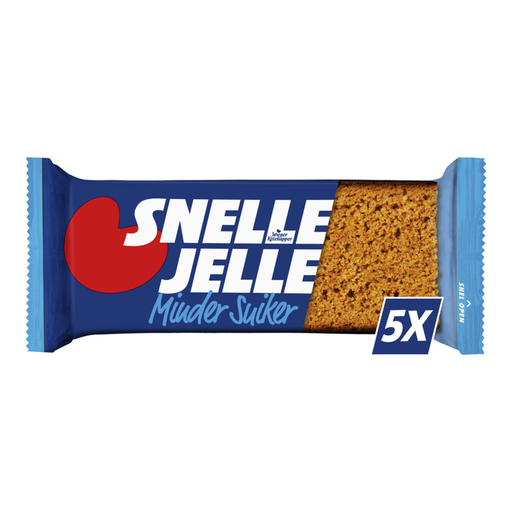
A 250 g pack to take along for a visit to the Christmas market. The variety name ‘Less Sugar-Free’ doesn’t prove that the cake is sugar-free or has no added sugars; check the ingredients and nutritional information on the pack.
 No image available
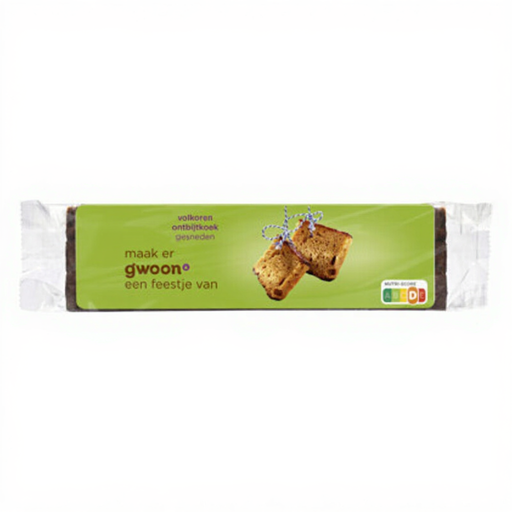
The sliced format is handy if you want to share individual slices. Check the ingredients and the sugar and fibre values on the current label before choosing; if you have an allergy, also check the ingredients and allergen information carefully.
Don’t treat breakfast cake as an equivalent substitute for wholemeal bread. The Netherlands Nutrition Centre describes breakfast cake as a snack that often contains a lot of sugar and little fibre; even with wholemeal breakfast cake, check the nutritional information for the variety you’ve chosen.
No, the two labels don’t mean the same thing. Peijnenburg describes one of its own wholemeal varieties as having ‘no added sugars’; also check the total sugar content and the ingredients on the exact pack.
No, you can’t assume this for every breakfast cake. The Netherlands Nutrition Centre identifies bread made with iodised baker’s salt as an important source of iodine in the Netherlands, but check the ingredients of the breakfast cake you’ve chosen.
Choose a pack that suits the number of portions you want to take or share, and follow the storage instructions on the packaging. Also check the best-before date of the cake you’re taking with you.