Who is this choice relevant to?

Canteen buyer looking for an addition to lunch

Wants to serve breakfast cake quickly while clearly distinguishing a slice of breakfast cake from a bread-based lunch on the menu. The Netherlands Nutrition Centre identifies bread as an important source of iodine; don’t assume breakfast cake has the same benefit from its name alone.

Student keeping an eye on sugar

Wants to know how much sugar is in a chosen slice or bar. Peijnenburg’s nutritional information shows that its regular wholemeal breakfast cake and its no-added-sugar version differ in this respect; the exact product and portion size matter.

Student on the go between lectures

Wants a portion they can take away straight away. A bar with a set portion weight makes choosing easy, as long as you check the nutritional values for the whole portion too.

What should you look for when choosing?

First decide how breakfast cake will fit into your lunch offer. Then compare the nutritional information for the exact product, and choose packaging that suits the way you serve it.

What to consider What to check when buying Who is this most important for?
Place in the lunch offer Make it clear on the menu that breakfast cake is an addition, while bread is a lunch option; state the size of each serving. When I put together the canteen menu, I don’t want a slice of breakfast cake to be mistaken for a bread-based lunch. For around 42% of consumers, its role at lunch is the main consideration.
Sugar and fibre Compare sugar and fibre per 100 g and per portion; treat ‘wholemeal’ and ‘no added sugars’ as separate product features. When choosing a sweet snack, I want to know what’s in the whole slice or bar, not just what the front of the pack says. Around 33% of consumers prioritise this nutritional consideration.
Portion and serving Check the weight of each slice or bar, then choose between portioning it yourself and offering a fixed, individually wrapped portion. Between lectures, I want something I can take with me without having to wait to be served. Around 25% of consumers consider this convenience their main priority.

Common mistakes

  • Presenting wholemeal breakfast cake as a bread-based lunch

    ‘Wholemeal’ doesn’t tell you everything about the nutritional value of a lunch. The Netherlands Nutrition Centre gives 11.1 g of sugar per 30 g slice of wholemeal breakfast cake, and describes bread separately as a source of iodine, among other nutrients.

    Offer breakfast cake as a clear addition to lunch or as a snack, and keep a bread-based lunch visible as a separate option.

  • Comparing figures per 100 g only

    A bar may not weigh the same as an individual slice. For example, Jumbo states that its 58 g wholemeal breakfast cake bar contains 20.5 g of sugars per bar.

    Compare products by the portion you’ll actually serve, and specify the portion size if you’re using a pack of sliced cake.

  • Assuming ‘no added sugars’ means there’s nothing else to consider

    According to the product information, the specific Peijnenburg no-added-sugar version contains xylitol. PLUS’s information warns that excessive consumption may have a laxative effect.

    For every version, check the ingredients, nutritional information and warnings on the current packaging.

  • Assuming it contains iodine-enriched baker’s salt

    Breakfast cake doesn’t automatically contain iodine-enriched baker’s salt. Brood.net describes its use as part of an agreement, not as a general legal requirement.

    Check the ingredients list for the breakfast cake you’ve chosen rather than listing iodine as a standard product feature.

Brands to consider

Peijnenburg

Offers both regular sliced wholemeal breakfast cake and a sliced wholemeal version with no added sugars.

  • For its no-added-sugar version, Peijnenburg states that it contains 4.9 g of sugars and 17 g of fibre per 100 g.
  • According to Peijnenburg, its regular sliced wholemeal version contains 39 g of sugars and 5.1 g of fibre per 100 g. So check which version you’re choosing.

Albert Heijn

Offers sliced wholemeal breakfast cake in a 485 g pack for canteens that want to serve their own portions.

  • Albert Heijn states that it contains 41% wholemeal rye flour and 5.7 g of fibre per 100 g.
  • The product information also lists 34 g of sugars per 100 g and rye as an ingredient; check the latest allergen information.

Jumbo

Offers breakfast cake in several formats, including a wholemeal breakfast cake bar in a fixed portion size.

  • A bar in a fixed portion size is practical when students want to take their purchase with them straight away.
  • Jumbo states that its 58 g bar contains 20.5 g of sugars and 4.8 g of fibre per portion; don’t compare this portion as if it were a single slice.

PLUS

Offers sliced wholemeal breakfast cake in a 485 g pack.

  • PLUS states that it contains 41% wholemeal rye flour and 5.7 g of fibre per 100 g.
  • The product page lists 34.1 g of sugars per 100 g and a Nutri-Score of D for this version. Check the other nutritional information and ingredients too.

ALDI / Koek & Bakker

ALDI’s Koek & Bakker range includes sliced breakfast cake zero, among other products.

  • ALDI describes the zero version as pre-sliced, with no added sugars, and packed in a 485 g pack.
  • For a comparison of sugar, fibre and allergens, read the information on the exact product packaging.

Lidl

Lists 485 g packs of sliced wholemeal breakfast cake as an in-store product.

  • The sliced format lets a canteen choose its own serving size.
  • Lidl says this product is available in store only. Check the packaging for ingredients, allergens and nutritional information.

Breakfast cake at Joybuy

These products show two ways to serve breakfast cake: a bar to take away and a sliced pack to portion yourself. Only choose between versions based on sugar or fibre after comparing the nutritional information on the exact packaging.
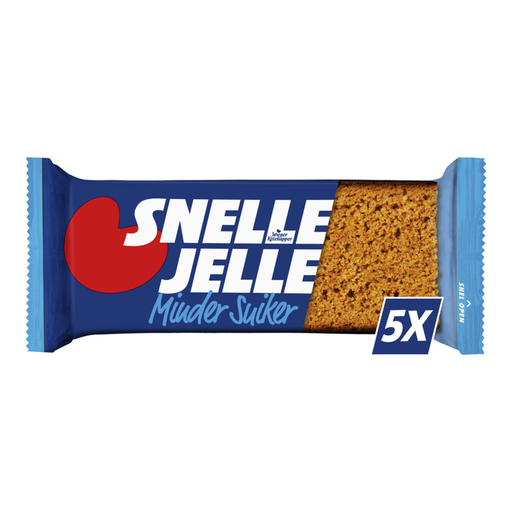
Snelle Jelle Breakfast Cake Less Sugar-Free, 250 g

Snelle Jelle Breakfast Cake Less Sugar-Free 250 g

A bar format to consider for quick service between lectures. Check the packaging for the portion size, nutritional values and what the sugar claim in the product name means; don’t assume that the bar is sugar-free.

View at Joybuy
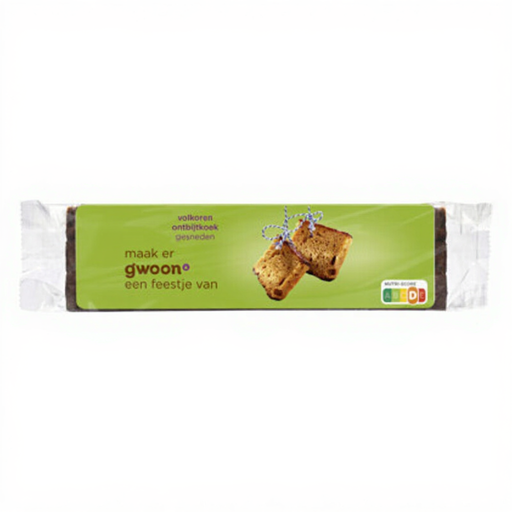
g'woon Wholemeal Breakfast Cake Sliced, 485 g

g'woon Wholemeal Breakfast Cake Sliced 485 g

Sliced breakfast cake for a canteen that wants to decide on its own serving sizes. The pack contains 485 g. Before serving, check the latest ingredients and allergen information on the packaging, especially if you’re sharing this information with students.

View at Joybuy

Frequently asked questions

Can wholemeal breakfast cake replace a bread-based lunch?

It’s best to treat wholemeal breakfast cake as an addition or snack rather than an equivalent substitute for a bread-based lunch. The Netherlands Nutrition Centre describes wholemeal bread as a source of fibre, vitamins, minerals and iodine, among other things; the word ‘wholemeal’ on breakfast cake doesn’t tell you how the rest of the lunch is made up.

Does ‘wholemeal’ mean breakfast cake is low in sugar?

No. ‘Wholemeal’ doesn’t tell you how much sugar breakfast cake contains. The Netherlands Nutrition Centre gives 11.1 g of sugar per 30 g slice of wholemeal breakfast cake. For the version you want to serve, check the nutritional information per 100 g and per portion.

What should you look for in breakfast cake with no added sugars?

Still check the amount of sugar per portion, the ingredients and any warnings. The specific Peijnenburg no-added-sugar version contains xylitol; PLUS’s information says that excessive consumption may have a laxative effect.

Which allergens should you check in breakfast cake?

Check the allergen information for the exact product before serving it in the canteen. For example, Albert Heijn’s product information lists rye and cereals containing gluten for its sliced wholemeal breakfast cake; don’t assume another product has the same ingredients.

Is all breakfast cake in the Netherlands required to contain iodine-enriched baker’s salt?

No. Don’t assume there’s a general requirement or that iodine is a standard feature of breakfast cake. Brood.net says that the use of iodine-enriched baker’s salt is agreed in a covenant, but isn’t required by law. The Netherlands Food and Consumer Product Safety Authority describes a limit for iodine when it’s added to bakery products via baker’s salt; check the ingredients of the product you’ve chosen.
