
Everyday shopper
You’re looking for a regular breakfast cake to enjoy at home or at work. A large pack makes sense if you’ll finish it before its quality starts to deteriorate.


If you eat regular breakfast cake often, a large pack of plain cake is a sensible starting point, provided you’ll finish it. Choose a wholemeal version, one with no added sugars or individual portions if that particular feature matters to you. Whatever you choose, check the ingredients, allergens and nutritional information for the exact product.
You’re looking for a regular breakfast cake to enjoy at home or at work. A large pack makes sense if you’ll finish it before its quality starts to deteriorate.
You check the ingredients and compare things such as wholemeal content, fibre and sugars. Look at the nutritional information for the version you’ve chosen, rather than relying on the wording on the front of the pack.
You might choose ginger, pearl sugar or raisins, or want individual portions to take with you. In that case, those features matter more than a large pack of plain cake.
First, decide whether you’ll keep the cake at home or want portions to take with you. Then compare the ingredients and nutritional information for the versions that suit how you plan to use it.
| What to consider | What should you check? | Who is it important to? |
|---|---|---|
| Pack size | Check the weight in grams and choose a size you’re likely to finish. | If I eat breakfast cake regularly at home, I don’t want to buy a larger pack than I can use. Around 36% of consumers say pack size is their top priority. |
| Sugars, fibre and wholemeal content | Read the ingredients and compare sugars and fibre per 100 g or per portion for the exact product. | If you’re specifically looking for wholemeal cake or want to compare sugars and fibre, the front of the pack won’t tell you enough. Around 29% of consumers say this nutritional information is their top priority. |
| Flavour and portion convenience | Check which flavour you’re choosing and whether the cake is sliced or individually wrapped. | If I’m taking it out with me, I want portions I can pack, or I might specifically choose a flavour other than plain. This is the main reason around 21% of consumers choose a particular version. |
| Allergens | Check both the ‘contains’ and ‘may contain’ information on the current label for the exact product. | If I need to avoid certain ingredients, I first need to know whether this cake is suitable. For around 14% of consumers, this check is their top priority. |
A large pack is less practical if you won’t finish the cake before its quality starts to deteriorate.
Choose a pack size to suit how often you eat breakfast cake, and follow the storage instructions on the pack.
This wording doesn’t mean the product contains no sugars. The Voedingscentrum states that a 30 g slice of breakfast cake with no added sugars contains 0.8 g of sugars; this figure doesn’t apply to every version.
For the cake you want to buy, check the ‘of which sugars’ value and whether the nutritional information is given per 100 g or per portion.
Rye is a gluten-containing grain. The product information for the Jumbo and PLUS versions reviewed lists rye and/or wheat.
Don’t rely on the product category or brand name: read the current label and only choose a product whose information meets your needs.
Peijnenburg offers plain, wholemeal, flavoured and individually portioned breakfast cakes, among other options.
The Jumbo own-brand range includes plain breakfast cake and other versions, including wholemeal and individually portioned options.
AH offers a 600 g breakfast cake for anyone looking for a large pack of everyday cake.
PLUS offers sliced plain breakfast cake and a Korenlanders Bakkers version, among other options.
This ALDI range includes sliced wholemeal breakfast cake, a version with no added sugars and pearl sugar cake, among other options.
These two products suit different needs: sliced wholemeal breakfast cake for home, and a Snelle Jelle version to consider if you want portions to take with you. Before buying, compare the current label, especially if sugars or allergens are a factor in your choice.
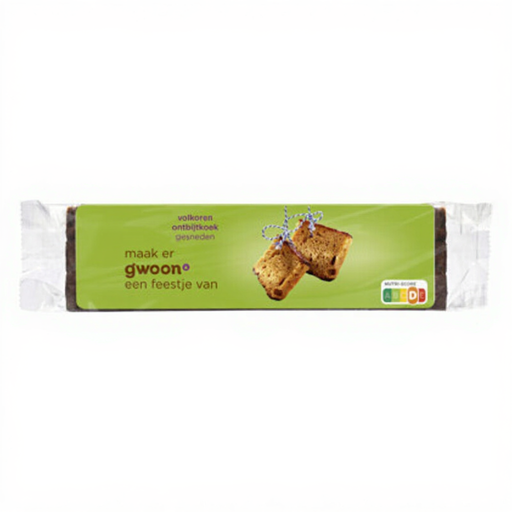 Image unavailable
An option if you’re looking for sliced wholemeal breakfast cake. The product information for this version lists 43% wholemeal rye flour and 5.9 g of fibre per 100 g. As rye is listed, don’t assume this product is gluten-free without checking; if you have a relevant allergy, read the current label.
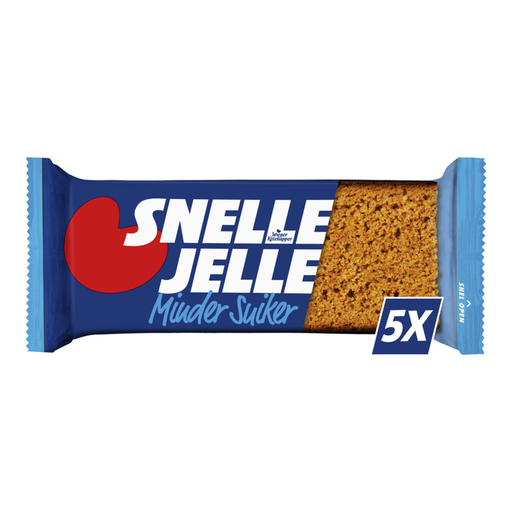 Image unavailable
Worth considering if you want breakfast cake in portions to take with you. According to the product description, the pack contains five individually wrapped 50 g portions. Don’t assume this version contains no sugars just because ‘Sugar-Free’ appears in the product name: check the claim and nutritional information on the current label. Also check the allergen information if you need to avoid rye, other gluten-containing grains, nuts or milk.
No, this wording doesn’t mean the total sugar content is zero. The Voedingscentrum states that a 30 g slice of breakfast cake with no added sugars contains 0.8 g of sugars; check the ‘of which sugars’ value on the label for the version you’re buying.
Don’t assume it is. The product information for the Jumbo and PLUS breakfast cakes reviewed lists rye and/or wheat. Check the ingredients and ‘may contain’ information for the exact product.
You can’t tell from the product category alone. If iodine or baker’s salt is relevant to your choice, check the ingredients for the breakfast cake you want to buy.