
If you shop by price per kilo
You regularly buy breakfast cake for home and are looking for a large, standard pack whose cost per kilogram you can compare. A special variety isn't automatically better value for you.


If your main concern is comparing the cost per kilogram, start with large, standard packs of ready-made breakfast cake and check the current price per kilo. Baking your own is a better fit if you want to choose the recipe and ingredients, but it isn't automatically cheaper: the quantities used, oven energy and yield all count too. Jumbo lists a preparation time of 70 minutes for its wholemeal recipe.
You regularly buy breakfast cake for home and are looking for a large, standard pack whose cost per kilogram you can compare. A special variety isn't automatically better value for you.
You want to choose the flour, spices and quantities yourself. That means setting aside time to weigh the ingredients and bake the cake; choosing this option doesn't automatically mean a lower cost.
You compare ingredients, allergens and nutritional information, such as sugars, fibre and salt. If a product says ‘no added sugars’, you also check how much sugar it contains.
First decide whether the price per kilo, the freedom to use your own recipe or the information on the label matters most to you. Then compare only the costs and product features that are relevant to that choice.
| What to consider | What should you check? | Who is this most important to? |
|---|---|---|
| Cost per kilogram | Compare current prices per kilo for similar packs; if there's an offer, check how long it's valid for. | If I regularly buy breakfast cake for home, I want to know how much cake I get for my budget. For around 50% of consumers, this predictable price per kilo comes first. |
| Freedom to choose the recipe | If you bake your own, calculate the cost of the ingredients used, oven energy and final yield. | I want to choose the type of flour and spices myself, and I can set aside time to prepare the cake. Around 30% of consumers prioritise having this control over the recipe. |
| Label and ingredients | Check the ingredients, allergens, and sugars, fibre and salt per 100 g; also look at the serving size. | If an ingredient or nutritional value determines my choice, I want to be able to check the exact pack. This label information comes first for around 20% of consumers. |
Once an offer has ended, it tells you nothing about the price per kilo you can compare with today. The Tastino offer shown by Lidl ran from 28 September to 4 October 2026.
Check the offer's validity period and use the latest in-store information to make your decision.
Breakfast cake is sold in different weights and varieties. A pack that costs less may not be cheaper per kilogram.
Compare the price per kilo first, then decide whether the size and variety suit the way you use it.
The cost of a home-baked cake depends on what you actually use and how much the recipe makes. Jumbo lists a preparation time of 70 minutes for its wholemeal recipe.
Calculate the cost of your recipe per kilogram of baked cake before comparing it with ready-made breakfast cake.
Remember to factor in oven energy, preparation time and any baking equipment you'll need for your chosen recipe.
Peijnenburg lists 4.9 g of sugars per 100 g for its plain variety with no added sugars. The claim on the front also doesn't tell you which allergens a product contains.
Check the nutritional information, ingredients and allergen details on the exact pack.
Jumbo sells own-brand breakfast cake in a range of varieties, including plain, sliced and wholemeal.
Albert Heijn sells own-brand breakfast cake alongside branded products and special varieties.
PLUS offers own-brand breakfast cake in plain, wholemeal and individually portioned varieties, as well as branded products.
ALDI lists Koek & Bakker products including sliced wholemeal breakfast cake and a zero variety.
Peijnenburg sells standard breakfast cake, individually portioned varieties and options with no added sugars.
Tastino is Lidl's breakfast cake range, which includes an unsliced plain variety.
These products suit the ready-made option: a sliced wholemeal breakfast cake for home and breakfast cake in individual portions. If you're shopping on a budget, compare their current price per kilo with other varieties; check their ingredients separately on the label.
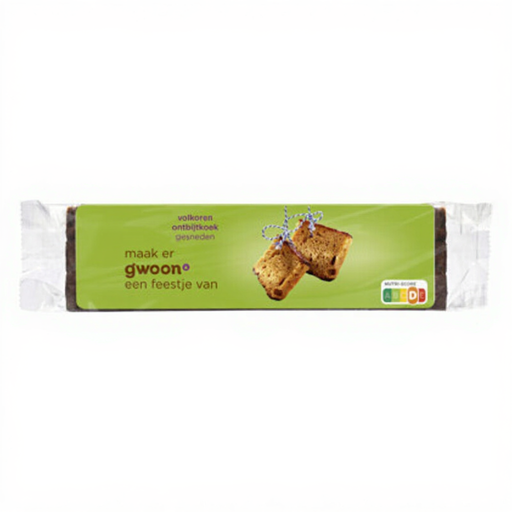 Image unavailable
Worth considering if you're looking for ready-made, sliced wholemeal breakfast cake for home.
Pack size: 485 g. If you have specific ingredient requirements or allergies, check the label on the pack.
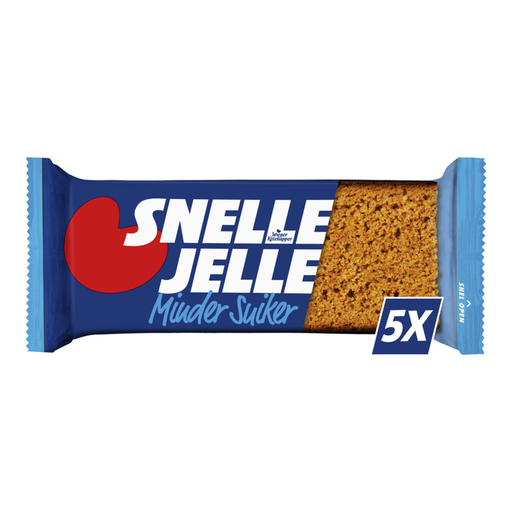 Image unavailable
Worth considering if you'd like to take breakfast cake with you in individual portions.
Pack size: 250 g. Don't assume ‘Less Sugar-Free’ in the product name means the cake is sugar-free; check the sugars per 100 g on the current label.
No. Peijnenburg lists 4.9 g of sugars per 100 g for its plain variety with no added sugars. Check the nutritional information for the variety you're buying, not just the claim on the front.
No, don't assume that you have to use baker's salt when making breakfast cake. The Voedingscentrum says bakers aren't required to use baker's salt; if iodine matters for your recipe, check the salt label to see whether iodine has been added.
Follow the method in your chosen recipe and avoid letting the cake get unnecessarily dark or burnt. Acrylamide can form when starchy ingredients are heated; the Netherlands Food and Consumer Product Safety Authority has also investigated this in relation to breakfast cake.
Store opened breakfast cake in a cool, dry, dark place in a well-sealed container, as recommended by the Voedingscentrum. Check the cake before eating it and follow any storage instructions on the pack.