
Regular stock-up shopper
You often have breakfast cake with your afternoon coffee at home and want to get several slices from one pack. A large own-brand cake is a useful option to compare.


If you regularly have afternoon coffee at home, a large own-brand breakfast cake is a practical place to start: one pack gives you several portions. Choose a wholemeal option if you specifically want to compare those, or individual portions if portability matters more. Check the ingredients and nutritional information for the exact product in each case.
You often have breakfast cake with your afternoon coffee at home and want to get several slices from one pack. A large own-brand cake is a useful option to compare.
You want to know which grains and ingredients a breakfast cake contains, and how its sugar and fibre are listed on the label. So you compare the exact product, rather than relying on the wording on the front of the pack.
You take breakfast cake to work or like to have a portion ready in advance. In that case, the packaging and amount per portion matter more to your choice than the overall pack size alone.
First, decide whether the breakfast cake will mainly be eaten at home or needs to go with you. Then compare the label of the pack format that suits your coffee break.
| What to consider | What to check before buying | Who it matters to |
|---|---|---|
| Pack for home | Compare the net weight and check whether the cake is pre-sliced. | For my regular afternoon coffee, I want to be able to have breakfast cake from one pack several times. This makes home use the deciding factor for around 50% of consumers. |
| Ingredients and nutritional information | Read the ingredients and compare sugar and fibre per 100 g; check the allergens on the pack. | If I’m considering a wholemeal option, I want to know what’s in the cake rather than judging it by the front of the pack alone. Around 30% of consumers put this label information first. |
| Portions to take with you | Check how many portions are in the pack, how much each portion weighs and how they’re packaged. | For a coffee break away from home, I want to be able to take a portion with me easily. Around 20% of consumers prioritise this convenience. |
A large pack won’t necessarily suit how often you eat breakfast cake at home; a different pack format may be more convenient when you’re out and about.
Think about how many slices you usually have and whether you want to cut them yourself before choosing a size.
A description such as ‘wholemeal’ doesn’t tell you the full nutritional value of a breakfast cake. The Voedingscentrum recommends reading the ingredients list and nutrition table too.
Compare the products you’re considering using their nutritional information per 100 g.
Ingredients and warnings can vary between breakfast cakes, so information for one option won’t necessarily apply to another.
If you need to avoid certain ingredients, read the allergen information on the pack every time you buy.
Jumbo’s breakfast cake range includes plain, sliced and wholemeal options.
AH Ontbijtkoek is an own-brand option if you’re looking for a large cake to enjoy at home.
ALDI lists a sliced wholemeal breakfast cake and a sliced zero option in this range.
Peijnenburg offers plain breakfast cake in a larger pack, as well as smaller portion packs.
PLUS Korenlanders is an own-brand alternative if you’re looking for a larger plain breakfast cake.
These products suit two ways of enjoying your coffee break: a sliced wholemeal breakfast cake for home, and a breakfast cake to take with you as a portion. Check the current packaging for both before making a decision based on the label.
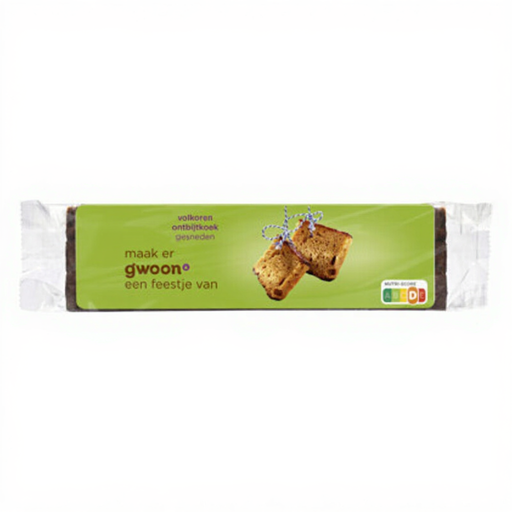 No image available
An option to consider if you’re looking for a sliced wholemeal variety to enjoy with your afternoon coffee at home.
Pack weight: 485 g. Check the ingredients and allergens on the current pack.
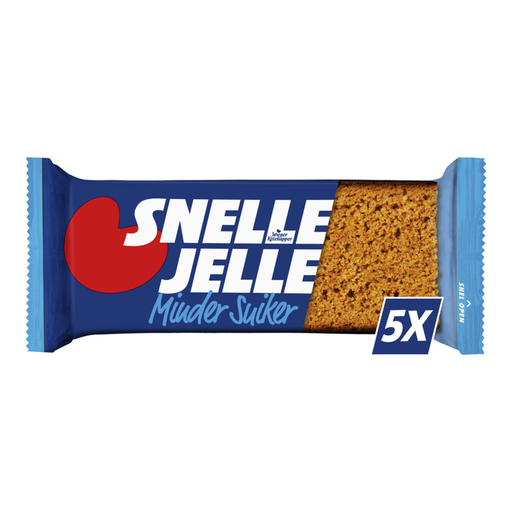 No image available
An option to consider if you’d like to take breakfast cake with you for a coffee break away from home.
Pack weight: 250 g. Check the pack to see how the portions are divided and whether the nutritional information is given per 100 g or per portion; don’t assume from the product name that the cake is sugar-free.
No. Check the ingredients and nutritional information for the breakfast cake you choose. The Voedingscentrum notes that breakfast cake often contains a lot of sugar and little fibre, so compare the information for the exact product.
A large pack works well if you eat it repeatedly at home and can cut off the amount you want, or choose a pre-sliced cake. Individual portions may be more practical to take with you; check the amount per portion and how it’s packaged.
Check the allergen information on the current packaging for the specific product. Ingredients and any warnings can vary between options, so don’t rely on the label of a different breakfast cake.
No. The use of baker’s salt doesn’t confirm that every breakfast cake contains iodine. The Netherlands Food and Consumer Product Safety Authority explains that iodine compounds may be present in bakery products through baker’s salt. For a specific product, check the ingredients or ask the manufacturer.