What should you look for in a camera for breakfast bowls?
Start with the framing you want and the light available. Then choose between a fixed lens and an interchangeable lens based on the details you want to capture.
| What to consider |
What should you check? |
Who should pay particular attention? |
| Framing and stability |
Check whether the lens can frame the bowl from the distance at which you’ll be photographing it on your table, and whether your setup can safely support the angle you want. Canon Europe says a tripod can be useful for overhead shots. |
If I want to capture the whole bowl and styling in one steady shot, I’ll consider the working distance and how to position the camera above the table. Around 33% of consumers say framing and stability are their main priorities when choosing. |
| Light and colour |
Canon Europe notes that the direction of the window, the time of day and the weather all affect the light. Compare test shots taken at the times you usually photograph. |
When I photograph at different times, I want to assess the light and colour across the series. Around 25% of consumers prioritise consistent lighting and colour. |
| Fine details |
Check the maximum magnification and focusing distance of the specific lens. Canon Europe describes 1:1 as the magnification of a true macro lens. Nikon states that the NIKKOR Z MC 50mm f/2.8 has around 5 cm of space in front of the lens at its closest focusing distance. |
For glaze or fine textures, I want to know how large the lens can make those details appear and how much space remains in front of it. Around 25% of consumers put detail magnification at the top of their list. |
| Ease of use and complete kit |
The Dutch Consumers' Association describes compact cameras as cameras with a fixed lens. For any camera, check the mount, the included lens and what other equipment you’ll need. |
If I want a simple setup and don’t want to change lenses, I’ll compare what I already own with the model’s fixed or kit lens. Around 17% of consumers focus mainly on ease of use and having a complete setup. |
Camera brands to consider
The product features mentioned apply to specific models and lenses. They aren’t a general assessment of every camera model or kit from a particular brand.
Canon
The EOS R system gives you a choice of lenses for wide shots and close-up details. Canon covers these uses in its food photography advice.
- Canon specifies that the EOS R50 supports RF and RF-S lenses.
- Check that the lens you need is included with each offer. A lens that focuses at close range isn’t automatically a true 1:1 macro lens. Canon Europe says a tripod can be useful for overhead shots.
Nikon
The Z system includes camera bodies and separate lenses for photographers who want to combine wide shots with detailed close-ups.
- Nikon lists a tilting touchscreen for the Z50II. For the separate NIKKOR Z MC 50mm f/2.8, Nikon specifies 1:1 magnification.
- Nikon states that this macro lens has around 5 cm between the front of the lens and the subject at its closest focusing distance. These aren’t features of every Nikon kit.
Sony
The Alpha ILCE-6400 is a mirrorless camera with interchangeable E-mount lenses and RAW shooting.
- Sony specifies an APS-C sensor, E-mount and RAW shooting for the ILCE-6400.
- These specifications don’t tell you whether the lens in a particular kit can capture the bowl details you want. Check the lens and kit contents separately.
Fujifilm
The X-M5 offers an interchangeable-lens system, a choice of creative image processing options and RAW files.
- Fujifilm lists a film simulation dial and RAW shooting for the X-M5.
- Creative image styles don’t guarantee accurate colours for portfolio documentation. Also check which lens is included with the offer.
Cameras at Joybuy to help you choose
This selection includes digital and pocket cameras, including a Sony ZV-E10 with a 16–50mm zoom lens. For each model, check whether the lens and focusing capabilities suit the distance and details of your breakfast bowls.
 No image available
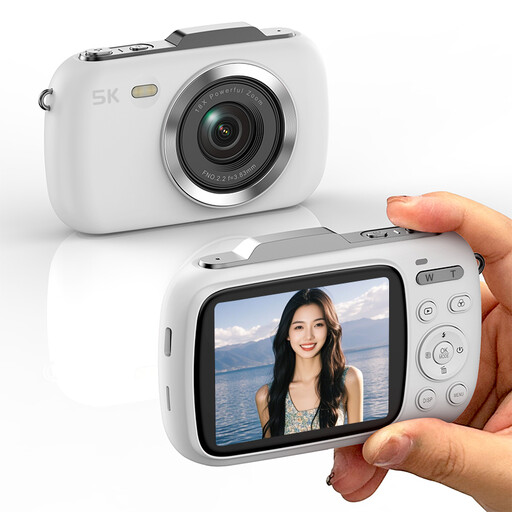
KOMERY G7 5K digital camera, 80 MP, white
The product name describes a compact camera. Check whether its lens can capture the bowl details you want from your shooting distance.
Listed features: 5K, 80 MP and 18x zoom.
View on Joybuy
 No image available
Komery W6 digital camera, 4K, 64 MP, 12x optical zoom, WiFi
This camera is marketed for photography and video. Check whether its fixed or included lens suits the distance at which you photograph your bowl.
Listed features: 4K, 64 MP, 12x optical zoom and WiFi.
View on Joybuy
 No image available
DJI Osmo Pocket 3, 1-inch CMOS, 4K/120fps
The product name positions this model as a vlog camera. Check whether its controls and still photography capabilities suit your portfolio shoots.
Listed features: 1-inch CMOS, 4K/120fps, 3-axis stabilisation and a 2-inch rotating touchscreen.
View on Joybuy
 No image available
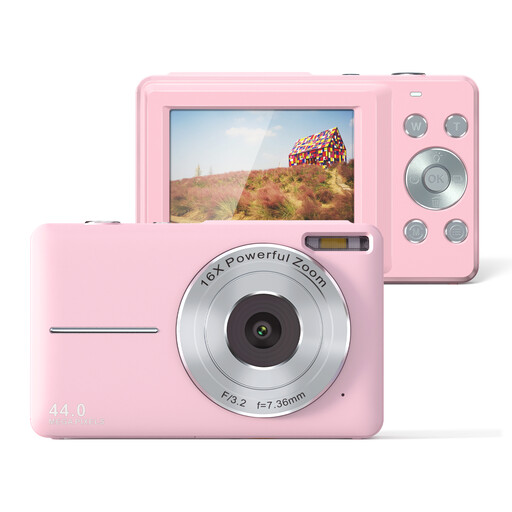
Songdian 4K pocket camera, 44 MP, 16x zoom, pink
The product name describes a pocket camera for photography and video. Check its close-up capabilities for the details you want to show.
Listed features: 4K, 44 MP and 16x zoom. A microSD card isn’t included.
View on Joybuy
 No image available
Sony ZV-E10 + 16–50mm Zoom Black
The Sony ZV-E10 with a 16–50mm zoom lens is a good option if you want an interchangeable lens. Check that the zoom range and close-up distance suit your setup.
An SD memory card and adapter/charger aren’t included.
View on Joybuy
Frequently asked questions
What should you try first if the bowl looks flat or dark in your photos?
First, adjust the direction and softness of the light, then assess a test shot. Canon Europe says the direction of the window, the time of day and the weather affect the available light. A thin curtain can soften harsh window light. This is photography advice, not a guaranteed result.
Do you need a macro lens for every breakfast bowl photo?
No, not for every shot. For a wide view showing the bowl and styling, you mainly need a suitable field of view. If you want to show fine textures in detail, check the maximum magnification of the specific lens. Canon Europe describes 1:1 as a feature of a true macro lens, not of every lens that focuses at close range.
How can you keep a series of portfolio photos consistent?
Take test shots with a similar lighting setup and assess the colours across the whole series. Nikon Netherlands notes that daylight changes in colour and intensity throughout the day. If your camera supports RAW, you can choose that file format if post-processing suits your workflow. RAW alone doesn’t guarantee consistent colour.
What if a camera you bought online doesn’t suit you after all?
When you buy online from a retailer, you’ll usually have a statutory 14-day cooling-off period from the date of delivery, although exceptions may apply. Check the information about your purchase. For a faulty product, your statutory rights are separate from any voluntary manufacturer’s warranty. The Dutch Government says the retailer must resolve the problem.


