What should you look for when choosing?
First decide how you want to store the rolls and how many you’ll eat at a time. Then check the preparation instructions and ingredient information on each pack.
Frozen bread rolls
Good for: households that need a few rolls at a time and have freezer space.
Bear in mind: defrost or prepare them according to the pack instructions; Jumbo states that its brown frozen rolls must not be refrozen once thawed.
Long-life bake-at-home rolls
Good for: keeping in a suitable cupboard when you want to bake the rolls just before eating.
Bear in mind: you’ll need an oven or air fryer and time to bake them; check the storage instructions for the variety you choose.
Fresh bread rolls
Good for: rolls you want to eat soon after buying.
Bear in mind: what you’ll do with the rest of the pack; if you won’t use them soon, check whether the product is suitable for freezing.
| What to consider |
Check |
Who is this most important for? |
| Portions and storage |
Number of rolls and instructions for storage and freezing. |
If I eat only one or two rolls at a time, I want to avoid the rest going stale. For around 36% of consumers, being able to split the pack into portions comes first. |
| Stock and preparation |
Suitable storage location and preparation method for the variety you choose. |
I want to be able to keep rolls in the cupboard and bake them when it suits me. Around 29% of consumers give this convenience the highest priority. |
| Bread type and fibre |
Ingredients and fibre per 100 g; don’t rely on the name or colour alone. |
When I compare types of bread, I want to know what’s actually in them. For around 21% of consumers, this nutritional information comes first. |
| Allergens and ingredients |
Current allergen information; if you’re interested in iodine, check which salt was used too. |
I need to be able to judge whether the ingredients meet my requirements, even if a product is sold as gluten-free. This is the main concern when buying for around 14% of consumers. |
Bread rolls at Joybuy
These white rolls are sold in packs of four. Compare that quantity with how you’ll use them, and check the packaging before deciding how to store or prepare them.
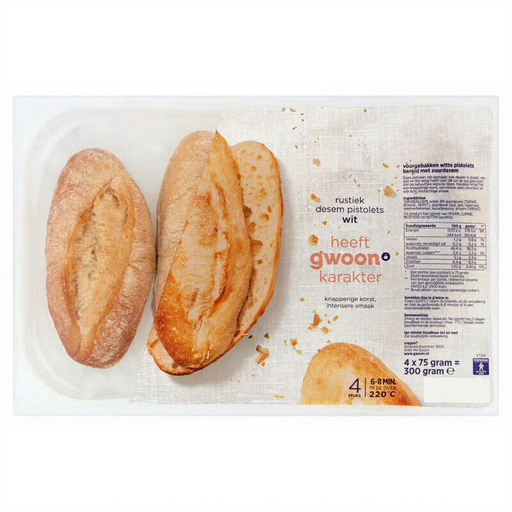 Image unavailable
g'woon White Rustic Pistolet, 4-pack
A pack to compare if you want to buy four white rolls at a time. Before adding them to your stock, check the current packaging for storage instructions, preparation details and allergen information.
View at Joybuy
Frequently asked questions
Can you freeze bread rolls at home for later?
You can freeze rolls that are suitable for it, but always check the packaging for the variety you’ve chosen. For brown rolls, the Voedingscentrum recommends storing them in the freezer for one to three months, after which their quality may deteriorate. Albert Heijn, by contrast, says its gluten-free white rolls aren’t suitable for freezing at home.
Can you cook bake-at-home rolls in an air fryer?
Some varieties can: PLUS provides instructions for using both an oven and an air fryer for the white and multigrain rolls reviewed. Check the cooking time and temperature on the pack for your variety, and follow your appliance’s instructions too.
Where can you find allergen information for bread rolls?
According to the Netherlands Food and Consumer Product Safety Authority, allergen information is shown on the label of pre-packed bread rolls. If you’re buying unpackaged rolls, ask about allergens before you buy if they’re relevant to your choice.
Do bread rolls always contain iodised baker’s salt?
No, don’t assume they do. According to the Voedingscentrum, bakers don’t always use baker’s salt, so check the ingredients list or ask which salt was used if you’re buying unpackaged rolls.


