
Families on a tight weekly budget
If bread goes into a school lunchbox almost every day, the number of usable slices in a pack matters. So compare the pack size with how much your household actually eats.


For a school lunch, choose a wholemeal loaf if your household will use it up or you can freeze it in portions according to the product instructions. If you use less bread, half a loaf or a few wholemeal rolls may be a better fit, even if you need to buy bread more often. If your child has a food allergy, check the information for the exact product and the school’s arrangements first.
If bread goes into a school lunchbox almost every day, the number of usable slices in a pack matters. So compare the pack size with how much your household actually eats.
The Netherlands Nutrition Centre recommends wholemeal and brown bread as suitable choices for children, highlighting their fibre content. Check that the bread is labelled wholemeal and that its format suits what your child likes to eat.
If you have a food allergy, check the latest product information for every loaf. If you won’t get through a whole loaf, a smaller size or freezing it in portions according to the product instructions may be more practical.
Start with the ingredients and any allergens that matter to your child. Then choose a type and quantity of bread that suits the school week.
| What to consider | What to check when buying | Who it matters to |
|---|---|---|
| Weekly budget | Compare the pack weight and number of slices or pieces with what your household uses. | If I pack bread for school every day, I want to use as much of each pack as possible. Around 33% of consumers put their weekly budget first. |
| Wholemeal and fibre | Check whether the product is labelled wholemeal bread and, where stated, compare the fibre per 100 g. | I’m looking for a wholemeal lunch bread that my child will enjoy eating. Around 27% of consumers prioritise this. |
| Allergens | Read the ingredients and allergen information for the exact loaf; ask for allergen information when buying unpackaged bread. | If there’s a food allergy, I need to know whether the bread contains a relevant allergen or warns that it may be present. This is a priority for around 20% of consumers. |
| Stock and food waste | Choose a whole or half loaf to suit how much you use, and check the storage and freezing instructions. | If we won’t get through a whole loaf in time, I want to buy smaller quantities or freeze suitable portions. Around 20% of consumers give this top priority. |
Standard wholemeal bread can contain gluten-containing grains. Other allergens may also be listed as ingredients or as possible traces.
If you have an allergy, check the latest information for the exact loaf. When buying unpackaged bread, ask about allergens before you buy.
A large loaf may not be the best fit if you’ll have slices left over before the end of its storage life.
Match the quantity to the number of school lunches you need. Albert Heijn and PLUS state that specific wholemeal loaves can be frozen on the day of purchase; follow the instructions for the product you choose.
A whole loaf, half a loaf and individual rolls won’t necessarily provide the same number of lunch portions.
Check the weight and, if stated, the number of slices or pieces. Think about how many your household will actually use.
Albert Heijn provides online product information for a range of breads, including wholemeal loaves.
Jumbo offers a range of wholemeal breads, including Fijn Volkorenbrood and half loaves.
Lidl offers fresh-from-the-oven bread and a separate list of ingredients and allergens for this range.
Aldi’s daily fresh range includes Fijn volkoren heel and Boeren tijger volkoren heel.
PLUS Boeren volkoren heel is an 800 g loaf with online information about ingredients, allergens and storage.
Dirk offers Bakker van der Akker wholemeal breads, including a whole loaf and a variety with extra fibre.
These products come in different formats for a school lunch: rye bread, wholemeal flatbread and round wholemeal bread. Choose a quantity you’ll use up, and check the ingredients, storage instructions and any preparation required for each product.
 Image unavailable
The pack of nine may suit you if you like to portion out lunch one piece at a time.
Check the packaging for allergen information and instructions on how to store the bread once opened.
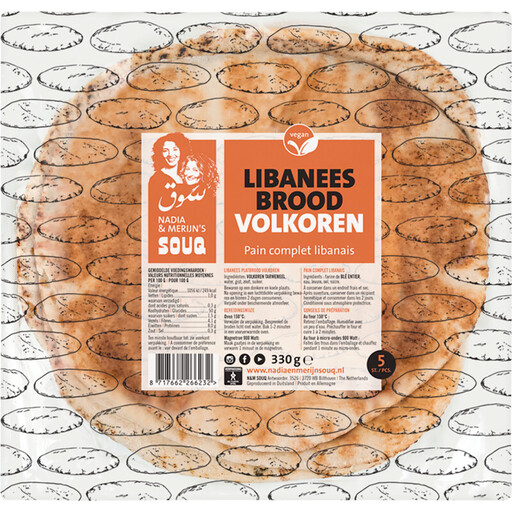 Image unavailable
This wholemeal flatbread offers a different option from sliced bread for a lunchbox.
The pack contains six pieces. Check the allergen information and storage instructions once opened.
 Image unavailable
If you’re looking for rye bread for lunch, you could consider this 500 g product.
Check the format before buying: the product title says ‘bun’, while the description refers to sliced rye bread. If you have an allergy, also check the latest packaging.
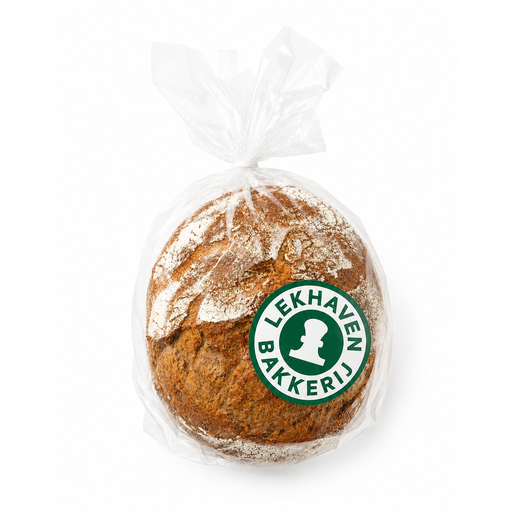 Image unavailable
This 550 g round wholemeal loaf is a good fit for lunches where you want to cut your own portions.
Before planning your child’s school lunch, check whether the bread needs to be defrosted and baked. Also read the latest allergen information.
Yes. For children without relevant dietary restrictions, the Netherlands Nutrition Centre recommends wholemeal and brown bread as suitable choices and highlights their fibre content. Choose a format and quantity your child will actually eat, too.
Don’t assume standard wholemeal bread is suitable: regular products may contain wheat, barley and other relevant allergens. Check the latest ingredients and warnings for the exact loaf, follow the individual advice for your child, and take the school’s arrangements into account.
Choose a smaller quantity or freeze a suitable loaf in portions according to the product instructions. Albert Heijn and PLUS say that specific wholemeal loaves can be frozen on the day of purchase; don’t assume this applies to another product without checking.
Check the ingredients list for the specific loaf to see whether baker’s salt is listed. The Netherlands Nutrition Centre discusses bread made with baker’s salt in its information about iodine; the type of bread alone won’t tell you which ingredients have been used.