
Smaller households
If you’re shopping for one or two people, buying rolls individually can help you avoid having an opened pack of four left over. If you’d still like to buy rolls ahead of time, first check how the packaging says to store them.


Buy bread rolls individually if you need them straight away for one or two people. A pack of four is a better fit for several planned snack times, as long as you decide in advance how to store any leftovers. If you’re also keeping an eye on fibre, compare the wholemeal information and nutrition values per 100 g; the word ‘multigrain’ alone doesn’t tell you enough.
If you’re shopping for one or two people, buying rolls individually can help you avoid having an opened pack of four left over. If you’d still like to buy rolls ahead of time, first check how the packaging says to store them.
A pack of four could work well if you want to serve the rolls on different occasions. Plan when you’ll prepare them and what you’ll do with any leftovers.
If you serve bread rolls regularly, compare the product descriptions, ingredients and fibre per 100 g. A rustic colour or the word ‘multigrain’ isn’t a substitute for checking.
First, work out how many rolls you’ll need for the occasions you have planned. Then compare the type of bread and preparation instructions for the pack you’re actually thinking of buying.
| What to consider | What to check before buying | Who it matters to |
|---|---|---|
| Quantity and leftovers | Count the people eating and the planned snack times. Compare individual rolls with packs of four, and read the storage advice. | For a snack with one or two people, I don’t want to open more rolls than we’ll use. An estimated 50% of consumers put quantity and potential leftovers first. |
| Type of bread and fibre | Check the wholemeal information, ingredients and fibre per 100 g; don’t judge a multigrain product by its name alone. | If bread rolls are served regularly, I want to compare different types by their ingredients and fibre content. This is the main priority for around 30% of consumers. |
| Preparation | Check whether the roll is ready to eat or needs baking. For bake-at-home rolls, follow the time and temperature on the pack you have. | For a warm snack, I want to know whether I’ll need extra time and a suitable appliance. An estimated 20% of consumers say preparation is their top priority. |
Four rolls won’t necessarily suit a small snack occasion. The Netherlands Nutrition Centre recommends keeping opened bake-at-home rolls in the fridge for 2–4 days or in the freezer for 1–3 months; freezing them for longer can make them drier.
Buy individual rolls if you’re going to eat them straight away, or decide before you buy when you’ll use all four and how to store them according to the label.
A multigrain roll contains different grains, but the name alone doesn’t mean that all the flour used is wholemeal. So you can’t reliably compare fibre based on the front of the pack.
Read the ingredients list and compare the fibre per 100 g of the products you’re considering.
According to the Netherlands Nutrition Centre, bakers aren’t required to use baker’s salt. The salt information can therefore vary from product to product.
If iodised salt is important to your choice, check the ingredients list for the specific bread roll.
Instructions vary between bake-at-home rolls. PLUS recommends 8–10 minutes in an oven at 220 °C for its white rolls, while Jumbo recommends 10–12 minutes at 200 °C for its white pack of four.
Follow the preparation instructions on the pack you’ve bought, even if you’ve prepared another brand or variety before.
These examples show where you can compare individual rolls or packaged bake-at-home varieties. Check the current product and label at the shop you choose.
An option if you’re looking for a single fresh white roll.
An option for comparing bake-at-home rolls in different varieties.
An option for packaged white and multigrain bake-at-home rolls.
An option for packs of four white or rustic multigrain rolls.
A place to shop for an individual white roll.
A place to shop for white rolls to bake at home.
This Joybuy selection contains four rolls in one pack. That quantity could work for several planned snack times; before buying, check how to prepare and store this specific product.
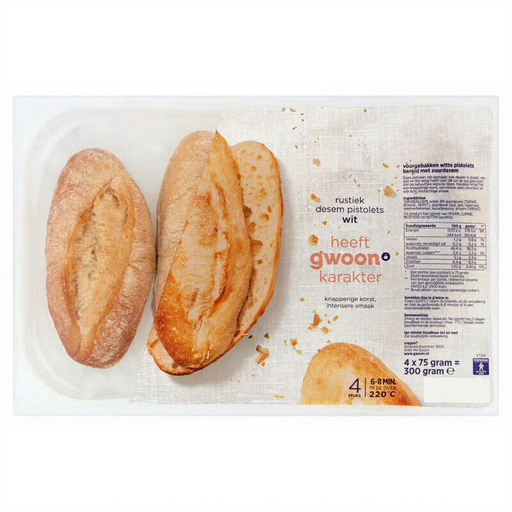 Image unavailable
This pack of four is suited to snack times when you’re planning to serve several rolls.
Check the packaging to see whether the rolls need baking and how to store any leftovers. Read the allergen information too if it’s relevant to anyone eating them.
Use ‘half a bread roll’ to describe the portion you want to serve, rather than assuming it’s a pack size. When you shop, compare the number of rolls sold individually or in a pack with the number of portions you need.
Plan when you’ll use the remaining rolls and follow the storage advice on the packaging. For opened bake-at-home rolls, the Netherlands Nutrition Centre recommends 2–4 days in the fridge or 1–3 months in the freezer; freezing them for longer can make the bread drier.
No. The word ‘multigrain’ alone doesn’t mean that all the flour is wholemeal. Read the product description and ingredients: for example, PLUS states that its multigrain rolls reviewed contain 56% wholemeal wheat flour.
If the allergen information isn’t displayed for an individual roll, ask for it before you buy. The Netherlands Food and Consumer Product Safety Authority says that allergen information must be available for non-prepacked products; for prepacked products, it appears on the label.
No. Don’t assume it does without checking the label. The Netherlands Nutrition Centre says that bakers aren’t required to use baker’s salt, so check the ingredients list for the specific product to see which type of salt it contains.