
Hosts planning a more substantial snack
For soup, fillings or a shared lunch, you could look beyond a white bread roll to sourdough, multigrain and spelt options. Choose ingredients that work with your fillings and suit your guests.


If you’re choosing a bread roll with grains, seeds or sourdough for an autumn half-term snack, pick an option with ingredients and allergens that suit your group. A freshly baked roll can be served straight away; if you’re buying a bake-at-home product, check how to prepare it and follow any storage instructions. If the type of salt used matters to you, check the ingredients list for each product separately.
For soup, fillings or a shared lunch, you could look beyond a white bread roll to sourdough, multigrain and spelt options. Choose ingredients that work with your fillings and suit your guests.
If you want to prepare the rolls just before eating, consider the baking time, the appliances you have available and the storage instructions. A frozen product needs a different plan from a roll that’s ready to serve.
The product name alone isn’t enough if you need to avoid allergens or have specific ingredient requirements. Check the current ingredients list and allergen information for each option, including any ‘may contain’ statements.
First, decide whether you want to serve the rolls straight away or bake them at home. Then compare the ingredients, allergens and nutritional information that matter for your snack.
| What to consider | What to check when buying | Who it matters most to |
|---|---|---|
| Type of bread and flavour | Check whether the roll contains sourdough, wholemeal flour, other grains or seeds, and whether those ingredients work with your fillings. | For a shared lunch, I want to choose a roll that suits the fillings and my guests’ preferences; around 37% of consumers prioritise flavour and presentation. |
| Preparation and storage | Check whether the roll is ready to serve or needs baking, and read the baking and storage instructions. | If I’m having people over, I want to know whether I can have the rolls ready in time; around 27% of consumers prioritise serving convenience. |
| Ingredients and allergens | Read the current ingredients list and check both the ‘contains’ and ‘may contain’ statements on the packaging. | If I’m catering for a guest who avoids certain ingredients, I don’t want to rely on the name of the bread; around 18% of consumers put checking ingredients and allergens first. |
| Fibre and salt used | Compare fibre per 100 g and check the ingredients list for baker’s salt or iodised salt. | When comparing rolls by their nutritional information, I want to be able to assess the fibre content and salt used in each product; this information matters most to around 18% of consumers. |
These terms don’t tell you whether a bread roll is gluten-free. The PLUS spelt and multigrain options discussed here contain grains with gluten.
If you need a gluten-free option, check that this is stated explicitly on the product and read the current allergen information. Don’t rely on the type of bread alone.
A name such as ‘sourdough’ or ‘artisan’ doesn’t tell you how much fibre a roll contains or what type of salt has been used. The Voedingscentrum explains that baker’s salt is iodised and contributes to iodine intake from bread.
Compare fibre values on the same basis, and read the ingredients list if you want to know whether baker’s salt or iodised salt has been used.
A bake-at-home product needs time and suitable equipment. The frozen multigrain sourdough roll described by PLUS also needs to be stored at −18 °C and must not be refrozen after defrosting.
Read the preparation and storage instructions before buying several packs for your snack.
A useful point of comparison for different types of bread rolls within one supermarket range.
A range where you can compare spelt and multigrain sourdough rolls with other bread rolls.
Worth considering if you also want to factor in the preparation and storage instructions for a specific product.
Choose between an individual bread roll and rolls from a range designed for baking at home.
An option if you want to bake white bread rolls at home.
For an autumn half-term snack with a white bread roll as the base, take a look at this pack of four. If you want to serve them warm, check the preparation instructions before buying.
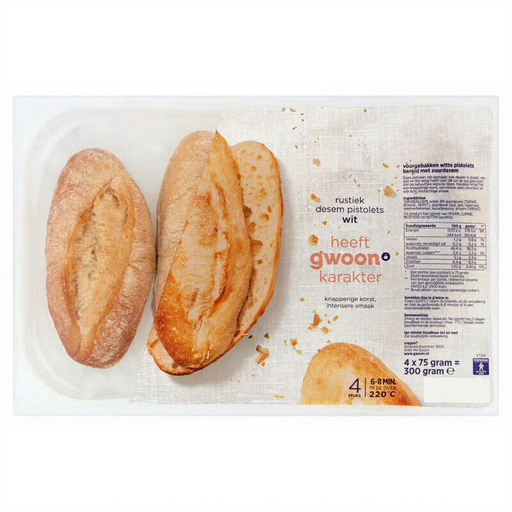 Image unavailable
A white bread roll for a filled snack. The pack contains 4 rolls.
If you want to serve the rolls warm or crispy, check the preparation instructions first. If you have specific ingredient or allergen requirements, check the current packaging too.
No. These terms don’t mean that a bread roll is gluten-free. The PLUS spelt and multigrain sourdough products discussed here contain grains with gluten. If you need a gluten-free option, always check that this is stated explicitly on the product and read the current allergen information.
Look for ‘baker’s salt’ or ‘iodised salt’ in the ingredients list. According to the Voedingscentrum, bread made with iodised baker’s salt contributes to iodine intake in the Netherlands. The type of bread or a distinctive product name won’t tell you which salt has been used in a specific roll.
Yes, if the product you choose is intended for baking at home and you follow the instructions on the packaging. PLUS says its sourdough spelt rolls take 6–8 minutes in the oven at 220 °C or 4 minutes in a preheated air fryer at 200 °C. Its frozen multigrain sourdough roll has separate storage instructions: keep at −18 °C and do not refreeze after defrosting.
A multigrain roll could suit your snack if you want the listed grains and seeds to be part of your bread choice, and they work with your fillings and guests. The name ‘multigrain’ doesn’t tell you enough about the fibre content or allergens. Compare the nutritional information per 100 g and check the current packaging for the products you’re considering.