
Buyer with limited space
If the available width or the space under a worktop is the main consideration, compare the exact model’s external dimensions, door clearance and installation requirements.


Use an existing freezer compartment first if it has room for your portions of bread rolls and can be set to the right temperature; an extra appliance takes up space and uses electricity. If that freezer space is consistently too small, measure the space where you plan to put it and your packaging, then compare compact models by layout, annual energy consumption and maintenance.
If the available width or the space under a worktop is the main consideration, compare the exact model’s external dimensions, door clearance and installation requirements.
If you regularly freeze several portions, it helps to have a layout that fits your packaging and makes it easy to find individual portions. So don’t look at capacity in litres alone.
Weigh the extra freezer space against the electricity used by a second appliance. Milieu Centraal points out that two refrigeration appliances use more energy together than one larger appliance.
First check whether an existing freezer compartment will do; then measure the space and your packaging before choosing a separate model.
Choose this if: there is enough room for the portions you want to store and you can set the temperature appropriately.
Bear in mind: the available capacity and the features of the existing compartment; according to the Voedingscentrum, freezers with one or two stars cannot be set to the recommended temperature.
Choose this if: your existing freezer space is not enough and you have a suitable place for a separate appliance.
Bear in mind: the space needed for the appliance, door and ventilation, as well as the electricity used by an additional refrigeration appliance.
Choose this if: you need a fridge anyway and a modest amount of freezer storage will be enough.
Bear in mind: the freezer compartment may have limited capacity. ETNA lists a 13-litre freezer compartment for model KVV856WIT; measure your packaging before choosing this option.
Choose this if: you regularly want to store larger quantities or awkwardly shaped items as well as bread rolls.
Bear in mind: the extra space needed for the appliance and to open it; that additional size may be unnecessary if you only need to store small portions of bread rolls.
| What to consider | What to look for | Who it matters most to |
|---|---|---|
| Space for the appliance | Measure the space, door clearance and bread roll packaging; follow the model’s placement and ventilation requirements. | If I have limited space, I want to make sure the appliance will fit and the door will open properly. Around 36% of consumers make available space their main priority. |
| Layout for portions | Compare the layout with the dimensions of your packaging; the capacity in litres doesn’t tell you whether it will fit in the compartments. | If I want to store and find portions separately, I look at the usable compartments and drawers. Around 29% of consumers prioritise the layout for portions. |
| Electricity use | For suitable models, compare annual consumption in kWh and freezer capacity on the EU energy label; the European Commission explains the information shown on the label. | If I’m considering extra freezer space, I also want to know how much electricity the appliance uses each year. Around 21% of consumers make electricity use their main priority. |
| Maintenance and noise | Check the defrosting system and stated noise level for each model; follow the manual for maintenance. | If I’m putting the freezer near a living area or want to minimise defrosting, I take these features into account. Around 14% of consumers prioritise maintenance or noise. |
An extra appliance may be unnecessary if your bread rolls already fit in a suitable existing freezer compartment. Milieu Centraal points out that two refrigeration appliances use more energy together than one larger appliance.
First check how much room there is for your portions and whether you can set the temperature appropriately. Only then compare separate appliances.
An extra appliance also takes up space and uses electricity over time.
The capacity doesn’t tell you whether your bread roll packaging will fit in a drawer or whether the door will open properly in the space you’ve chosen.
Measure the packaging and the space where you plan to put the appliance, and check the layout and installation requirements for the exact model.
As well as the energy rating, the EU energy label shows annual electricity consumption and capacity. The European Commission lists these as separate pieces of information on the label.
For models that offer enough usable space without providing more than you need, compare the stated kWh per year.
Defrosting systems vary between models. The Consumentenbond explains that ice can build up in models without NoFrost, meaning they may need defrosting and cleaning.
Before you buy, check whether the model has NoFrost and follow the manual for maintenance.
A model without NoFrost takes time to defrost and clean.
According to Beko, the FS166020 is a narrow freestanding under-counter model for spaces with limited width.
According to Tomado, the TFT4702W is a compact freezer with three compartments.
The VR550 is an under-counter model with three drawers and a reversible door.
The GTV15NWEB is an under-counter model with three drawers and a SuperFreezing function.
According to Liebherr, the FNe 1404 Pure is an under-counter model with NoFrost.
These compact, freestanding freezers provide extra freezer space; for portions of bread rolls, pay particular attention to the dimensions, layout and maintenance requirements of the exact model.
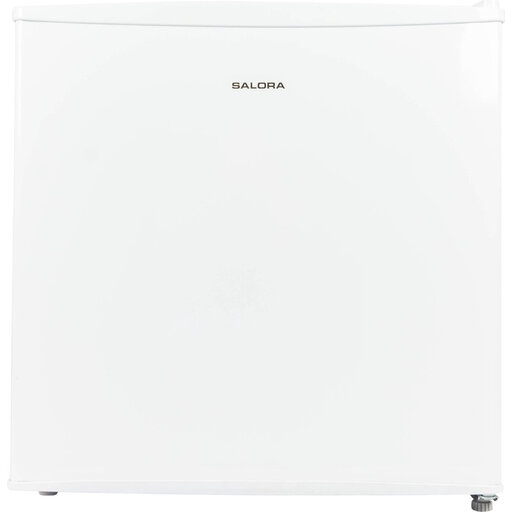 No image available
A compact freestanding under-counter freezer that gives you extra space for small portions.
The description lists a capacity of 31 litres, two compartments and a freezing capacity of 2 kg per 24 hours. The product name lists an A+ energy rating.
 No image available
An under-counter model for anyone looking for extra freezer space and considering NoFrost.
The description lists a capacity of 87 litres, NoFrost and a freezing capacity of 5 kg per 24 hours. With one compartment, there are fewer separate sections for organising portions.
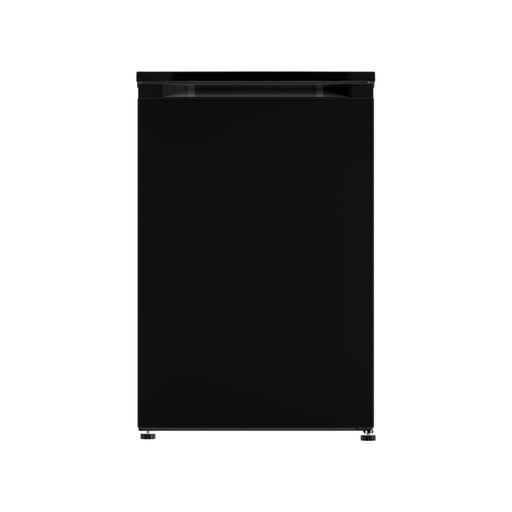 No image available
An under-counter model with separate drawers for anyone who wants to store portions of bread rolls separately.
The description lists three transparent drawers, 105 kWh per year and a freezing capacity of 4,5 kg per 24 hours. Manual defrosting is required; the product name lists energy class C.
 No image available
An under-counter model with several drawers for anyone who wants to store portions separately.
The description lists three transparent drawers, 84 kWh per year and a freezing capacity of 4,4 kg per 24 hours. It does not have NoFrost; the product name lists energy class B.
 No image available
A compact under-counter model for anyone with a narrow space who wants to store portions in separate compartments.
The description lists a width of 472 mm, three compartments and a freezing capacity of 6 kg per 24 hours. The door is reversible; it does not have NoFrost.
The Voedingscentrum recommends setting your freezer to −18 °C or colder. For an opened soft white bread roll, the Bewaarwijzer recommends 1–3 months; after that, the quality may deteriorate. For other types of bread roll or filled rolls, check the relevant storage advice, and follow the packaging instructions for sealed packs.
No. Check the installation requirements for the exact model. Measure the available space and allow for door clearance and ventilation; a removable top, as listed by Inventum for the VR550, does not remove the need to check.
It depends on the model. Liebherr lists NoFrost for the FNe 1404 Pure, while Bosch does not list NoFrost for the GTV15NWEB. Check the specifications and follow the manual for maintenance.
Not if your existing freezer compartment has enough room and can be set to the right temperature. If your portions don’t fit properly, first measure the available space and compare compact models with the dimensions and layout of your packaging.
For models with enough usable freezer space, compare both the energy rating and annual consumption in kWh. The European Commission also lists the capacity on the EU energy label.