
Workshop host serving individual portions
You reheat bread pudding for each participant and want to check every portion before serving. The Netherlands Nutrition Centre recommends reheating leftovers until they are piping hot all the way through.


If you only want to reheat individual portions of bread pudding, a solo microwave will do the job. Choose a model with a grill or oven function if you also want to demonstrate browning or baking. These extra functions require suitable cookware and more settings, while a turntable alone won’t eliminate cold spots. The Netherlands Nutrition Centre recommends checking the pudding during heating and making sure it is piping hot all the way through.
You reheat bread pudding for each participant and want to check every portion before serving. The Netherlands Nutrition Centre recommends reheating leftovers until they are piping hot all the way through.
You also want to show a browned top after reheating. Inventum and Whirlpool describe models with grill or finishing functions; check which function and cooking method apply to each model.
You need to fit the appliance between other workstations and use it repeatedly. Compare the dimensions of both the appliance and your dish; manufacturers such as Inventum, Severin and Tomado describe models with rotary controls.
Choose this type: if you mainly reheat individual portions and don’t need a browned top.
Bear in mind: a solo model doesn’t have a separate grill or oven function.
Choose this type: if browning is part of your demonstration.
Bear in mind: check which dish or tray the manufacturer recommends and whether it’s included.
Choose this type: if you also want to bake or use an oven setting during the workshop.
Bear in mind: compare the internal dimensions, space needed and controls against the dish you plan to use.
For a cookery workshop, your choice mainly depends on the finish you want to demonstrate, the dish you’ll use and how much space you have.
| What to consider | What to look for | Who might prioritise this |
|---|---|---|
| Even heating | Check the time and power during heating; a turntable doesn’t replace these checks. | If I’m serving portions one at a time, I want to check for cold spots; around 33% of consumers prioritise safe, even reheating. |
| Browning and texture | Decide whether browning is important and check the functions and recommended accessories for the exact model. | If I also want to show a browned top, the finish matters; around 27% of consumers prioritise texture and browning. |
| Dish size and serving capacity | Measure your dish and compare it with the internal space, door opening and turntable. | If I’m planning several portions for participants, I want to know how many will fit in each batch; around 20% of consumers prioritise dish fit and serving capacity. |
| Worktop space and controls | Compare the external dimensions with the space available and check how to set the time and power. | If I’m using the appliance repeatedly during a workshop, I want it to be easy to position and set; around 20% of consumers prioritise worktop space and controls. |
Cold spots can remain even when there’s a turntable. The Netherlands Nutrition Centre recommends stirring thoroughly during heating and making sure the portion is piping hot all the way through.
Heat manageable portions, check them during heating and make sure the pudding is hot throughout before serving.
A solo microwave reheats food, but doesn’t have a separate grill or oven function to finish the top.
Before you buy, decide whether reheating alone is enough or whether browning is part of the workshop.
If you later decide you want to demonstrate a browned top, you may need a separate oven as well as a solo microwave.
The stated capacity doesn’t tell you whether your workshop dish will fit inside. Severin lists both 17 and 19 litres on the same product page for the MW 7886.
Before you choose, compare your dish with the internal dimensions and turntable of the exact model.
A container that’s suitable for storing food isn’t necessarily suitable for heating it. The Netherlands Food and Consumer Product Safety Authority did not assess microwave use in the cited study on reused plastic food packaging.
Check the container’s label and instructions, or use tableware that the manufacturer says is microwave-safe.
Inventum describes both solo microwaves and a combination microwave with microwave, grill and oven functions.
The MW 7886 is a solo model with a rotary control and defrost function.
The TMS2003W is a solo option with two rotary controls for reheating individual portions.
The MCP 349 SL combines reheating with grill, crisp and oven functions, making it an option for workshops that also cover finishing techniques.
The MS20A3010AL/EN is a solo model with rotary controls for anyone who doesn’t need an oven function.
This selection of Joybuy products includes solo microwaves, a microwave with a grill and combination microwaves with grill and convection functions. Check that the specific appliance carries the required CE marking; a product description alone doesn’t confirm that the individual item has one.
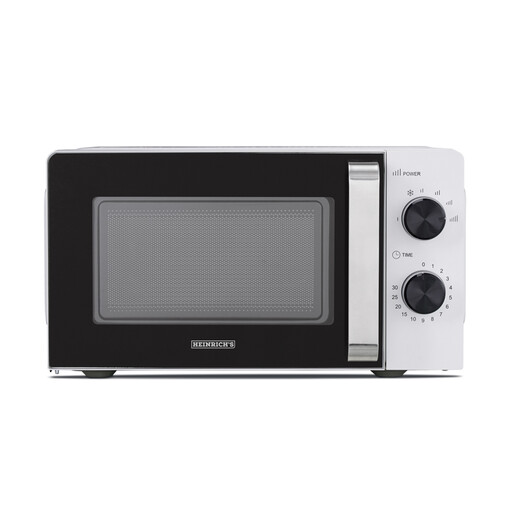 No image available
A solo option for reheating individual portions.
According to the product name: six power settings, a 30-minute timer, defrost function and 360° turntable.
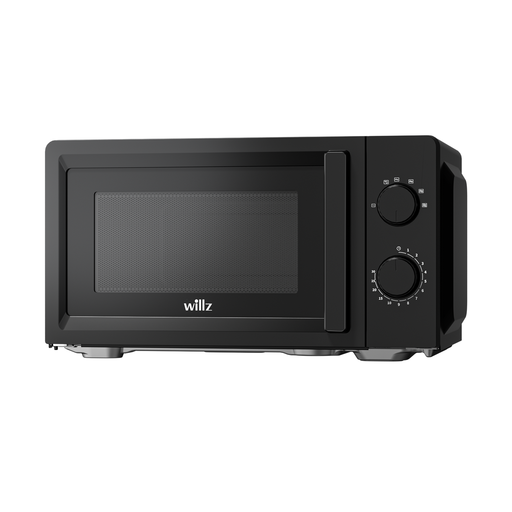 No image available
An option to compare if you have limited worktop space.
The product name describes a compact, square design with a capacity of 20 litres.
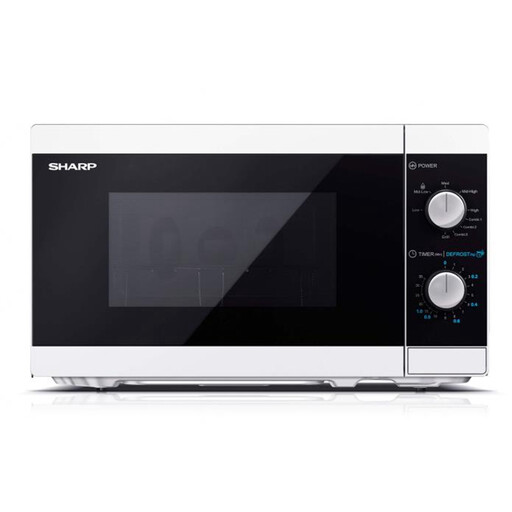 No image available
A model to compare if you want a grill function as well as reheating.
The product name lists a capacity of 20 litres, 800 W and a grill.
 No image available
A combination microwave to compare if your workshop also includes grilling or convection cooking.
The product name lists a capacity of 25 litres and a silver finish.
 No image available
A combination microwave to compare if you want to do more than just reheat during your workshop.
The product name lists a capacity of 20 litres, with grill and convection functions.
No, you can reheat it in smaller portions. The Netherlands Nutrition Centre recommends stirring leftovers thoroughly and heating them until piping hot all the way through; even with a turntable, check for cold spots during heating.
Use microwave-safe tableware, such as glass, glazed earthenware or porcelain, as recommended by the Netherlands Nutrition Centre. A reused plastic container that’s suitable for storing food isn’t necessarily suitable for heating it; check the container’s label and the manufacturer’s instructions.
Check portions during heating and stir them thoroughly where appropriate for the dish. The Netherlands Nutrition Centre recommends heating leftovers until piping hot all the way through; a turntable alone isn’t a substitute for checking.
Follow the manual for your chosen model and remove food residue regularly. Tomado’s manual for the TMS2003W includes cleaning instructions for that model; for other appliances, use the relevant manual.
New electrical appliances placed on the EU market must meet the applicable safety requirements and carry a CE marking; the Dutch government and the European Commission explain these requirements. The Netherlands Food and Consumer Product Safety Authority says that businesses selling food to consumers several times a year must register and have a food safety plan or hygiene code. Whether this applies to your workshop depends on how you organise and sell it.