For whole loaves and overhead compositions, a camera with a suitable zoom lens is a practical choice. For close-ups of crust and crumb, the magnification of the lens you choose is what matters most. Check what’s included in the kit, the lens mount and whether you have room to light close-ups. A tripod can allow you to use slower shutter speeds when photographing stationary loaves, but window light still depends on factors such as the time of day and the weather.
Who is this buying guide for?
For close-ups of crust and crumb
You want to capture tiny textures in great detail, so look at lens magnification, focusing distance and space for lighting. Fujifilm and Nikon both describe dedicated macro lenses for this type of close-up photography.
For bakers photographing whole loaves
You mainly photograph a loaf on a table or an overhead arrangement. A field of view that suits your workspace may be more important than maximum macro magnification. Canon UK covers both types of food photography in its photography tips.
For home photographers working with changing window light
You photograph stationary loaves and want to manage camera movement and changing daylight. Canon UK explains how a tripod allows you to use slower shutter speeds, and how window light changes with factors such as the time of day and the weather.
What should you look for when choosing?
First decide whether you mainly want to photograph a whole loaf or capture small details. Then consider the lens and your set-up: the camera body alone doesn’t determine how much magnification you’ll get.
| What to consider |
What should you check? |
Who is this most relevant to? |
| Crust and crumb details |
Compare lens magnification, focusing distance, mount and included lens. Fujifilm specifies 1× magnification for the XF30mmF2.8 Macro; Canon specifies a maximum of 0.26× for the RF-S 18-45mm at 45 mm with manual focusing. |
If you want to show the texture of crust or crumb in close-up, prioritise lens magnification and room for side lighting; around 36% of consumers make fine details their top purchase priority. |
| Whole loaves and composition |
Check the zoom range of the exact lens and whether you can frame the entire set-up from the distance available. According to Canon, the Canon RF-S 18-45mm has a range of 18–45 mm on APS-C. |
If you want to show a whole loaf and the table arrangement, look for a field of view that suits your workspace; around 29% of consumers prioritise the whole loaf and composition. |
| Sharpness in window light |
Consider where the light is coming from and whether you can position the camera steadily beside or above the table. A tripod can allow you to use slower shutter speeds when photographing stationary bread. |
If you want sharp photos in changing light at home, look for a stable, repeatable set-up; around 21% of consumers give light and sharpness top priority. |
| Photos and video |
Decide whether you’ll also film the baking process, and check the features of the exact camera body. Assess these separately from the lens you need for bread close-ups. |
If you want to film the baking process as well as take finished photos, look for an easy way to do both; around 14% of consumers give photography and video use top priority. |
Common mistakes when choosing
-
Assuming a camera body or standard zoom is a complete macro kit
Magnification depends on the lens you choose. A macro lens isn’t automatically included with a body or standard kit.
Check exactly what’s included in the kit, then compare the lens mount and maximum magnification with the details you want to photograph.
A separate, compatible macro lens may be an extra part of your set-up.
-
Comparing only megapixels or stabilisation
When photographing stationary bread, camera movement and changing window light also play a part. A stabilisation specification alone doesn’t tell you how every lens and shooting set-up will perform.
First assess the lens and shooting location. Then check whether you can set up the camera securely and control the light.
-
Confusing focusing distance with the working space in front of the lens
Nikon states that the NIKKOR Z MC 50mm f/2.8 has around 5 cm of space in front of the lens at its minimum focusing distance. This can limit where you place the light for a close-up.
At the magnification you want, check that there’s enough room around the bread and lens to light your subject.
Camera brands to consider
Canon
The EOS R50 is an APS-C mirrorless camera body with RF and RF-S support. Your choice of lens determines whether you can best capture a whole loaf or small details.
- Canon specifies 24.2 effective megapixels for the EOS R50.
- Canon doesn’t specify in-body sensor-shift stabilisation for this camera body. The 0.5× magnification applies to the separate RF 35mm F1.8 Macro, not to the body or every kit.
Fujifilm
The X-S20 is a mirrorless camera option for anyone taking photos and possibly video; the separate XF30mmF2.8 R LM WR Macro is designed for close-ups of small details.
- Fujifilm specifies 26.1 megapixels and built-in five-axis stabilisation for the X-S20. For the XF30mm macro lens mentioned, Fujifilm specifies 1× magnification.
- The macro lens is a separate model, so check the mount and what’s included in the kit you choose.
Nikon
The Z50II is a Z-system camera body. The separate NIKKOR Z MC 50mm f/2.8 is a macro lens for close-ups of small details in bread.
- Nikon lists a tilting screen for the Z50II and a 1:1 macro reproduction ratio for the lens mentioned.
- Nikon states that there’s around 5 cm of space in front of the lens at its minimum focusing distance. Bear this in mind when positioning your light.
Sony
The α6700 is an APS-C camera with an E-mount. Choose a lens separately to suit the bread photos you want to take.
- Sony specifies approximately 26.0 effective megapixels for photos, RAW recording and built-in five-axis stabilisation for the ILCE-6700.
- These camera body specifications don’t determine whether any lens included in the kit is suitable for close-ups of crust and crumb.
Cameras at Joybuy
Below are cameras whose product titles mention photography or video. For bread photography, check that the camera you choose can focus at the distance you want and that the included accessories suit your set-up.
 No image available
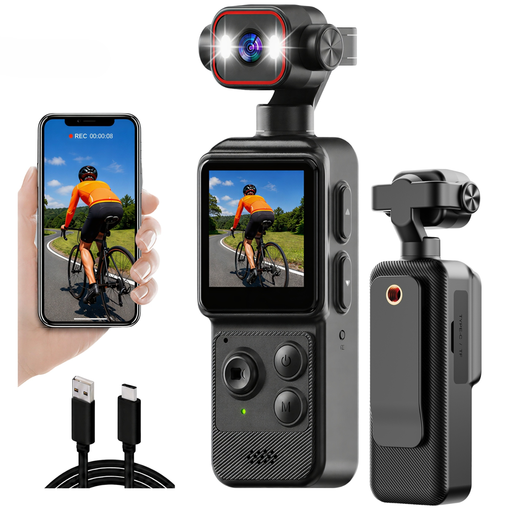
4K mini action camera with clip and 140° wide-angle lens
The stated field of view may be useful for a wide shot of the table and loaf; check that it suits the composition you want.
The product title lists a 1.54-inch screen, app control, LED light and a 1,200 mAh battery.
Joybuy
 No image available
DJI Osmo Pocket 4 Standard Combo
If you want to shoot video as well as take photos, check that the focusing distance and included accessories suit your bread photography set-up.
The product title lists a 1-inch CMOS sensor, 4K/240fps, 3-axis stabilisation, 2× zoom, 107 GB of built-in storage and a 2-inch rotatable screen.
Joybuy
 No image available
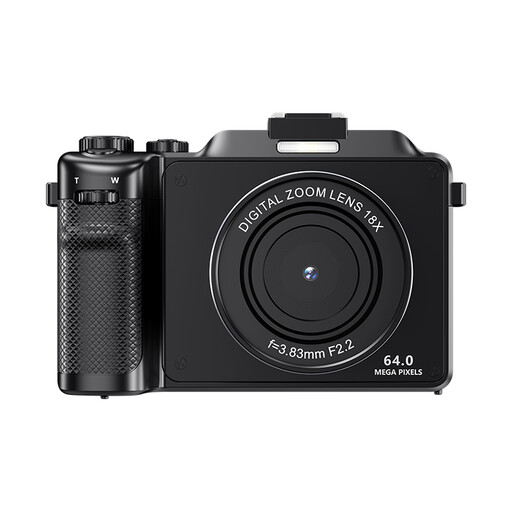
Komery X9 4K 64 MP camera with autofocus
For close-ups of crust and crumb, check the focusing distance and lens capabilities of the camera you choose.
The product title lists 18× digital zoom. The product description warns that digital zoom can reduce image quality.
Joybuy
 No image available
Komery W6 4K camera with 12× optical zoom
The stated optical zoom may be useful if you want to adjust the framing; also check whether the camera can focus at the distance you need.
The product title lists Wi-Fi and 64 MP.
Joybuy
 No image available
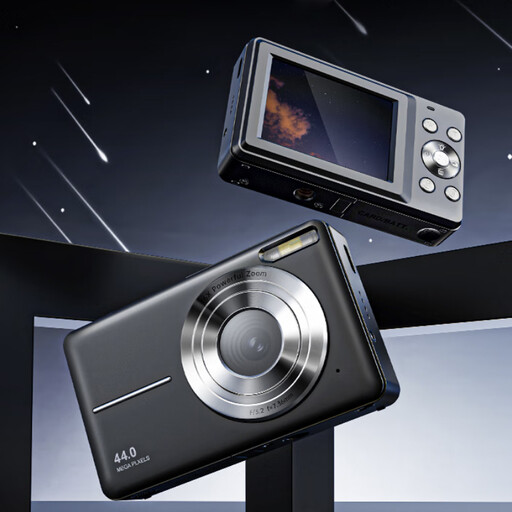
Songdian 4K 44 MP compact camera
For bread photography, focusing distance and the framing you want are important points to check.
The product title lists photo and video recording and 16× zoom.
Joybuy
Frequently asked questions
Do I need a macro lens for every bread photo?
No. For a whole loaf, choose a lens that lets you fit the composition you want into the space available. If you want to capture small details in the crust or crumb, compare the maximum magnification of the exact lens. A camera body doesn’t have a fixed macro magnification of its own.
How can I photograph bread in window light without using an unnecessarily high ISO?
When photographing stationary bread, a tripod can allow you to use slower shutter speeds and a lower ISO. Reassess the window light when the time of day or weather changes, and find a stable position beside or above the table. Canon UK describes this approach as a photography tip.
What should I check about a camera kit and its warranty?
Check that the kit includes the lens you want and that it fits the camera mount. According to the Netherlands Authority for Consumers and Markets (ACM), the seller is responsible for the statutory guarantee if a product is faulty; any manufacturer’s guarantee is separate.
Can I return a camera bought online in the Netherlands?
For online consumer purchases, you’re generally entitled to a 14-day cooling-off period after delivery. Check the terms and any exceptions that apply to your specific purchase. This right is separate from the statutory guarantee for faulty goods; the ACM’s ConsuWijzer service explains the cooling-off period.


