
Festive baker catering for a crowd
Wants to plan the number of dough batches and available oven space before the big day. Focus on the amount of dough your recipe makes per batch, not just the stated loaf weight.


Start with a bread maker that has a suitable dough or kneading programme, then work out how many recipe batches you’ll need. The stated loaf weight doesn’t automatically tell you how much dough the machine can handle. For individual rolls, take the dough out of the machine to shape and bake them. Check the dough limit and specification for the exact model, and make sure the appliance on offer carries a CE mark.
Wants to plan the number of dough batches and available oven space before the big day. Focus on the amount of dough your recipe makes per batch, not just the stated loaf weight.
Wants the machine to do the kneading or proving, but plans to shape the rolls by hand and bake them in the oven.
Wants to fit the dough-making steps around other festive preparations, so is looking for dough programmes and flexible settings.
Start with your roll recipe and the number of portions you want to make. Then check that the machine’s settings suit the dough-making steps you need.
| What to consider | What to look for | Who should consider this? |
|---|---|---|
| Dough per batch | Compare the ingredient quantities in your recipe with the instructions for the exact model. Don’t use the weight of a baked loaf to estimate the dough limit. | If you want to make enough dough for a crowd, focus on the amount the machine can handle per batch. Around 36% of consumers put batch capacity first. |
| Dough for individual rolls | Check whether the model has a dough programme or suitable separate kneading and proving settings. Plan to shape and bake the rolls separately. | If you want to shape individual rolls and bake them in the oven yourself, look for a suitable dough programme. Around 29% of consumers prioritise this option. |
| Festive planning | Check the programme time and the manual steps involved in your recipe. A timer doesn’t automatically mean shaped rolls will be ready when you want to serve them. | If you want to fit dough-making around other festive preparations, focus on the timing of each step. Around 21% of consumers put this planning first. |
| Care and servicing | Check the cleaning instructions and whether spare parts are available for the exact model. Compare any extra warranty with your rights as a customer of the seller. | If you want a machine that’s easy to maintain and help is available if it develops a fault, focus on spare parts and servicing. Around 14% of consumers make this their main buying concern. |
A manufacturer may state the size of the baked loaf, while listing the maximum ingredient quantity for dough separately. A recipe that exceeds the model’s limit may therefore be unsuitable.
Work out your portions using a recipe that fits within the instructions for the exact model.
A dough programme won’t shape rolls for you. You’ll usually need to take the dough out of the machine and divide and shape it yourself.
Allow time and oven space for shaping, any further proving and baking.
These steps and use of the oven come in addition to the time the machine takes.
A retailer listing with an abbreviated model code doesn’t automatically confirm that it’s the same version as a model with a full code.
Compare the full model code and relevant features before applying product information to a different version.
The BM125 is worth considering if you’re looking for a bread maker with a dough setting and a large baking tin.
The Dutch SD-YR2550 range may suit you if you want to set kneading and proving separately.
The Pain & Délice PF240E38 is a version worth considering if you’re looking for a yeast dough setting.
The 152009 is worth considering if you want to compare separate kneading or proving settings.
The BA 550 is worth a look if you want a kneading programme and a freely programmable setting.
These bread makers are options to compare if you plan to shape the dough yourself later and bake it in the oven as rolls. Check the dough limit and CE mark for each version of the appliance on offer.
 No image available
An option to compare if you’re looking for a machine to make dough that you can shape and bake yourself later.
The product title lists 12 programmes and a capacity of 1 L.
 No image available
The dough-making function described may suit rolls that you plan to shape yourself and bake in the oven.
The product description lists 16 automatic programmes and preparation settings for bread and dough.
 No image available
The dough-making function described may suit a plan where you take the dough out of the machine to shape it into rolls.
The product description lists 20 automatic programmes, dough preparation and an automatic dispenser.
 No image available
The dough-making function listed may suit rolls that you shape and bake yourself once the machine has finished.
The product description mentions a delayed start and keep-warm function; the product title lists 12 programmes.
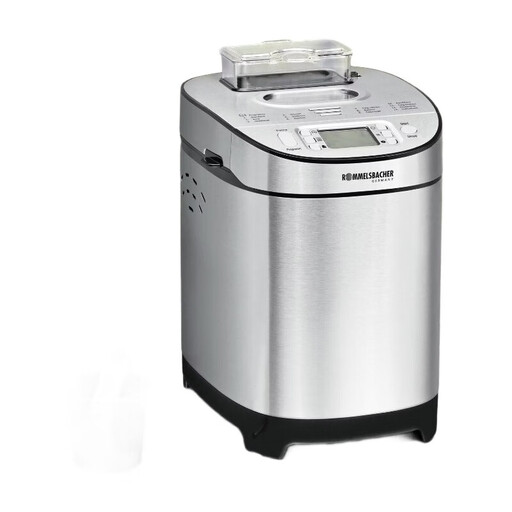 No image available
The kneading programme may suit you if you want to shape the dough yourself and bake it in the oven.
Rommelsbacher specifies a maximum of 500 g of flour for yeast dough. Check that this quantity suits your recipe and plan several batches if needed.
Don’t count on it: a dough programme makes the dough, but won’t automatically shape and bake individual rolls. Take the dough out of the machine and plan to shape it, allow it to prove further if needed, and bake it separately.
The loaf size alone doesn’t tell you that. Inventum lists 1200 grams as a loaf size for the BM125; check the manual for the ingredient quantity allowed on the dough setting and for your recipe. For another model, the Rommelsbacher BA 550, the manufacturer separately specifies a maximum of 500 g of flour for yeast dough.
The Netherlands Nutrition Centre advises against tasting raw bread dough, as flour can also contain harmful bacteria and young children are particularly vulnerable. Wash your hands before and after handling the dough, and bake it thoroughly.
Before buying, check whether spare parts are available for the exact model; Inventum, for example, publishes part numbers for the BM125. According to the Dutch government, if a product is faulty, the seller is your point of contact for your statutory guarantee rights. In the Netherlands, there is no fixed statutory guarantee period.
According to the Netherlands Food and Consumer Product Safety Authority, electrical products must carry a CE mark. Check the mark and the identity of the model on offer. A CE logo isn’t an independent performance test and doesn’t by itself confirm that a specific appliance on offer has been inspected.