
Workshop leader who wants to demonstrate adding ingredients
You’re looking for a clear moment to add seeds to the dough together with participants. An add-in signal can help; Inventum lists one for certain BM55 programmes.


If you want to show participants when seeds go into the dough during the workshop, choose a machine that lets you add them yourself after a signal. If you’d rather keep your hands free at that point, compare models with an automatic ingredient dispenser and check that it’s suitable for your seeds and recipe. In either case, match the loaf size and programme duration to the session. A gluten-free programme does not make a recipe containing gluten or one involving cross-contamination safe for someone with an allergy or coeliac disease.
You’re looking for a clear moment to add seeds to the dough together with participants. An add-in signal can help; Inventum lists one for certain BM55 programmes.
You want to help participants while the machine adds the ingredients. So compare an automatic dispenser with adding them yourself; Panasonic lists a raisin/nut dispenser for the SD-R2530.
You’re matching the loaf size to the group and taking ingredients and cleaning into account. If you serve unpackaged bread to consumers, information about allergens present is also relevant; the NVWA has specific information requirements for this.
Suitable if: adding seeds is a visible part of the lesson and someone can respond to the signal.
Worth noting: you need to be there at the right moment; the signal is only available on certain programmes.
Suitable if: the leader wants to help other participants while the dough is kneading, rather than adding ingredients themselves.
Worth noting: check whether your type and quantity of seeds are suitable for the dispenser on the exact model.
Suitable if: the workshop includes kneading and proving, but the bread doesn’t need to be baked during the session.
Worth noting: you’ll need a separate baking step to finish the loaf; factor it into the recipe.
| What to consider | What to look for when buying | Which consumers will find this important? |
|---|---|---|
| Seeds as part of the lesson | Check whether, and when, the selected programme gives an add-in signal. For the BM55, Inventum advises that added ingredients should not be too large or sharp. | If I want participants to add the seeds themselves, I need to be able to guide them at the right moment. Around 33% of consumers prioritise this part of the lesson. |
| Automatic ingredient dispensing | Check whether the exact model has a dispenser and whether the manual allows your ingredients and programme. Panasonic lists a raisin/nut dispenser for the SD-R2530. | If I want to help other participants while the dough is kneading, I don’t want to have to stand by the machine to add ingredients myself. Around 27% of consumers prioritise automatic dispensing. |
| Loaf size and planning | Compare the stated loaf weight with the size of the group and check how long the selected recipe takes. Inventum lists 650 and 800 gram loaf sizes for the BM55; Princess lists 680 to 900 grams for the 152009. | If I want people to taste the bread, the loaf size needs to suit the group and the baking cycle needs to fit the schedule. Around 20% of consumers prioritise loaf size and timing. |
| Cleaning and allergens | Check the cleaning instructions and make a note of the grains, seeds and any nuts you’ll be using. If you serve unpackaged bread to consumers, NVWA information requirements apply to allergens present. | If participants are tasting the bread, I want to organise the ingredients and cleaning carefully, especially where allergens are involved. Around 20% of consumers prioritise cleaning and allergen management. |
A signal still means someone has to add the ingredients at the right time. A dispenser takes care of that step for you; they’re two different ways of working.
Decide whether adding the ingredients is part of the lesson or whether the leader would rather be doing something else at that point. Then check the features and programme instructions for the exact model.
A cycle that only kneads or proves the dough won’t automatically produce a baked loaf. Princess lists separate kneading and proving cycles for the 152009.
Compare the recipe steps with the workshop schedule and decide whether the bread needs to be baked during the session. A separate dough programme will need to be followed by a separate baking step.
A programme name alone tells you nothing about the ingredients or contact with residue from previous bakes. This matters if someone has an allergy or coeliac disease.
Check the ingredients and cleaning requirements separately. If you serve unpackaged bread to consumers, follow the applicable NVWA rules for allergen information; you must specify which gluten-containing cereals and nuts are present.
The BM55 could be a good fit if you want to demonstrate adding seeds during the workshop.
The SD-R2530 is worth comparing if automatic dispensing or separate kneading and proving settings are important to you.
The 152009 may be worth considering if you want to compare loaf sizes and separate dough stages.
The Pain & Délice PF240E is worth considering if you’d like to use the machine for other preparations too.
These bread makers give you useful points of comparison for loaf size, programme options and, where specified, automatic dispensing for your workshop. Always check the manual for the exact model to make sure it’s suitable for your seeds and recipe.
 No image available
An option to consider if you want to match the loaf size to the group tasting the bread during the workshop.
Tefal lists loaf sizes of 500, 750 and 1,000 grams, and 12 programmes.
 No image available
An option to consider if you need a larger loaf for the workshop.
The product information lists loaf weights from 750 grams to 1.5 kg, 16 automatic programmes and 1600W.
 No image available
An option if you don’t want to add ingredients yourself while the dough is kneading; check that your seeds are suitable for the dispenser.
The product information lists 20 programmes and an automatic dispenser for yeast and ingredients such as raisins, nuts and chocolate chips.
 No image available
An option if you want to make both bread and dough in the machine for your workshop.
The product information lists a maximum loaf weight of 1 kg and 12 programmes. A timer and keep-warm function are also mentioned.
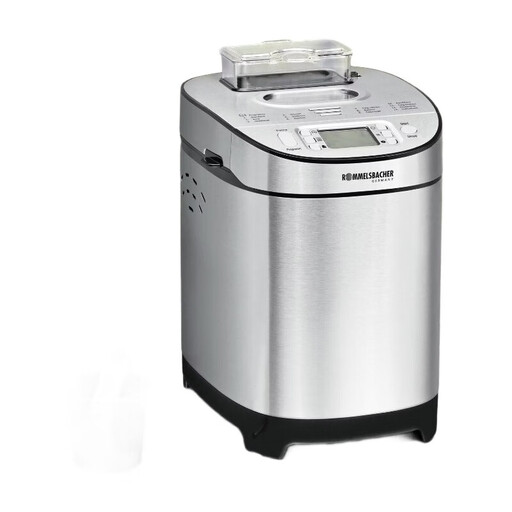 No image available
An option to weigh up loaf size and automatic dispensing for your workshop.
The product information lists loaf sizes of 700 and 900 grams and an automatic dispensing module.
It varies by model and programme. For certain BM55 programmes, Inventum lists an audible signal during kneading; follow the manual for your recipe and don’t use ingredients that are too large or sharp.
No, not if the aim is to make the dough and bake the bread later. Princess lists separate kneading and proving cycles for the 152009. If you want to taste the bread during the session, check in advance that the full programme fits your schedule.
Follow the cleaning instructions for the exact model. Princess lists a removable bread pan for the 152009; Inventum provides a manual for the BM55. Check which parts, such as the bread pan and kneading paddle, are available for your version.
No. According to ACM ConsuWijzer, the legal guarantee depends on what you could reasonably expect from the product with normal use. If a purchase develops a fault sooner than expected, contact the seller to find a solution; any manufacturer’s guarantee is separate.
If you serve unpackaged bread to consumers, the NVWA says you must provide information about allergens present. You must specify which gluten-containing cereals and nuts are included. The requirements that apply to your situation also depend on how you prepare and serve the bread; a private session isn’t necessarily the same as serving food to consumers.