
Home baker who makes wholemeal bread
You want to choose the flour yourself and are looking for a machine with a clearly specified wholemeal programme. Check the recipe too: a programme name won’t automatically make a loaf 100% wholemeal.


Choose a bread maker with a clearly specified wholemeal programme and a loaf size that suits what you use or can store. Then check that the appliance can be positioned safely on the shared worktop, and that its timer, cleaning requirements and housemates’ arrangements work for your situation. The programme doesn’t determine which flour you use.
You want to choose the flour yourself and are looking for a machine with a clearly specified wholemeal programme. Check the recipe too: a programme name won’t automatically make a loaf 100% wholemeal.
You share the worktop and need a loaf size that suits your needs, as well as a spot where the machine can stand securely and dissipate heat.
You want to agree baking times with your housemates and leave the machine clean after use. A timer, a removable bread pan and clear arrangements for using it may all be worth considering.
Start with the wholemeal programme and the smallest loaf size. Then consider whether the machine is practical and safe to use on a shared worktop.
| What to consider | What should you check? | Who is this most relevant to? |
|---|---|---|
| Wholemeal programme and flour | Check whether the exact model variant has a wholemeal programme, and use a recipe made with 100% wholemeal flour. The Dutch Nutrition Centre defines wholemeal bread as bread made with 100% wholemeal flour. | I want to bake fully wholemeal bread myself, so I pay attention to both the flour and the setting. Around 33% of consumers rank wholemeal baking as their top priority. |
| Portion size and workspace | Compare the smallest loaf size with how much you use, measure the space available and follow the machine’s positioning instructions. | If I share the worktop, I want to bake a portion that suits how much we use and still have room for the machine. Around 27% of consumers prioritise portion size and workspace. |
| Baking times and noise | Check the timer on the exact model variant and agree when the machine can be used. A timer doesn’t tell you how audible the kneading will be. | I want to fit baking around my housemates’ schedules and avoid disturbing them. Around 20% of consumers rank planning as their top priority. |
| Clean and safe shared use | Read the instructions for positioning, connecting and cleaning the machine. If someone has coeliac disease, discuss separately how shared equipment should be cleaned. The Fire Service advises that appliances need room to dissipate heat. | If several people use the machine, I want to know how to leave the bread pan clean and where the appliance can be positioned safely. Around 20% of consumers prioritise clean and safe use. |
Brown bread can be made with a mixture of wholemeal flour and white flour. A wholemeal programme won’t change the ingredients in your recipe.
Check the ingredients and choose a recipe made with 100% wholemeal flour if that’s what you’re looking for. The Dutch Nutrition Centre defines wholemeal bread as bread made with 100% wholemeal flour.
A large maximum loaf size doesn’t tell you whether the smallest loaf suits what you use at home, or whether the machine will fit on the shared worktop.
Compare the smallest loaf size with how much you use, and measure the available workspace before choosing a model.
A delayed start won’t automatically fit baking around your housemates, and it tells you nothing about how noisy the machine is while kneading.
Agree on when the machine can be used, and follow the chosen model’s manual for connection, positioning and heat dissipation.
Even a small amount of gluten can be relevant for someone with coeliac disease. The Dutch Nutrition Centre warns about cross-contamination; a programme name alone doesn’t make equipment that has been used before suitable.
If a housemate needs to eat gluten-free, assess the ingredients, shared equipment and cleaning separately.
The features listed apply to the models or ranges mentioned and aren’t a general judgement on a brand.
The Princess 152009 is worth comparing if you’re looking for a wholemeal programme and loaf sizes from 680 to 900 grams suit your needs.
The Pain & Délice PF240E38 is worth comparing if you’re looking for wholemeal settings and a choice of loaf sizes.
The DOMO B3971 is worth comparing if you bake different portion sizes or add nuts and seeds.
The SD-R2530 range is worth considering if you want to compare a dispenser and manual settings alongside wholemeal options.
The Inventum BM55 is worth comparing if a loaf size of 650 or 800 grams suits your needs.
These Joybuy product listings are intended to help you compare options for scheduling, portion size and use in a shared kitchen. Before buying, check the exact product variant, whether it has a suitable wholemeal programme and whether the relevant CE marking is present. The Netherlands Food and Consumer Product Safety Authority (NVWA) states that CE marking is compulsory for electrical consumer products placed on the market in the Netherlands.
 Image unavailable
A good fit if a timer and automatic ingredient dispensing are important when planning when to use the machine.
700 W, 20 programmes and a removable non-stick pan.
 Image unavailable
A good fit if you want a timer and a maximum loaf size of 1 kg.
610 W and 12 programmes.
 Image unavailable
Compare this model if you’re looking for a larger loaf size and a delayed start.
1600 W. The stated smallest loaf size is 750 grams; choose this model only if that portion suits your needs.
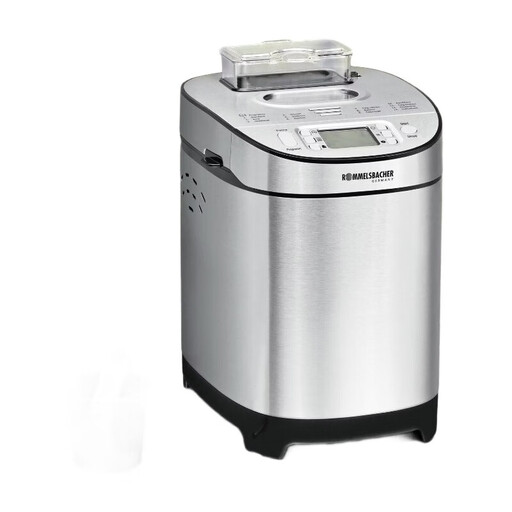 Image unavailable
Compare this model variant if you’re looking for a wholemeal setting and loaf sizes of 700 or 900 grams. Check that these features apply to the exact variant.
No. The Dutch Nutrition Centre defines wholemeal bread as bread made with 100% wholemeal flour. So check the flour and recipe as well as the programme you choose.
No, follow the manual for your chosen model. The Inventum BM55 manual specifies a firm, level surface for this machine; the Fire Service advises that appliances need room to dissipate heat. Also follow your machine’s positioning and connection instructions.
No. The Dutch Nutrition Centre warns that even small amounts of gluten and cross-contamination can be relevant for someone with coeliac disease. Assess the ingredients, shared equipment and cleaning separately; a programme name doesn’t automatically make equipment that has been used before suitable.
Yes. According to the NVWA, CE marking is compulsory for electrical consumer products placed on the market in the Netherlands. A CE marking alone doesn’t tell you whether a machine is suitable for your recipe or bakes wholemeal bread well.
According to the Dutch government, when you buy a product, you’re entitled to a product that works properly. A manufacturer’s or seller’s warranty may offer additional cover; check the seller’s and manufacturer’s terms before buying.