
Everyday lunch bakers
You regularly want to take wholemeal sandwiches with you and are mainly looking for a practical time to bake and a loaf size that suits your lunch.


Start by working out how much bread you need, then choose a model with a suitable wholemeal programme and a timer that fits your morning routine. A smaller loaf setting may be a better fit for a few lunch portions, while a dispenser is particularly useful if you regularly add seeds or nuts. Check the exact model variant and the required conformity information before making your choice.
You regularly want to take wholemeal sandwiches with you and are mainly looking for a practical time to bake and a loaf size that suits your lunch.
You only use a few slices at a time and want the loaf size and storage to reflect what you actually eat. The Netherlands Nutrition Centre notes that bread can be stored in the freezer, but may become drier if frozen for longer.
You sometimes want to add seeds or nuts, so you’re comparing an add-in alert or dispenser as well as a wholemeal programme.
| What to consider | What should you check? | Who is this important for? |
|---|---|---|
| Wholemeal recipe | Check whether the exact model has a wholemeal programme and which types of flour the recipe or mix calls for. The colour of the bread alone doesn’t show which flour was used, according to Brood.net. | If I want to make wholemeal bread, I look at both the recipe and the programme. Around 36% of consumers prioritise a suitable wholemeal recipe. |
| Baking time | Compare the timer on the exact model variant with your routine, and allow time for the bread to cool and be sliced. | If I need bread for lunch, I want to be able to plan when it bakes without forgetting that it still needs to cool and be sliced afterwards. Around 29% of consumers prioritise planning. |
| Loaf size and storage | Compare the stated loaf sizes with the number of slices you need. Think about storage or freezing; according to the Netherlands Nutrition Centre, bread may become drier if frozen for longer. | If I only need a few slices, I don’t want to bake more than I can store or eat. Around 21% of consumers mainly consider portion size and storage. |
| Extra ingredients and maintenance | Check which ingredients a dispenser, if included, can handle, and follow the model’s cleaning instructions for the bread tin and kneading paddle. | If I often add seeds or nuts, I compare a dispenser with adding them by hand and check what maintenance is involved. Around 14% of consumers prioritise variety and maintenance. |
The programme doesn’t determine which types of flour you use. According to Brood.net, the bread’s colour doesn’t tell you whether it was made with white flour, flour or wholemeal flour.
Check the ingredients in the mix or flour, and follow a recipe that suits your exact appliance. The NVWA sets requirements for the grain ingredient when foods are labelled as wholemeal.
Available loaf sizes vary by model. Any unused slices need a storage plan; according to the Netherlands Nutrition Centre, bread may become drier if frozen for longer.
Compare the smallest stated loaf size with how much you use, and freeze any portions you won’t use if that suits your plans.
A delay-start timer lets you schedule the baking, but the bread still needs to cool, be sliced and be packed afterwards.
Allow time for these steps when you prepare your lunchbox, too.
The machine doesn’t determine which salt you use in the recipe. The Netherlands Nutrition Centre identifies bread made with iodised baker’s salt as an important source of iodine and recommends using baker’s salt rather than table salt when baking your own bread.
Check which salt your recipe calls for and adjust it if necessary.
According to Inventum, the BM55 has settings for 650 and 800 g loaves, as well as automatic programmes.
For the 152009, variant 01.152009.01.001, Princess lists a wholemeal programme, adjustable crust colour and a timer.
According to Tefal, the Pain Doré PF2101 has a wholemeal programme, three loaf weight settings and a timer.
For the B3971, DOMO lists 500, 750 and 1000 g loaf sizes, a wholemeal programme and a dispenser for extra ingredients.
The Dutch brand page for the SD-YR2550 lists a wholemeal programme, dispensers for yeast and raisins or nuts, and a digital timer.
This selection includes bread makers for planning ahead, choosing different loaf sizes or adding ingredients. For each exact model, check whether it has a wholemeal programme if you want to bake wholemeal bread.
 No image available
An option if you want to schedule baking in advance and compare loaf sizes.
12 programmes; 1 L capacity; three loaf weight settings of 500, 750 and 1000 g; timer up to 15 hours; three browning levels; white.
Tefal lists a wholemeal programme for the PF2101. Check the markings and conformity information for the exact variant: CE marking is mandatory for electrical products placed on the market in the Netherlands.
 No image available
A good fit if a timer and automatic dispensing of extra ingredients are important to you.
700 W; 20 programmes; 15-hour timer; three loaf weight settings; automatic dispensing of yeast and extra ingredients; removable non-stick pan.
The smallest loaf size isn’t specified among the listed weight settings. If you want to bake wholemeal bread, check whether the exact variant has a wholemeal programme.
Also check the markings and conformity information for the exact variant: CE marking is mandatory for electrical products placed on the market in the Netherlands.
 No image available
An option if you want to schedule baking in advance and are looking for a stated maximum loaf size of 1 kg.
610 W; 12 programmes; delay-start timer; maximum loaf weight 1 kg; display and keep-warm function.
If you want to bake wholemeal bread, check whether the exact variant has a wholemeal programme. Also check the markings and conformity information: CE marking is mandatory for electrical products placed on the market in the Netherlands.
 No image available
A good fit if you want to compare larger loaf sizes and need a timer to schedule baking.
1600 W; 16 automatic programmes; timer; loaf weights from 750 g to 1.5 kg; non-stick pan; white.
The stated minimum loaf weight is 750 g, so this may be less suitable if you’re looking for a smaller loaf. Check whether the exact variant has a wholemeal programme, and review the markings and conformity information; CE marking is mandatory for electrical products placed on the market in the Netherlands.
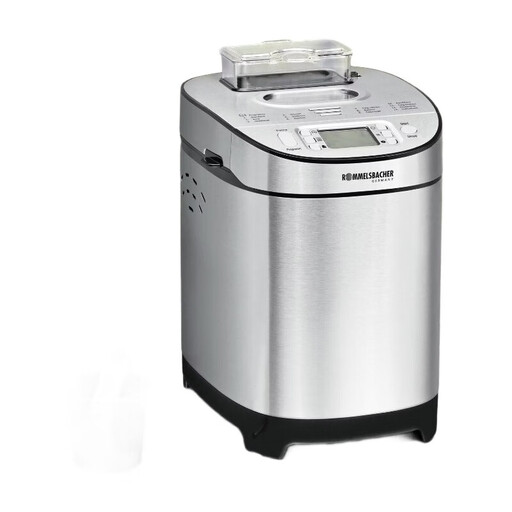 No image available
An option if you want to plan ahead and dispense extra ingredients as well as bake bread.
Loaf sizes of 700 and 900 g; 13-hour timer; automatic ingredient dispensing; three browning levels. The product description says it can bake wholemeal bread.
The smallest stated loaf size is 700 g. Check whether that suits your lunch portions, and review the markings and conformity information for the exact variant; CE marking is mandatory for electrical products placed on the market in the Netherlands.
No. The programme doesn’t replace checking the flour or bread mix. The NVWA sets requirements for the grain ingredient when foods are labelled as wholemeal, so choose a suitable recipe and check the ingredients.
You can freeze bread in portions and take out what you need. According to the Netherlands Nutrition Centre, bread may become drier if frozen for longer. For a school lunch, the Netherlands Nutrition Centre recommends a tightly sealed lunchbox and a small cool bag for food that spoils quickly.
The machine doesn’t choose the salt for you. The Netherlands Nutrition Centre identifies bread made with iodised baker’s salt as an important source of iodine and recommends using baker’s salt rather than table salt when baking your own bread; this isn’t a feature of the bread maker.
Check the markings and conformity information for the exact variant: according to the NVWA, CE marking is mandatory for electrical products placed on the market in the Netherlands. The Dutch Government also says that online shops must make clear who is responsible for delivery and handling returns.