
Baking bread for a group
You want to bring enough slices for everyone, so start by considering the loaf size. Manufacturers such as Inventum and Tefal list different weight settings. Try your own recipe to see how many slices it makes.


Start by deciding how many slices you need, then choose a bread maker with a loaf size that suits your group. The maximum weight setting alone won’t tell you how many slices your recipe will make, so baking a test loaf can help you plan portions. If you’ll use the machine regularly, compare how easy it is to clean and whether replacement parts are available. If guests have dietary requirements, ingredients and avoiding cross-contamination matter more than the name of a programme.
You want to bring enough slices for everyone, so start by considering the loaf size. Manufacturers such as Inventum and Tefal list different weight settings. Try your own recipe to see how many slices it makes.
You want to keep using the machine after the bring-and-share. As well as the purchase price, consider whether it has a useful basic programme, how easy it is to clean and whether parts are available for the exact model.
You want the bread to be ready in time to cool, slice and pack. Compare the timer and the duration of your chosen programme.
| What to consider | What should you check? | Who is this important for? |
|---|---|---|
| Portions and loaf size | Compare the available loaf weight settings and bake a test loaf using your own recipe. The listed weights are settings, not a guaranteed number of slices. | If I want enough slices for the group without lots of bread left over, I’ll prioritise portions. Around 36% of consumers in this breakdown put portions first. |
| Using it after the bring-and-share | Check the basic programme, how to clean the machine and whether parts are available for the exact model. | If I want to use the machine regularly after the event, I’ll take its ongoing usefulness into account. Around 29% of consumers prioritise regular use above all else. |
| Planning | Check the programme duration and how the timer works in the manual. Allow time for the bread to cool and for packing, too. | If I need to be ready by a set departure time, I’ll plan when to bake in advance. Around 21% of consumers prioritise planning. |
| Dietary requirements | Ask guests about their needs, check ingredient labels and avoid cross-contamination when preparing, slicing and serving the bread. | If a guest has a dietary requirement, I’ll first check whether I can adapt the preparation to suit it. Around 14% of consumers put dietary safety first. |
Weight settings vary by model and don’t tell you how many slices your recipe will make. You could end up with a loaf that’s too small for your group, or with more than you can hand out.
Choose a loaf size to suit your group and bake a test loaf with your chosen recipe before the event.
A test run may mean an extra baking session. If you misjudge the loaf size, you could be left with bread to spare.
A programme won’t automatically stop gluten from getting into the bread through ingredients, crumbs or shared kitchen utensils. The Voedingscentrum warns that even a small amount of gluten can cause symptoms for someone with coeliac disease.
Ask guests about their needs in advance, check labels and avoid cross-contamination. Don’t promise a safe gluten-free option based on the programme name alone.
Extra features aren’t automatically useful for making one sandwich loaf. If you’ll use the machine regularly, ease of cleaning and the availability of suitable parts matter too.
First compare the loaf settings and basic programme. Then look at maintenance and parts for the exact model.
If you bake regularly, factor in ingredients, energy use and any replacement parts you might need. What’s relevant depends on how you use the machine and which model you choose.
The BM55 is worth comparing if two loaf sizes and a straightforward selection of programmes suit your plans.
The Pain Doré PF2101 is designed for basic loaves, while the Pain & Délices PF240E also has programmes for other recipes.
The 152006 is worth comparing if you’re looking for a machine that makes loaves of up to 900 g, with adjustable crust colour and a timer.
The BM-4586 is worth comparing if its stated maximum of 1 kg and range of programmes suit the way you’ll use it.
The SD-R2530 is worth considering if you want ingredients added automatically for other occasions, too, and plan to use the machine for a range of recipes.
These bread makers are options to consider for making a sandwich loaf and planning when to bake. Before choosing, check that the listed features suit your preferred loaf size, recipe and bring-and-share schedule.
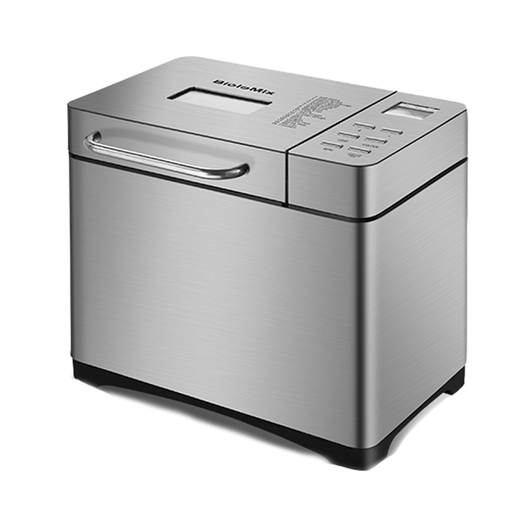 No image available
Worth considering if you want to schedule the start of baking in advance and would also like a fruit and nut dispenser.
The product name lists 17 programmes, a fruit and nut dispenser, a delayed-start timer of up to 15 hours and a 1-hour keep-warm function.
 No image available
Worth considering if you want to use a timer to plan your baking in advance.
The product name lists 12 programmes and a capacity of 1 L. Tefal also lists a 15-hour timer for the PF2101.
 No image available
Worth considering if you’re looking for a bread maker and want to plan your baking in advance.
The product name lists a power rating of 1600 W and a white finish.
 No image available
Worth considering if you want to compare the listed gluten-free option as well as standard bread-making. The programme name doesn’t guarantee a gluten-free loaf.
The product name lists 700 W, 20 programmes and a removable non-stick pan. Tefal also lists a timer of up to 15 hours for the PF250135.
 No image available
Worth considering if you want to use the bread maker around a planned departure time.
The product name lists 610 W and 12 programmes. Tefal also describes a delayed-start timer for the PF251835.
No. The loaf weight doesn’t tell you exactly how many usable slices you’ll get. That also depends on the recipe, the shape of the loaf and how thickly you slice it. If you’re baking for a group of a set size, make a test loaf and count the slices.
Follow the recipe and the ingredient order for your model, fit the kneading blade correctly and measure the ingredients accurately. Panasonic includes these points in its baking tips; if you have another model, follow its own manual.
No. A programme alone won’t automatically make the bread gluten-free. Check the ingredients and make sure crumbs or shared kitchen utensils don’t contaminate the bread. The Voedingscentrum warns that even a small amount of gluten can cause symptoms for someone with coeliac disease.
According to the Voedingscentrum, ordinary bread should be kept at room temperature in a sealed bread bin or plastic bag. Different advice applies to fillings that spoil quickly: don’t leave these foods out of the fridge for more than two hours. Plan how you’ll transport and serve them based on the filling.
According to ACM ConsuWijzer, the retailer is responsible for the statutory guarantee if the product doesn’t meet what you could reasonably expect. For distance purchases, the Dutch government says you’ll often have a 14-day cooling-off period. The applicable terms determine whether this applies to your purchase.