
Baker making one mini loaf
You mainly want to make a small, individual loaf to sell, so you start by comparing the stated loaf sizes.


If you mainly want to bake one loaf as small as possible, look for a machine with a stated loaf size of around 400 g. If you’d also like to make larger loaves, compare adjustable models that start at 500 g. Check your recipe too, along with the yield per baking cycle and how you’ll work hygienically and inform buyers about allergens.
You mainly want to make a small, individual loaf to sell, so you start by comparing the stated loaf sizes.
You’re starting with a small loaf for your bake sale, but may want to use the same machine for larger loaves later.
You’re considering bread with ingredients such as nuts or seeds, and need to take allergen information and the prevention of cross-contamination into account too.
Start by choosing your loaf size: Panasonic states that the SD-PN100KXE makes loaves of around 400 g, while the adjustable models mentioned start at 500 g. These larger sizes give you more scope to bake bigger loaves later, but won’t make a loaf of around 400 g.
| What to consider | What should you check? | Who is this important for? |
|---|---|---|
| Loaf size | Compare the stated weight for the exact model. Panasonic states around 400 g for the SD-PN100KXE; Princess lists 500–750 g for model 152007, while DOMO lists settings of 500, 750 and 1000 g for the B3971. | If I want to sell one small loaf, I start with the smallest stated setting and work out whether the yield is suitable. Around 36% of consumers prioritise loaf size. |
| Flexibility and planning | Check the weight settings and timer for the full model number. Allow time to remove the bread from the tin and let it cool too; a timer doesn’t tell you how much bread you’ll need per baking cycle. | If I want to use the machine for other loaf sizes after the sale, I compare both the smallest and larger settings. Around 29% of consumers prioritise flexibility and planning. |
| Ingredients and allergens | Check the recipe and ingredients, and consider how to prevent cross-contamination. A dispenser can add ingredients, but it doesn’t check what’s in the bread. | If I’m offering bread with ingredients such as nuts or seeds, I want to be able to clearly communicate the ingredients and allergens. Around 21% of consumers prioritise ingredient management. |
| Cleaning and reusing | Check the cleaning instructions and, when buying replacement parts, check the model number. Don’t assume parts are interchangeable between models. | If I want to keep using the machine after the sale, I consider cleaning and compatible parts. Around 14% of consumers prioritise maintenance and reusability. |
The smallest stated settings vary by model: around 400 g, from 500 g or, for the DOMO B3974, from 750 g. A larger minimum setting may mean you bake more bread per cycle than you want to offer for sale.
Check the weight settings for the full model number and choose a size that matches how much you actually want to bake.
A programme name doesn’t check which ingredients you’ve used or whether cross-contamination occurs during preparation.
Check your recipe and working practices, prevent cross-contamination and give buyers accurate information about any allergens present.
Extra programmes or a dispenser are only relevant if they suit the loaf size and ingredients you want to use.
First decide on your preferred loaf weight, number of baking cycles and ingredients; then compare the extra features.
The SD-PN100KXE is a mini bread maker with a stated loaf size of around 400 g, aimed at anyone who wants to bake the smallest loaves possible.
Model 152007 is an adjustable bread maker with a stated range of 500–750 g.
According to DOMO, the B3971 has settings for 500, 750 and 1000 g, as well as an ingredient dispenser.
These bread makers suit different preferred yields per baking cycle, from adjustable weights starting at 500 g to larger sizes. Check for each model whether its smallest stated setting is right for the small loaf you want to sell.
 No image available
Suitable if you’re looking for an adjustable model that makes loaves from 500 g and can also bake larger ones.
Stated loaf settings: 500, 750 and 1000 g. The product description mentions an automatic dispenser for yeast and other ingredients, a timer of up to 15 hours and a one-hour keep-warm function.
 No image available
Suitable if you want to select different loaf weights from 500 g and are looking for a removable tin.
The product name lists 700W, 20 programmes and a removable non-stick tin. The description mentions three weight settings, with 500 g as the smallest loaf size, and an automatic dispenser.
 No image available
A bread maker for anyone who wants to bake bread too; check before buying whether its weight settings suit the small loaf you want to make.
The product name lists 610W and 12 programmes. The description mentions a maximum loaf weight of 1 kg, a timer and a keep-warm function.
 No image available
Suitable if you want to make a larger loaf per baking cycle than around 400–500 g.
The product name lists 1600W. The description mentions weight settings from 750 g to 1.5 kg, 16 automatic programmes, a jam function, a viewing window and a delayed-start timer.
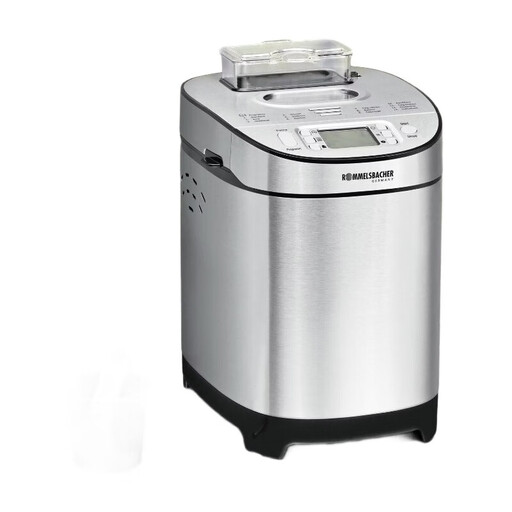 No image available
Suitable if you can use a smallest loaf size larger than 400 or 500 g.
The product description lists loaf sizes of 700 and 900 g, 13 programmes, three browning settings and an automatic ingredient dispenser. It also mentions a timer of up to 13 hours and a keep-warm function for up to 60 minutes.
Don’t assume that will work. Use a recipe suited to the tin and programme of your exact model, and measure the ingredients carefully. Panasonic advises accurate measuring and making sure the kneading blade is correctly positioned if your bread doesn’t rise properly.
No. A programme doesn’t confirm which ingredients were used or whether cross-contamination was prevented. Check your recipe and working practices, and give buyers accurate information about any allergens present; don’t make unsubstantiated claims that the bread is allergen-free.
Follow the cleaning instructions for your chosen model and check the model number when buying a replacement part. For example, Princess lists a separate kneading blade that’s compatible with model 152007.
For sales at a Dutch market or event, the NVWA says food must be prepared, sold and stored safely and hygienically, even if the seller is a private individual. The NVWA states that a HACCP food safety plan is required for anyone who prepares and sells food several times a year; that condition alone doesn’t determine the rules for every individual sale.
The NVWA says food sellers must inform consumers about any allergens present. Under NVWA rules, this information can be given in writing or verbally for unpackaged bread. First decide how you’ll sell the bread: prepacked products are subject to labelling rules.