
Bakers who can’t wait by the machine to add ingredients
If you want to do something else while the dough is kneading, look for a model whose manufacturer confirms it can automatically add seeds or kernels.


A bread maker with a dispenser could be a good choice if you want to prepare the seeds in advance and can’t stay by the machine while it kneads. With an add-in alert, you can add them yourself if you’re free at the right time. Choose a loaf size to suit the number of people eating, and check the ingredients and preparation conditions if you’re sharing the bread with guests who have allergies.
If you want to do something else while the dough is kneading, look for a model whose manufacturer confirms it can automatically add seeds or kernels.
Compare the stated loaf sizes with how much you expect to need for your meal. Loaf weight alone doesn’t tell you how many portions you’ll get.
Weigh up how much you’ll use it after the potluck, the storage space you have and which features you expect to use for other baking occasions.
| What to consider | What to look for when buying | Who should give this more weight? |
|---|---|---|
| Adding seeds | Check whether the dispenser can handle seeds and kernels, or which programmes have an add-in alert. Princess describes automatic dispensing for the 152010; Inventum mentions an alert for certain BM55 programmes. | If I can’t stay by the machine while it kneads, I want to be able to prepare the seeds in advance. Around 36% of consumers rank automatic dispensing as their top priority. |
| Loaf size | Compare the stated loaf weights with the number of people eating and the amount you want to serve. Princess lists 700–900 g, Inventum 650 or 800 g, and Tefal lists sizes from 500 g to 1 kg for the PF240E. | For a shared meal, I want to be able to choose an amount that suits the group without assuming that a particular loaf weight will make a set number of portions. Around 29% of consumers prioritise a suitable loaf size. |
| Using it after the meal | Think about how often you’ll want to bake later, measure the storage space available and compare the purchase price at the time of buying. Extra programmes matter most if you’ll use them. | As a student, I want to avoid buying a machine that goes unused after one meal. Future use and storage space are both part of my decision. Around 21% of consumers prioritise value for future use. |
| Ingredients and allergens | Ask guests about allergies in advance, check the ingredients in your recipe and consider the preparation conditions. A dedicated programme alone doesn’t prove that a recipe or appliance is suitable for every guest. | If a guest has an allergy, I want to know which ingredients I’m using and how the bread has been prepared. Around 14% of consumers prioritise catering for a guest with an allergy. |
A timer sets the start time. With certain Inventum BM55 programmes, you add the ingredients yourself when you hear an alert.
Check separately how the machine adds ingredients and what you’ll need to do when using your chosen programme.
A programme name doesn’t tell you which ingredients are in your recipe or how the appliance has been used. The Voedingscentrum explains that ingredients can contain allergens.
Ask guests about any relevant allergies, check the ingredients and prepare the bread accordingly.
A product page may show a listing even when the product isn’t currently available to order.
Check current availability before relying on a product listing.
The 152010 is worth considering if you want to look into automatic dispensing of seeds and kernels.
The BM55 is an option if you’re able to add ingredients yourself while the dough is kneading.
The Pain & Délice PF240E is worth considering if you’re weighing up different loaf sizes and future use.
The SD-R2530 is worth a look if you’re considering an automatic raisin and nut dispenser and a range of programmes.
This Joybuy selection includes models listed with a dispenser, as well as models whose product name gives information about capacity or loaf size. Check each appliance’s manual to find out how and when you can add seeds.
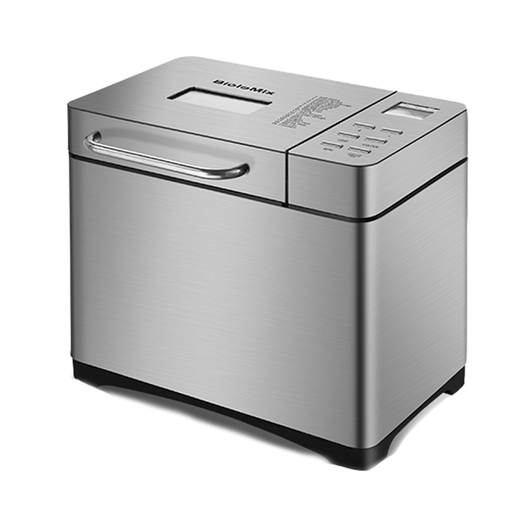 No image available
Suitable if you want to prepare ingredients in advance; check whether the dispenser can also handle the seeds in your recipe.
17 menus; fruit and nut dispenser; timer with up to 15-hour delay start; 1-hour keep-warm function.
 No image available
One to compare if you want to factor the stated capacity into your plans for a shared meal.
12 programmes; the product name states a capacity of 1 L. Check the manual for loaf sizes and instructions for adding ingredients.
 No image available
The product name mentions an automatic programme; check separately how to add seeds to your chosen recipe.
1,600 W; white finish.
 No image available
The product name mentions an automatic dispenser; check the manual to see whether it’s suitable for the ingredients in your seeded bread.
700 W; 20 programmes; removable non-stick pan.
 No image available
The product name describes a compact design; check the dimensions and make sure it will fit where you plan to store it.
610 W; 12 programmes.
Not always. Inventum says you can add ingredients to certain BM55 programmes after an alert sounds; Princess describes automatic dispensing of seeds and kernels for the 152010. Follow the manual for your chosen machine and the recipe.
Leave the bread to cool on a wire rack after baking. The Voedingscentrum generally recommends storing bread at room temperature in a closed bread bin or plastic bag; for a crisp crust, it suggests using a paper bread bag.
According to the Rijksoverheid, you should be able to contact the seller if a product is faulty. The Netherlands has no fixed statutory guarantee period; what you could reasonably expect from the product and the cause of the problem are both relevant.
The NVWA’s information about allergens in unpackaged food applies to businesses and other suppliers selling to consumers; its information about home baking covers sales and catering. It does not establish a labelling requirement for the informal, non-commercial meal described here. However, ask guests about allergies and tell them which ingredients you’ve used. If you’re selling food or providing catering, the situation needs to be assessed separately.