Who is this choice for?

Seed bread baker who wants to keep an eye on things less

You don’t want to have to add ingredients when you hear a beep, so you compare how the dispenser works on each model and programme. Panasonic Netherlands and Inventum describe different ways of adding ingredients.

Baker making several portions to sell

First, work out how much bread you need, then compare making one larger loaf with making several smaller loaves or baking in batches. Inventum and Princess list different loaf sizes and baking options.

Organiser with questions about allergens

Before the sale, you want to check which allergens are in the recipe and how to inform buyers based on how you’re selling the bread. The Netherlands Food and Consumer Product Safety Authority (NVWA) explains the requirements for providing allergen information.

What should you look for when buying?

Automatic dispensing

When: If you don’t want to wait around during kneading to add ingredients. Panasonic lists a raisin/nut dispenser for the SD-R2530, as well as a yeast dispenser for the SD-YR2550.

Trade-off: Dispensers and compatible programmes vary by model. Check the manual to make sure your seeds and recipe are suitable.

Add ingredients when prompted

When: If you can be there during kneading to add kernels or seeds. Inventum describes this option for the BM125.

Trade-off: You’ll need to respond to the alert. Inventum warns that large or sharp add-ins can damage the non-stick coating.

Prioritise loaf size and programmes

When: If a suitable loaf size and programme selection matter more than automatic seed dispensing. Princess lists loaf sizes from 680 to 900 grams for the 152009; Tefal lists three weight settings for the Pain Doré PF2101.

Trade-off: Don’t assume that a timer or range of programmes means seeds are added automatically. Check the manual to find out how ingredients are added.

What to consider What should you check? Who is this important for?
Adding seeds at the right time Check the exact model, bread programme, suitable ingredients and whether you can be there when prompted to add them. If I can’t stay by the machine during kneading, I want to know whether ingredients are added automatically. Around 33% of consumers prioritise ease of adding ingredients.
Enough bread to sell Compare the number of portions you need with the weight of each loaf and how many baking sessions you can schedule. If I need several portions to sell, I want to know in advance how many loaves or batches I’ll need. Around 27% of consumers prioritise yield.
Planning baking around the sale Allow for the programme time, any alert to add ingredients and the time you’ll need before packing or transporting the bread. If the sale is at a set time, I want to plan my baking around it. Around 20% of consumers prioritise planning.
Allergen information when selling Keep a record of the ingredients used and decide whether you’ll sell the bread prepacked or non-prepacked; the way you provide information varies. If buyers might ask about allergens, I want to know what’s in my recipe and how to provide that information before the sale. Around 13% of consumers make this their top priority.
Purchase and maintenance Check the maintenance instructions, compatible parts and the seller’s and manufacturer’s terms for the exact model. If I want to use the machine after the bake sale too, I want to know how to maintain it and where to find model-specific parts. Around 7% of consumers prioritise purchase and maintenance.

Common pitfalls

  • Confusing a timer with automatic seed dispensing

    A delayed start and the point at which extra ingredients are added are two different features. A timer alone doesn’t tell you when or how seeds are added to the dough.

    Compare the dispenser and add-in alert separately, and check the manual to see whether the method you want is available with the bread programme.

  • Assuming the largest loaf setting means you’ll have enough bread

    The stated weight applies to each loaf or baking tin, not the total amount you’ll need for the bake sale.

    First work out how many portions you need, then plan how many baking sessions it will take.

  • Assuming a gluten-free programme makes your product allergen-free

    A machine programme doesn’t determine which allergens are in your recipe or what information you need to give buyers.

    Check the ingredients and don’t claim a product is allergen-free unless you have appropriate evidence. The NVWA explains what allergen information must be available when selling food.

Brands to compare

Panasonic

The SD-YR2550 and SD-R2530 are worth considering if you’re comparing automatic dispensing.

  • Panasonic Netherlands lists a yeast and raisin/nut dispenser for the SD-YR2550, and a raisin/nut dispenser for the SD-R2530.
  • Panasonic Netherlands lists the SD-R2530KXE as unavailable on its own product page; this doesn’t indicate availability from other sellers.

Inventum

The BM125 is worth comparing if you want to add seeds when prompted and are considering different loaf sizes.

  • Inventum describes a large or double baking tin, including the option to bake two 450-gram loaves.
  • You need to be there when the add-in alert sounds. Inventum warns that large or sharp add-ins can damage the non-stick coating.

Princess

The 152009 is worth comparing if its loaf sizes, timer and programmes suit your baking schedule.

  • Princess lists loaf sizes from 680 to 900 grams; the manufacturer also lists 15 programmes and a removable baking tin.
  • Check the manual to see how to add seeds; automatic seed dispensing has not been confirmed for this model.

Tefal

The Pain Doré PF2101 is an option if weight settings and programmes matter more to you than a confirmed automatic dispenser.

  • Tefal Netherlands lists three weight settings and a rye bread programme for this model.
  • Check the manual to find out how to add ingredients; the product information consulted does not confirm automatic seed dispensing.

DOMO

The B3974 is worth comparing if you want a choice of two loaf sizes and don’t require a dispenser.

  • DOMO lists loaf sizes of 750 and 1000 grams.
  • DOMO states that the B3974 does not have a nut/raisin dispenser. The product specifications are from the Belgian manufacturer’s website.

Bread makers at Joybuy

These Joybuy bread makers are worth comparing by model, batch planning and relevant features. Check the exact model to make sure its method of adding ingredients is suitable for your seeds and bread programme.

Tefal PF610138 bread maker, white

Tefal PF610138 bread maker, 1600 W, white

If you’re planning a larger batch, compare the stated loaf weight with the number of portions you need.

Model PF610138; 1600 W; white.

Check the latest product information and manual to find out how to add seeds.

View at Joybuy
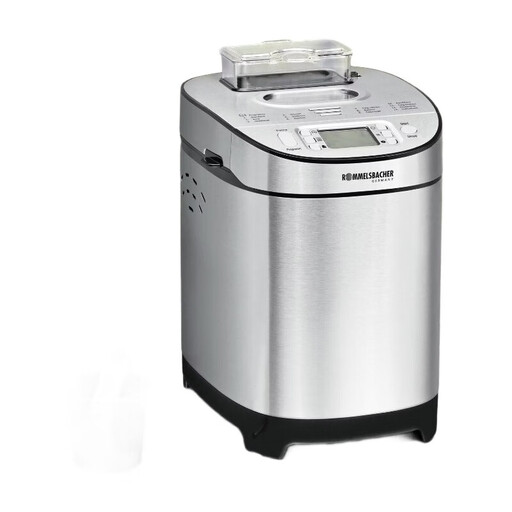
Rommelsbacher BA 550 bread maker

Rommelsbacher BA 550 bread maker

If automatic ingredient dispensing matters to you, check whether the dispenser is suitable for your seeds and chosen programme.

Also check which loaf sizes and timer settings are available on the exact model.

View at Joybuy

Tefal Pain Doré PF2101 bread maker

Tefal Pain Doré PF2101 bread maker

If you want to match batch size to your schedule, check the loaf sizes available for this model.

The product name lists 12 programmes.

Check the manual to find out how to add seeds.

View at Joybuy

Tefal PF251835 bread maker, black

Tefal PF251835 bread maker, 610 W, black

If you need a batch size to fit your sales plan, compare it with the specifications for the exact model.

The product name lists 610 W and 12 programmes.

The product information describes the appliance as intended for domestic indoor use.

View at Joybuy

Tefal PF250135 bread maker, non-stick baking tin

Tefal PF250135 bread maker, 700 W

If automatic dispensing is a consideration, check whether the dispenser is suitable for your seeds and chosen programme.

The product name lists 700 W, 20 programmes and a removable non-stick baking tin.

Compare the loaf sizes listed in the latest product information with the number of portions you need.

View at Joybuy

Frequently asked questions

Do I need to open the machine part-way through to add kernels and seeds?

It depends on the model and programme. Inventum describes an add-in alert for the BM125; Panasonic lists an automatic raisin/nut dispenser for the SD-YR2550 and SD-R2530. Check the manual for your ingredients and chosen programme.

How do I clean the baking tin without damaging its coating?

Follow the manual for the exact model. For the BM125, Inventum warns that kernels and seeds that are too large or sharp can damage the non-stick coating.

What should I check if I need a baking tin or kneading blade later?

Check whether the part is available for your exact model and review the manufacturer’s and seller’s warranty terms. Inventum describes its own warranty terms; Tefal offers a model-specific spare parts search.

Can I sell homemade seed bread at an event as a private individual?

The NVWA says food sold at markets and events must be prepared, sold and stored safely and hygienically; this applies to private and professional sellers. Whether your particular sale also requires registration or involves other obligations may depend on the nature and frequency of the activity. Don’t assume you’re exempt simply because it’s a bake sale.

How do I provide allergen information if I sell the bread whole or by the slice?

First decide whether you’re selling the bread prepacked or non-prepacked. The NVWA says allergens must be listed on the label of prepacked food; for non-prepacked food, the information must be available before purchase. Cereals containing gluten and sesame seeds are among the allergens that may need to be declared. State what is actually in your recipe.
