
Host catering for a large group
Wants to make enough sandwiches while keeping the number of baking cycles down. Compare the stated loaf size with the number of portions you need: Inventum and DOMO list different loaf sizes for their machines.


Start by working out how many portions you need. Choose a loaf size to match, then decide whether you’d prefer fewer baking cycles or want to try a dedicated sandwich programme. Inventum lists loaf sizes of up to 1200 g for the BM125, while DOMO lists a sandwich programme and loaf sizes of up to 1000 g for the B3974. Allow time for the bread to cool on a wire rack after baking, too. A gluten-free programme alone won’t prevent cross-contamination for someone with coeliac disease.
Wants to make enough sandwiches while keeping the number of baking cycles down. Compare the stated loaf size with the number of portions you need: Inventum and DOMO list different loaf sizes for their machines.
Is looking for a suitable programme and wants to allow time for the bread to cool before slicing. DOMO lists a sandwich programme for the B3974, but that doesn’t guarantee a particular baking result.
Wants to check ingredients and the risk of cross-contamination before serving bread to a guest with coeliac disease. The Voedingscentrum warns that even a crumb containing gluten can be a concern.
First, work out how many portions you need, then compare that with the loaf sizes and programmes available on the exact machine. Next, plan backwards from serving time, allowing time for the bread to cool and be sliced.
| What to consider | What to look for | Who is this most important for? |
|---|---|---|
| Enough bread per baking cycle | Work out how many portions you need and compare this with the stated loaf size. Don’t convert weight into a guaranteed number of sandwiches without checking the recipe or slicing a test loaf. | When I’m baking for a larger group, I want to know whether one baking cycle will be enough. Consumers whose main priority is making enough portions in fewer cycles account for around 33% of consumers in this choice breakdown. |
| Suitable sandwich bread | Check whether the machine has a sandwich programme, and which loaf sizes and settings apply to the exact model. | When I want to make a particular type of sandwich bread, I look for a suitable programme as well as a suitable recipe. Consumers mainly looking for a sandwich programme and bread that slices well account for around 27% of consumers in this choice breakdown. |
| Allowing enough time to bake and cool | Check when the selected programme finishes. The Voedingscentrum recommends removing baked bread from the tin and leaving it to cool on a wire rack before slicing. | When I need bread ready for a set serving time, I also want time to let it cool and slice it. Consumers who mainly prioritise planning around serving time account for around 20% of consumers in this choice breakdown. |
| Dietary requirements and cross-contamination | Ask your guest about their needs, check the ingredients and consider whether the tin, kneading paddle and other equipment can be used without gluten cross-contamination. | When a guest with coeliac disease is joining us, I don’t want to rely on a programme name alone. Consumers for whom a dietary requirement is the main consideration account for around 20% of consumers in this choice breakdown. |
The number of usable slices also depends on the recipe and how you slice the bread. So a stated loaf size won’t tell you by itself how many portions you can serve.
Work out how many portions you need in advance and, if possible, try an important recipe before the gathering.
A programme name doesn’t mean the ingredients or equipment are free from cross-contamination. The Voedingscentrum says that even a crumb containing gluten can be a concern for someone with coeliac disease.
Discuss your guest’s needs with them, check the ingredients and consider how the tin, kneading paddle and other equipment are used.
A timer helps you plan when the bread will bake, but once it’s done, you’ll still need to remove it from the tin and let it cool before slicing.
Plan backwards from serving time and allow for cooling.
The BM125 is an option if you want to choose between one larger loaf and two smaller loaves.
The B3974 is worth considering if a dedicated sandwich programme matters to you.
The 152009 is an option if you’re looking for smaller loaves or are happy to bake in several cycles.
The SD-B2510 is an alternative if you’re looking for a loaf size of up to 1,1 kg and a timer.
The BA 550 is an option if smaller loaf sizes and automatic ingredient dispensing are useful for your recipe.
These Joybuy products offer different loaf sizes and planning options to compare with the number of portions you need and how many baking cycles you’re prepared to do.
 Image unavailable
The stated loaf sizes can help you decide whether this machine suits the number of portions you need.
The title lists loaf sizes of 500, 750 and 1000 g. The product description mentions 12 programmes, three crust settings and a timer of up to 15 hours.
 Image unavailable
The stated maximum loaf size may be useful if your portion plan can be met with one larger loaf.
The product description lists loaf weights from 750 g up to a maximum of 1,5 kg, 16 automatic programmes and a delayed start timer.
 Image unavailable
Compare the programmes with the recipe you want to use; a programme name doesn’t guarantee a particular baking result.
The title lists 20 programmes and gluten-free options. The product description mentions three weight settings, a timer of up to 15 hours and a one-hour keep-warm function.
 Image unavailable
The stated maximum loaf size can help you work out whether one baking cycle will meet your portion plan.
The product description lists a maximum loaf weight of 1 kg, 12 programmes, a timer and a keep-warm function.
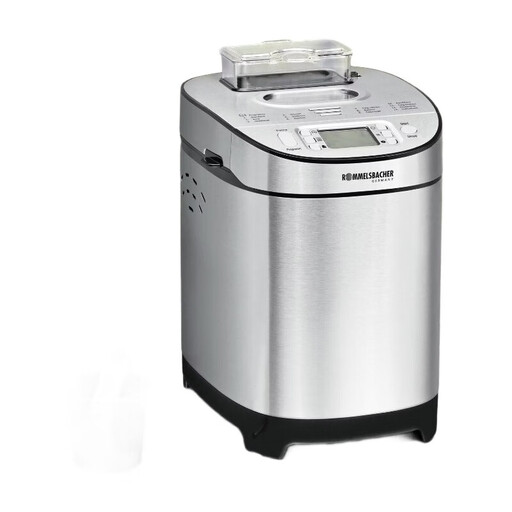 Image unavailable
The loaf sizes are worth considering if you can split the portions across several baking cycles.
The product description lists loaf sizes of 700 and 900 g, 13 programmes, a timer of up to 13 hours and automatic ingredient dispensing.
Work out how many guests you’re serving and how many sandwiches each person will need, then compare that with the loaf size for the exact machine. A stated weight won’t tell you a fixed number of slices. Princess gives its own estimate of around 8–14 slices for the 152009, for a 680–900 g loaf; this isn’t a general conversion rule.
In its bread-maker recipe, the Voedingscentrum recommends removing the bread from the tin after baking and leaving it to cool on a wire rack. Allow time for this in your plans.
No. A gluten-free programme alone won’t prevent cross-contamination. Check the ingredients and equipment, and ask your guest what’s safe for them. The Voedingscentrum says that even a crumb containing gluten can cause symptoms for someone with coeliac disease.
In the Netherlands, you have statutory rights in addition to any manufacturer’s warranty. According to ACM ConsuWijzer, if a product develops a fault sooner than you could reasonably expect under normal use, the seller must repair or replace it free of charge or, in some circumstances, refund the purchase price. There isn’t one fixed statutory warranty period for every bread maker.
The NVWA explains that businesses offering food to consumers must provide information about allergens; its guidance on preparing food at home relates to sales and catering. Don’t assume these requirements automatically apply when sharing food privately. If you charge for the food or operate as a caterer, check which rules apply to your situation. It’s also a good idea to ask guests about allergies when sharing food privately.