
Bakers making lots of sandwiches
You want to know in advance that you can make enough usable slices, so you compare the quantity per baking cycle with the number of cycles you can fit into your schedule.


Choose a bread maker based on how many usable sandwich slices you need, the shape of the loaf and the time needed for baking and cooling. A higher stated loaf weight doesn’t guarantee that you’ll get enough evenly sized slices, so test your recipe in advance. If you’re selling the bread, also check separately how to handle food safely and what allergen information you need to provide for your type of sale.
You want to know in advance that you can make enough usable slices, so you compare the quantity per baking cycle with the number of cycles you can fit into your schedule.
You want to know whether your recipe will produce loaves that can be cut into consistent sandwiches; the stated loaf weight alone won’t tell you that.
You plan your baking around a fixed start time and allow for removing, cooling and slicing the bread too.
Start with a test loaf to find out how much usable bread your recipe yields. Then compare baking capacity and allow enough time for the bread to be ready to serve.
| What to consider | What to look for when buying | Who is this most important for? |
|---|---|---|
| Enough bread per baking cycle | Compare the stated loaf weights and check whether one large loaf or several smaller loaves better suit your plans. | If I want to make enough sandwiches to sell, I’d rather count the baking cycles I need than look only at the maximum weight. Around 36% of consumers put yield per cycle first. |
| Bread that slices well | Check the shape of the bread pan and test your recipe and preferred slice thickness with a test loaf. | I want to see in advance whether my loaf can be cut into usable, evenly sized sandwich slices. Around 29% of consumers put ease of slicing first. |
| Bread ready on time | Check what the timer can delay and allow separate time for removing, cooling and slicing the bread. | If the sale starts at a set time, I don’t want my schedule to stop when the baking programme finishes. Around 21% of consumers prioritise having the bread ready on time. |
| Ingredients and information | Check that the programme suits your recipe and find out what allergen information you need to provide for your type of sale. | I want to know what’s in my bread and what information customers need. Around 14% of consumers put checking recipes and ingredients first. |
Manufacturers state loaf weights and bread pan options, but these don’t tell you how many usable slices your recipe will yield at your preferred thickness.
Bake and slice a test loaf first. Use the result to work out how many baking cycles you’ll need.
A delayed start lets you schedule the machine, but it doesn’t automatically allow for removing, cooling and slicing the bread.
Work backwards from when you want to serve the sandwiches, including every step after baking.
A programme alone doesn’t tell you which ingredients have been used or guarantee that cross-contamination has been ruled out. If you’re selling the product, you also need to provide the correct information about what you’ve made.
Check your recipe and ingredients, manage the risk of cross-contamination and provide the relevant allergen information. Don’t claim that a product is free from allergens unless you can substantiate it.
Worth considering when the quantity per baking cycle is the deciding factor: the BM55 has settings for 650 and 800 g, while the BM125 makes 900 or 1200 g loaves, or two 450 g loaves.
The 152009 is worth comparing if its stated loaf weight of 680–900 g suits your baking plans.
The SD-YR2550 is worth considering if you want to compare automatic ingredient dispensing or a range of recipe programmes.
According to Tefal, the Pain & Délice PF240E combines loaf sizes from 500 g to 1 kg with programmes for bread and other preparations.
According to DOMO, the B3974 has settings for 750 g and 1000 g loaves, making it worth comparing for capacity.
This Joybuy selection includes bread makers with different stated loaf weights and timer functions. Compare the quantity per cycle with the results from your test loaf, and allow time for cooling and slicing.
 Image unavailable
Adjustable loaf weights give you options for matching the quantity per baking cycle to your plans.
Loaf weights: 500, 750 and 1000 g.
Timer with up to 15 hours’ delay and three crust colour settings.
12 baking programmes.
 Image unavailable
The stated loaf weights can help you plan the quantity per baking cycle; remember to allow time for the bread to cool after baking too.
Loaf weights: 750 g to 1.5 kg.
16 automatic programmes for bread and dough.
Delayed-start timer.
 Image unavailable
The loaf weights and automatic dispensing are useful if you’re planning different baking cycles or recipes with additional ingredients.
Loaf weights: 500 g to 1000 g.
20 automatic programmes, a timer of up to 15 hours and three crust settings.
Automatic dispensing of yeast and other ingredients; removable bread pan.
 Image unavailable
The stated maximum loaf size can be a useful starting point when planning the quantity per baking cycle.
Maximum loaf size: 1 kg.
12 programmes for bread and dough.
Delayed-start timer and keep-warm function.
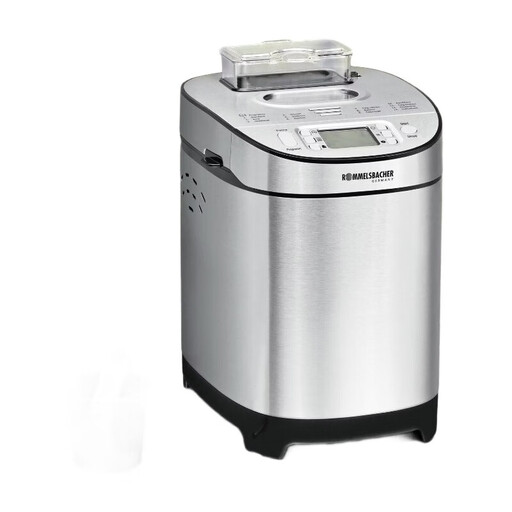 Image unavailable
The two stated loaf weights give you options for matching the quantity per baking cycle to the results of your test loaf.
Loaf weights: 700 g and 900 g.
13 programmes, including bread programmes.
Timer of up to 13 hours and keep-warm function for up to 60 minutes.
Automatic ingredient dispensing.
First, test how many usable slices your recipe yields at your preferred thickness. Then work out how many baking cycles you’ll need and allow time for removing, cooling and slicing the bread; the timer won’t automatically include those steps.
The Netherlands Food and Consumer Product Safety Authority (NVWA) states that food sold at markets and events must be prepared, stored and sold safely and hygienically, whether the seller is a business or a private individual. Any additional requirements that apply to your sale depend on the specific way you’re selling.
That depends on the specific way you’re selling and whether your activity falls under the registration requirements for food businesses. Check the NVWA guidance for your situation; simply describing it as ‘a bake sale’ isn’t enough to give a complete answer.
The NVWA states that allergen information is required for non-prepacked foods sold by, among others, retailers and institutions; separate labelling rules apply to prepacked sales. Decide how you’ll offer the bread, keep a record of the ingredients and check which rules apply to your type of sale. A gluten-free machine programme alone doesn’t prove that the finished product is allergen-free.