Choose a bread maker with a separate dough programme whose manual explains how to remove the dough so you can shape the rolls by hand and bake them in an oven. Then compare the worktop and cupboard space required, the amount of dough in each recipe, and how to clean the pan and kneading blade. For the exact model, also check the product information for the relevant safety requirements and CE marking.
Who is this relevant to?
Roll baker in a shared kitchen
You want the machine to do the kneading and proving, but you want to shape the rolls yourself and bake them in a shared oven. In that case, a clearly explained dough programme matters more than a large number of baking programmes. DOMO’s product information and recipe book describe a dough programme and a recipe for soft rolls.
Baker with limited cupboard space
You put the appliance away after use, so you compare its external dimensions, how easy it is to move and the portion size you actually make. Panasonic describes the SD-PMC101 as compact, with a stated loaf size of up to 500 g; Princess lists a storage handle for the 152007.
Baker who needs to keep ingredients strictly separate
You share equipment or worktops and want to prevent gluten from getting into gluten-free food. The Voedingscentrum warns that even a small amount of gluten can cause symptoms for people with coeliac disease. So, a gluten-free programme name is no substitute for clear arrangements around ingredients, workspace and cleaning.
What should you look for when buying?
Start with the dough setting and the steps needed to make individual rolls. Then check whether the quantity and storage space suit the way you use the appliance in a shared kitchen.
| What to consider |
What to look for when buying |
Who should pay particular attention? |
| Making and removing the dough |
Check the manual for the exact model to see whether it has a dough programme and what the programme does. |
I want to remove the dough from the machine, shape the rolls myself and bake them in an oven. Around 36% of consumers mainly look for a suitable dough setting. |
| Worktop and cupboard space |
Measure the space available and compare the external dimensions. Treat a storage handle as a convenience feature, not proof that the appliance is small. |
If I need to put the machine away after use, I want to know whether I have room for it in my shared kitchen. Around 29% of consumers prioritise storage space. |
| Quantity per batch |
Compare the quantities in recipes for the dough setting. A stated loaf weight does not automatically tell you how much dough a recipe can handle. |
I want to make enough dough for my rolls without overloading a recipe or the machine. Around 21% of consumers consider batch size first. |
| Cleaning and keeping ingredients separate |
Agree on who uses and cleans the pan and kneading blade. If you need to keep things strictly gluten-free, consider whether equipment and workspace can be reliably kept separate. |
If I need to keep ingredients strictly separate, I want to know how shared parts are used and cleaned. Around 14% of consumers prioritise separation and cleaning. |
Common pitfalls
-
Assuming that lots of programmes means there’s a suitable dough setting
To make individual rolls, you need to be able to remove the dough from the pan before baking. A large number of programmes doesn’t tell you what the dough setting actually does.
Check the manual for the exact model to find out how the dough programme works and when you can remove the dough.
An unsuitable setting may mean extra hands-on work or that you need a different machine.
-
Assuming the maximum loaf weight is the same as the amount of dough
The stated loaf sizes don’t confirm how much dough each roll recipe can handle.
Follow the permitted quantities and recipes for the dough setting you’ve chosen, rather than relying on the loaf weight alone.
-
Confusing a gluten-free programme with protection against cross-contamination
With shared use, traces can remain on the pan, kneading blade or worktop. The Voedingscentrum warns that even a small amount of gluten can cause symptoms for people with coeliac disease.
Agree on how ingredients and cleaning will be handled. If you need to follow a strictly gluten-free diet, consider whether you can reliably keep equipment and workspace separate.
Separate equipment or extra cleaning may be needed.
Brands to compare
DOMO
The B3974 is worth considering if you’re looking for a separate dough setting and a recipe for soft rolls. DOMO also lists a separate kneading setting.
- DOMO lists loaf settings of 750 and 1000 g.
- Those loaf weights don’t automatically determine the maximum amount of dough for every recipe; follow the manual and recipe.
Panasonic
The SD-PMC101 is worth comparing if you like the sound of a machine Panasonic describes as compact, with a small stated loaf size.
- Panasonic lists a loaf size of up to 500 g and separate functions for bread dough, kneading and proving.
- Check whether the manual gives a quantity and method that suit your bread roll dough.
Princess
The 152007 may be worth considering if a storage handle and a separate dough programme are important to you.
- Princess lists 19 programmes; the support page gives a duration of around 1 hour and 30 minutes for Dough.
- The programme duration alone doesn’t confirm that every roll recipe will work or how much dough you can make.
Tefal
The Pain Doré PF2101 is worth comparing if you also want to make other types of dough. Tefal mentions pizza and pasta dough.
- Tefal lists a removable pan.
- The product information doesn’t specifically confirm a programme or recipe for proved bread roll dough, so check before using your recipe.
Inventum
The BM55 is worth comparing if you’re looking at the stated loaf sizes of 650 and 800 g.
- Inventum lists automatic kneading, proving and baking.
- Check the manual to find out which separate programme is suitable for removing bread roll dough before baking.
Bread makers at Joybuy
These Joybuy products are bread makers to assess for their dough function and suitability for making individual rolls. A product listing alone doesn’t confirm that a dough setting is suitable for proved bread roll dough. In the Netherlands, electrical appliances must meet the relevant safety requirements; the NVWA states that electrical products must have the mandatory CE marking before they are placed on the market. Check the product information for the exact model.
 No image available
Tefal PF250135
Check the manual to see whether the dough setting is suitable for proved bread roll dough and the quantity in your recipe.
The product name lists 700 W, 20 programmes, gluten-free options and a removable non-stick pan.
View at Joybuy
 No image available
Tefal PF610138
Check that the dough setting and permitted quantity suit your roll recipe; the product listing alone doesn’t confirm this.
The product name lists 1600 W, a white finish and a non-stick pan.
View at Joybuy
 No image available
Tefal Pain Doré PF2101
Tefal mentions dough for pizza and pasta, but not specifically proved bread roll dough. So check whether the manual supports the method you want to use.
The product name lists 12 programmes and a capacity of 1 L.
View at Joybuy
 No image available
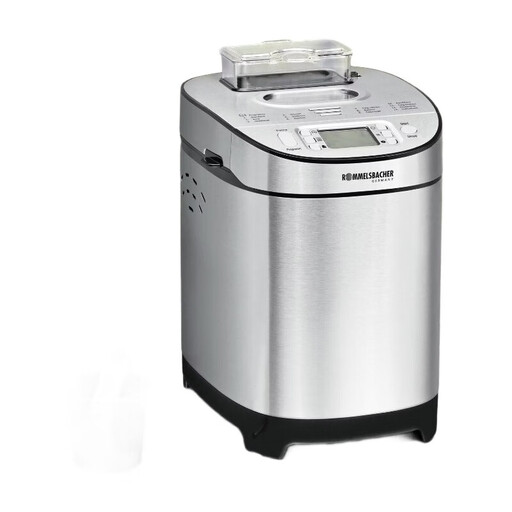
Rommelsbacher BA 550
Check the manual to see whether a dough programme is suitable for proved rolls and whether the quantity suits your recipe.
View at Joybuy
Frequently asked questions
Does the bread maker bake individual rolls?
Not when you follow the dough method described here: remove the dough from the machine after the programme, shape the rolls and bake them in an oven. Follow the timings and quantities in the recipe and the manual for your model.
Can I use a shared bread maker for gluten-free dough?
A gluten-free programme alone won’t prevent cross-contamination. The Voedingscentrum warns that even a small amount of gluten can cause symptoms for people with coeliac disease. So consider whether you can reliably keep ingredients, workspace and the parts you use clean and separate.
Who can help if my bread maker breaks during normal use?
For a consumer purchase in the Netherlands, the seller is responsible for ensuring the product is of satisfactory quality. According to the Rijksoverheid, there is no fixed statutory guarantee period; a manufacturer’s guarantee is separate from your statutory rights.
Which product safety requirements are relevant when buying in the Netherlands?
Electrical appliances must meet the relevant safety requirements. The NVWA states that electrical products must have CE marking before they are placed on the market. Check the information for the exact model; a product listing alone doesn’t confirm that the individual model has been checked for compliance.


