
Regular pizza lunch-maker
You mainly want to prepare the dough, then bake small pizzas yourself for your lunchbox.


Choose a bread maker with a confirmed dough or pizza dough programme: the machine prepares the dough, but you shape and bake the pizza yourself afterwards. Then compare the amount of dough your recipe needs and how you’ll plan the preparation; bread weights don’t tell you how many mini pizzas you’ll make. Before buying, also check the exact model and make sure it carries the mandatory CE marking.
You mainly want to prepare the dough, then bake small pizzas yourself for your lunchbox.
You make one or a few lunches at a time and want to check whether a recipe and baking tray suit the amount you need. The stated bread weight won’t tell you that on its own.
You want to fit dough preparation around the school or working day, while also considering how to store your topped lunch.
Start with the dough function, then check whether the quantity and timing fit your lunch routine.
| What to consider | What should you check? | Who is this important for? |
|---|---|---|
| Making dough without baking a loaf | Check the manual for the exact model to see which programme kneads and proves the dough, and when to take it out. | If I mainly want to use the machine for shaping my own lunch pizzas, I’m looking for a suitable dough function. Around 33% of consumers prioritise this function for pizza dough. |
| Quantity for your lunchbox | Compare the recipe and dough quantities for the exact model with the number of pizzas you want to make. | If you’re making lunch for one or more people, you’ll want to prepare an amount that suits those portions. Around 27% of consumers prioritise portion size. |
| Planning the preparation | Check the duration and timer operation of the dough programme you’ve chosen; don’t assume it works the same way as a bread programme. | If I want to plan dough preparation around the school or working day, I also need to allow time to shape and bake the pizzas. Around 20% of consumers make planning their top priority. |
| Preparing lunch and cleaning | Plan the baking; follow the storage advice for the toppings and the cleaning instructions for the exact machine. | If you want to take a baked lunch with you, you’ll also need to think about the toppings and how to store it. Around 20% of consumers prioritise lunch storage and cleaning. |
The stated weights refer to loaf sizes. Without a suitable dough recipe, they won’t tell you how many lunch pizzas you can make.
Compare the recipe and the permitted quantities for the exact model before choosing based on capacity.
A bread programme label doesn’t confirm that your pizza recipe or method is suitable.
Check the recipe and ingredients for the specific model; don’t assume it’s suitable just because it says ‘gluten-free’.
Dough from the machine isn’t a baked, wrapped pizza yet.
Plan the shaping and baking separately from the dough programme. For food that can spoil quickly, the Netherlands Nutrition Centre recommends using a small cool bag.
Allow extra preparation time and make sure you have a suitable way to keep perishable lunch cool while you’re out.
Tefal’s product information for the Pain & Délice PF240E mentions pizza dough and a yeast dough programme. It’s worth considering if you want to make bread as well as dough for lunch pizzas.
Panasonic lists a pizza dough programme and various other dough and bread programmes for the SD-YR2550.
Inventum describes the BM125 as having a dough programme, as well as a large and a double baking tin. This may be useful if you also bake different loaf sizes.
The product information for the Princess 152006 lists separate kneading and proving settings alongside bread programmes.
This selection features bread makers. Check whether the dough function and quantity suit your pizza recipe for each model, and confirm that the version on offer carries the CE marking.
 No image available
Before buying, check whether the exact version has a dough programme that suits your pizza recipe.
The product listing mentions a timer of up to 15 hours and loaf sizes of 500, 750 and 1000 g; these sizes don’t indicate how much pizza dough it can make.
No image available
This may be worth considering if you’re looking for a general dough programme; check that the method suits your pizza recipe.
The product information lists automatic bread and dough programmes, along with a delayed start timer.
 No image available
This may suit you if you want to prepare dough as well as bread; check the manual to see whether the programme can handle your pizza recipe.
The product name lists 20 programmes; the product information mentions dough preparation and a timer of up to 15 hours.
 No image available
Check whether the dough function on the exact version is suitable for your recipe; loaf sizes don’t indicate how much pizza dough it can make.
The product name lists 12 programmes. The product information mentions a timer of up to 15 hours and loaf sizes of 500, 750 and 1000 g.
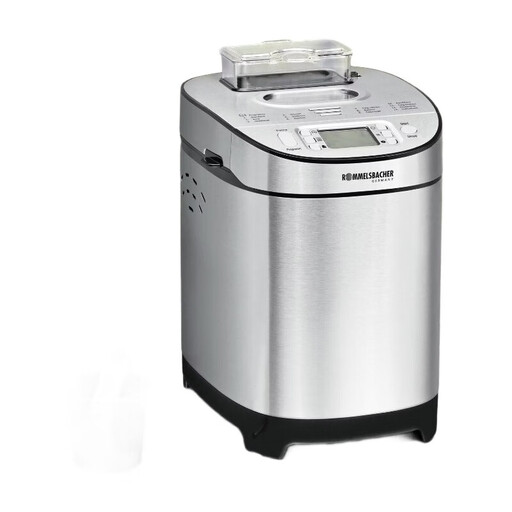 No image available
Consider this model for pizza dough only after checking which dough function the exact version offers and whether it suits your recipe.
The product information lists a 13-hour timer and loaf sizes of 700 or 900 g; these weights don’t tell you how much pizza dough you can make.
No. The programme prepares the dough; afterwards, you take it out, shape the pizza and bake it separately. Follow the steps in your machine’s recipe.
That depends partly on the toppings. The Netherlands Nutrition Centre recommends using a small cool bag for food that can spoil quickly; also check the storage advice for the ingredients you’re using.
According to the Netherlands Food and Consumer Product Safety Authority (NVWA), electrical products must carry the CE marking. Check that the version on offer displays the marking and that its product details match the one you intend to buy.
Don’t assume so. Panasonic advises against putting parts of its bread makers in the dishwasher; follow the cleaning instructions for the exact model.
For eligible distance purchases, the Dutch Government says that in many cases you have a 14-day cooling-off period. Check the terms of the specific purchase; this is separate from your statutory rights if a product doesn’t conform to the contract.