
Party host making lots of pizzas
You want to plan in advance how many batches of dough you’ll need. So check the dough capacity for your recipe, not just the stated loaf weight.


When choosing a bread maker for party pizzas, focus on the permitted quantity of ingredients for your dough recipe and the actual duration of the dough programme: the stated loaf weight doesn’t tell you how much pizza dough it can make. A dedicated pizza dough programme makes its intended use clearer; if it has a general dough programme, the manual should confirm that it supports your recipe and batch size. Before buying, also check the specifications and CE marking of the exact appliance. The NVWA says CE marking is mandatory for electrical products, but this does not confirm that an individual appliance complies.
You want to plan in advance how many batches of dough you’ll need. So check the dough capacity for your recipe, not just the stated loaf weight.
You want the dough to be ready on time, so you’re comparing the duration of the right programme and the work that still needs doing afterwards.
You want to keep using the machine after the party, so you’re also considering other programmes and compatible parts. If a guest has coeliac disease, preventing cross-contamination is important too: the Voedingscentrum stresses that gluten residue can contaminate gluten-free food.
First check the batch size your recipe requires, then see whether the programme and preparation time fit your plans.
| What to consider | What should you check? | Who is this most important for? |
|---|---|---|
| Dough batch size | Check the ingredient limit for the selected dough programme and recipe; don’t use the loaf weight as a substitute. | If I’m baking for lots of guests, I want to know how much dough one batch can handle so I can plan how many rounds I’ll need; around 36% of consumers put portion size first. |
| Preparation time | Check how long the dough programme takes and whether there are any timer restrictions for the exact model. | If I have a set serving time, I want to know when the dough will be ready and how long shaping and baking will take afterwards; around 29% of consumers prioritise planning. |
| Use after the party | Compare programmes you’ll actually use and check whether compatible spare parts are available for the model. | If I want to use the machine for other recipes too, those features and parts will influence my choice; around 21% of consumers prioritise versatility. |
| Dietary requirements | Check the recipe and ingredient labels, and find out how to prevent gluten residue from contaminating equipment and work surfaces. | If a guest needs to eat gluten-free, I want to prevent cross-contamination throughout preparation; around 14% of consumers prioritise this dietary requirement. |
The stated loaf size doesn’t tell you how much pizza dough the appliance can handle per batch. This could lead you to miscalculate how many batches you’ll need for the party.
Use the recipe or ingredient limit for the dough programme on the exact model to work out how many batches you’ll need.
Cross-contamination with gluten can be a problem for people with coeliac disease. A programme name alone doesn’t guarantee that ingredients, equipment and work surfaces will be free from gluten residue.
Check the ingredients and prevent contact with gluten residue during preparation. The Voedingscentrum highlights the importance of preventing cross-contamination.
A product listing with a shorter model name may not make it clear enough which version or features you’ll receive.
Before buying, compare the full product code and relevant features of the appliance on offer with the manufacturer’s information.
This helps you avoid expecting a version with different connections or features from those of the appliance on offer.
Panasonic Netherlands describes the SD-R2530 as having separate programmes for standard and gluten-free pizza dough, as well as manual kneading and rising settings.
Tefal says the Pain & Délice PF240E combines pizza dough preparation with uses including bread, pasta and dairy products.
Inventum lists a general dough programme and loaf sizes of 900 and 1200 grams for the BM125.
Princess lists separate kneading and rising functions for the 152009.
Joybuy’s selection of bread makers and dough preparation options.
 No image available
Check the product information and manual to make sure the appliance suits your dough recipe and preferred batch size.
The product title lists 12 programmes and a capacity of 1L.
 No image available
The product information lists bread and dough programmes; check that the dough programme supports your pizza recipe and batch size.
The product title lists 1600W, automatic programmes and a non-stick pan.
 No image available
The product information lists dough preparation alongside bread programmes; check the dough limit and preparation method for your recipe.
The product title lists gluten-free options and a removable non-stick pan. If you have a dietary requirement, also check the ingredients and take steps to prevent cross-contamination.
 No image available
The product information lists dough preparation and programme settings; check the manual for the limit and duration of the dough programme you’ll use.
The product title lists 610W and 12 programmes.
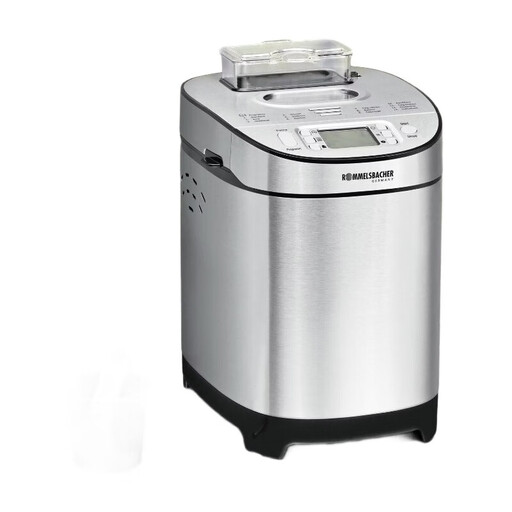 No image available
Check the product information and manual to make sure the machine has a suitable dough programme and the right limit for your recipe.
No, the pizza dough functions mentioned are designed to prepare the dough. You’ll also need to allow time to divide, shape and top the dough, then bake it. Check the recipe for your model.
Not directly. Manufacturers state loaf sizes, but for pizza dough you need the ingredient limit for the dough recipe on your exact machine.
A gluten-free programme alone isn’t enough: check ingredient labels and prevent gluten residue from getting onto ingredients, equipment or work surfaces. The Voedingscentrum stresses the importance of preventing cross-contamination.
According to the Dutch government, you should contact the seller to resolve the issue. The Netherlands has no fixed statutory guarantee period of two years; what you’re entitled to expect depends, among other things, on the product and normal use.
Yes. The NVWA states that CE marking is mandatory for electrical products. Check the marking and specifications of the exact appliance; a brand name or product listing doesn’t confirm that an individual appliance meets the requirement.