Choose a bread maker with a yeast dough programme or separate kneading and proving settings that suit your recipe. Then work out how many batches you’ll need: the weight of a loaf isn’t the same as the maximum amount of uncooked dough, and you’ll usually need to shape and bake individual rolls yourself. Treat the models as examples to compare, and check the marking and conformity of the specific appliance before buying.
Who is this guide for?
Bring-and-share organiser planning lots of rolls
You want to work out the number of batches you’ll need from a recipe in advance and find a suitable dough cycle. Loaf weight alone won’t tell you how much roll dough the machine can handle; the programme details published by Tefal, Rommelsbacher and Inventum can help you compare models.
Student looking to simplify the preparation
You want to leave the kneading or proving to a machine, then shape and bake the rolls yourself. Tefal, Rommelsbacher and Princess list dough, kneading or proving functions; check which steps your recipe still requires.
Baker in a shared kitchen
You’re weighing up space, cost and cleaning before adding another appliance. If a guest has coeliac disease, the Netherlands Nutrition Centre advises paying extra attention to ingredients and cross-contamination.
What should you look for?
Start with the amount of flour and dough per batch in your recipe. Then choose a suitable dough cycle and make sure you have space to shape and bake the rolls outside the machine.
| What to consider |
What to look for |
Who should prioritise this? |
| Dough quantity per batch |
Calculate the flour and total dough weight from your recipe. Compare like with like: Rommelsbacher specifies a maximum of 500 g of flour for yeast dough with the BA 550. |
If I’m planning a set number of rolls for a bring-and-share, I want to know how much dough one cycle can handle; around 36% of consumers prioritise batch size. |
| Dough cycle |
Check the programmes for the exact model, and plan to shape and bake individual rolls separately. |
If I want the machine to do the kneading or proving but shape the rolls myself, I’m looking for a suitable cycle; around 29% of consumers prioritise dough preparation. |
| Space and care |
Measure the available worktop and storage space. Check the cleaning instructions too: Inventum specifies that the baking tin for the BM55 must be washed by hand. |
In a shared kitchen, I want to avoid an appliance that takes up too much space or is difficult to clean; around 21% of consumers prioritise space, cost and maintenance. |
| A guest’s dietary requirement |
Ask what the requirement is and check the ingredients and risk of cross-contamination. A special programme alone doesn’t prove that the result is suitable. |
If a guest has a specific dietary requirement, I want to make sure the ingredients and preparation meet their needs; around 14% of consumers make this their priority. |
Common pitfalls
-
Assuming loaf weight is the maximum dough batch size
A stated loaf size isn’t a confirmed limit for uncooked, proving dough. For example, Rommelsbacher separately specifies a maximum of 500 g of flour for yeast dough in the BA 550.
Compare flour weight with flour weight, and total dough weight only with a limit explicitly stated for dough. Calculate the amount per batch using your recipe.
-
Confusing a dough programme with ready-to-bake rolls
A yeast dough, kneading or proving programme doesn’t mean the machine will shape and bake individual rolls.
Check which steps the machine carries out, then plan to divide, shape and bake the dough according to your recipe.
-
Treating a gluten-free programme as proof of safety
For someone with coeliac disease, gluten can get into food through ingredients or cross-contamination. The Netherlands Nutrition Centre points out that even breadcrumbs can be a concern.
Ask what the dietary requirement is, check the labels and avoid contact with gluten during preparation.
-
Assuming a similar model name means the same version
A small difference in a model code could mean you’re looking at a different version.
Before ordering, compare the full model name on the product page with the version you want to buy.
Brands to compare
Tefal
The PF240E38 is worth a look if you’re after a dedicated yeast dough programme.
- For this model, Tefal lists a ‘Yeast Dough’ programme and loaf sizes from 500 g to 1 kg.
- Loaf sizes don’t indicate the maximum amount of roll dough; check the manual against your recipe.
Rommelsbacher
The BA 550 is worth considering if you want to match the amount of flour per batch to a stated limit.
- Rommelsbacher lists a kneading programme and a maximum of 500 g of flour for yeast dough.
- That limit is for flour, not total dough; also check which proving step your recipe requires.
Princess
Item number 01.152009.01.001 may be of interest if you want to set kneading or proving separately.
- Princess lists programmes for kneading or proving only.
- The stated loaf capacity of 680–900 g isn’t a confirmed limit for uncooked dough; check the manual for the exact version.
Inventum
The BM125 and BM55 offer loaf sizes to compare if you also want to use the machine for bread.
- Inventum lists loaf sizes of 900 and 1,200 g for the BM125, and 650 and 800 g for the BM55.
- These loaf sizes don’t confirm a dough limit for rolls; Inventum specifies that the BM55 baking tin must be washed by hand.
Panasonic
The SD-YR2550 is worth looking into if manual kneading and proving settings matter to you.
- Panasonic lists manual settings for kneading and proving.
- Check that the settings and availability of the exact version suit your plans.
Bread makers at Joybuy
These bread makers are options to compare for preparing bread and dough. The Netherlands Food and Consumer Product Safety Authority states that CE marking is mandatory for electrical consumer products; check the marking and conformity of the specific appliance before buying.
 No image available
Tefal Pain Doré PF2101
Check the manual to see which dough cycle suits your roll recipe and how much dough is allowed per batch.
12 programmes; loaf sizes of 500, 750 and 1,000 g.
View at Joybuy
 No image available
Tefal PF610138
The product description lists dough programmes; check whether the relevant setting is suitable for your yeast dough recipe.
16 automatic programmes; maximum loaf weight 1.5 kg; power 1,600 W.
View at Joybuy
 No image available
Tefal PF250135
The product description mentions dough preparation; check the manual to see whether the function is suitable for yeast dough for individual rolls.
700 W; 20 programmes; automatic dispenser for yeast and other ingredients.
View at Joybuy
 No image available
Tefal PF251835
The product description mentions dough preparation; check the instructions for the right quantities and steps for your recipe.
12 programmes; maximum loaf weight 1 kg; power 610 W.
View at Joybuy
 No image available
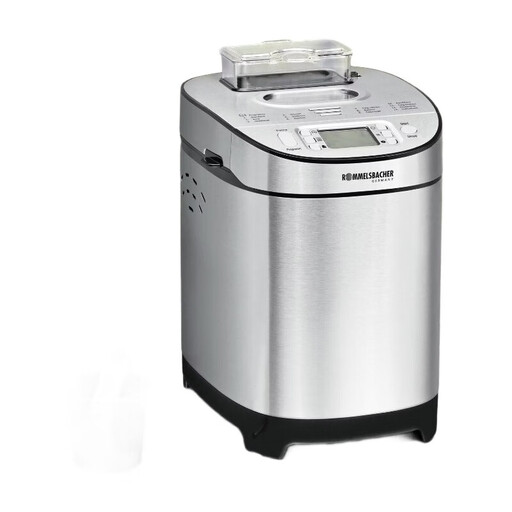
Rommelsbacher BA 550
A kneading programme and a stated flour limit can help you plan the dough stage; plan the other steps in your recipe separately.
Rommelsbacher specifies a maximum of 500 g of flour for yeast dough. The stated loaf sizes are 700 and 900 g; these aren’t dough limits.
View at Joybuy
Frequently asked questions
Will the machine bake individual rolls as soon as the dough programme finishes?
Don’t assume it will. The yeast dough, kneading or proving functions reviewed prepare the dough; plan to divide, shape and bake individual rolls according to your recipe.
Can I use a 900 g loaf size as the limit for 900 g of roll dough?
No, not unless the instructions for that specific model say so. A loaf size is a different measure; Rommelsbacher separately specifies a maximum of 500 g of flour for yeast dough in the BA 550.
Is a gluten-free programme enough for a guest with coeliac disease?
No. Check the ingredients and prevent cross-contamination during preparation. The Netherlands Nutrition Centre warns that even breadcrumbs can be a concern for someone with coeliac disease; tailor the preparation to the guest’s needs.
Is CE marking mandatory for an electric bread maker in the Netherlands?
Yes. The Netherlands Food and Consumer Product Safety Authority states that CE marking is mandatory for electrical consumer products. A product name or brand alone doesn’t confirm that a specific appliance on sale carries the marking or meets all applicable requirements.
How do I clean the baking tin?
Follow the instructions for the exact model. For the BM55 baking tin, Inventum specifies washing by hand with a little washing-up liquid; don’t automatically apply this advice to other machines.


