
Picnic baker who’d rather leave the kneading to the machine
Wants to shape and bake cinnamon rolls themselves, but leave the kneading and proving to a dedicated dough programme.


Choose a bread maker with a separate yeast dough programme, or with kneading and proving settings if you’d prefer to control each step yourself. You’ll then take the dough out of the machine to fill, shape and bake the rolls; bread loaf sizes are not a proven guide to the maximum amount of cinnamon roll dough a machine can handle. Also check the recipe quantity, CE marking and connection type for the exact model.
Wants to shape and bake cinnamon rolls themselves, but leave the kneading and proving to a dedicated dough programme.
Sometimes makes a small batch and sometimes a larger one, and compares recipe limits and loaf sizes before choosing a machine.
Wants to adjust the kneading and proving stages rather than simply follow a fixed automatic programme.
First, check that the machine offers the dough functions you need. Then compare your recipe quantity and the time you’ll have left to shape and bake.
| What to consider | What should you check? | Who is this important for? |
|---|---|---|
| Dough programme | Look for a yeast dough programme or separate kneading and proving settings, not just a programme that bakes sweet bread. | If I mainly want the machine to handle the kneading and proving, I need to know which dough stages it actually performs. Around 36% of consumers give automating dough preparation the highest priority. |
| Batch size | Compare the ingredient quantities in your recipe with the manual for the exact model; loaf weights are not dough limits. | For a picnic group, I want to make enough dough without choosing a size that doesn’t suit my recipe. Around 29% of consumers prioritise choosing a batch size that suits their group. |
| Proving and planning | Check whether any dough programmes can be set to start later, and allow time for shaping, a second prove, baking and cooling. | If I’m using my own recipe or planning around a departure time, I want to be able to manage the dough stages and the remaining preparation time. Around 21% of consumers place the greatest importance on process control or timing. |
| Cleaning and parts | Read the cleaning instructions and check that the baking pan and kneading blade are compatible with the exact model. | If I use the machine regularly, I want to know how to remove leftover dough and where to find model-specific parts. Around 14% of consumers prioritise maintenance and parts. |
A programme that bakes bread in the baking pan won’t automatically produce individually shaped cinnamon rolls.
Check the manual for a yeast dough programme or separate kneading and proving settings. Allow time to fill, shape and bake the dough yourself.
The stated loaf sizes don’t confirm how much dough containing butter, milk or egg will fit in a machine.
Compare your recipe quantities with the instructions for the exact model, rather than trying to work out the flour or dough limit from the loaf weight.
A Princess page for article number 01.152009.02.001 lists a type G plug. This information does not automatically apply to model 01.152009.01.001.
Check the full article number and connection type on the specific listing and rating plate before choosing a model.
For the Pain & Délice PF240E38, Tefal lists a separate yeast dough programme. This could be useful if you want to automate kneading and proving.
For the SD-YR2550, Panasonic describes manual kneading and proving settings for anyone who wants to choose the dough stages themselves.
According to Inventum, the BM125 comes with a large and a double baking pan, which may be useful if you want to make loaves in different sizes.
For the 152009, Princess lists separate kneading and proving programmes and loaf sizes from 680 to 900 grams.
This selection consists of bread makers. Before buying, check the manual to see whether the model can handle the dough stages and recipe quantity you need. According to the Netherlands Food and Consumer Product Safety Authority, CE marking is mandatory for electrical appliances placed on the Dutch market. Check the marking and suitable connection type for the exact model.
 No image available
The product title describes a bread maker; check the manual to see whether it supports the dough stages you need.
12 programmes; capacity 1 L; white.
 No image available
The product information mentions dough preparation; check the manual for the suitable dough setting and recipe quantity.
Power: 1600 W; white.
 No image available
The product title describes a bread maker; check whether it has a dough programme suitable for your recipe.
Power: 700 W; 20 programmes; removable non-stick pan; gluten-free baking options.
 No image available
The product information mentions dough preparation; compare the stated function with the instructions for your cinnamon roll recipe.
Power: 610 W; 12 programmes; black; compact size according to the product title.
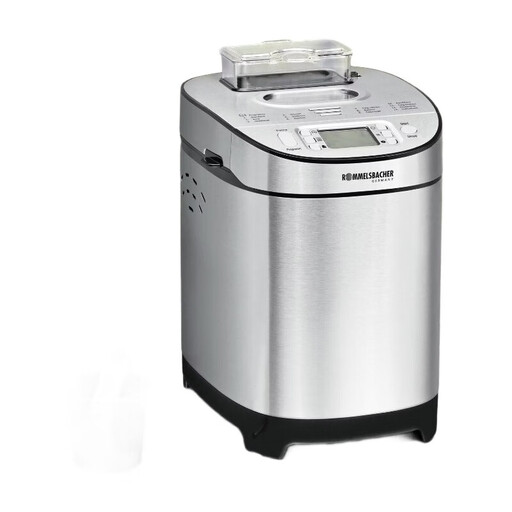 No image available
The product title describes a bread maker; check the manual for dough functions and the maximum quantity for your recipe.
No. A dough programme helps prepare the dough, but it won’t automatically make individually shaped rolls. You’ll still need to fill, roll and cut the dough, then leave it to prove again and bake it according to your recipe. Tefal’s cinnamon roll recipe has not been validated for a specific bread maker model.
Don’t assume that you can. Tefal’s cinnamon roll recipe calls for fresh yeast, while Panasonic recommends dry yeast for bread makers in its general baking tips. Follow the yeast type, ingredient order and quantities in your model’s manual; this information does not provide a validated conversion for the recipe.
Keep icing that needs to be chilled in a cool bag, and take it out of the fridge shortly before you leave. The Netherlands Nutrition Centre advises throwing away products that are normally kept chilled if they have been left unrefrigerated for more than two hours. This advice applies to those storage conditions, not as a general time limit for all cinnamon rolls.
According to the Netherlands Food and Consumer Product Safety Authority, CE marking is mandatory for electrical products placed on the Dutch market; kitchen appliances are electrical appliances. Check the marking and connection type for the exact model. A product description alone does not prove which marking the item supplied will have.
For online consumer purchases from a business, the Dutch government says a 14-day cooling-off period applies in many cases; check the terms of the specific purchase. For Tefal parts, the manufacturer recommends searching by the appliance name or model. A manufacturer’s warranty or returns offer is separate from the legal assessment of a fault.