What should you look for when buying?
First, check whether the machine can knead the dough without baking it into a whole loaf. Then work out how many portions you need and whether participants should learn to knead the dough themselves.
| What to consider | What should you check? | Who is this most important for? |
|---|
| Removing the dough without baking it |
Check whether the manual describes a dough programme or separate kneading setting, what happens when it ends and what steps are still needed. |
If I want the dough kneaded in advance so participants can shape the rolls afterwards, I’ll focus on what the machine does at the end of the programme. Around 31% of consumers prioritise this dough function. |
| Fitting in with the lesson schedule |
Check the programme duration and allow time for dividing, shaping and, if needed, further proving. |
If the dough needs to be ready for the group at a set time, the overall schedule matters more than just a delayed start. Around 25% of consumers prioritise lesson timing. |
| Portions and machine cycles |
Compare the recipe instructions and maximum ingredient quantities with the number of portions planned. Don’t convert loaf weight directly into bread roll dough capacity. |
If I need dough for several workstations, I want to know in advance how many portions and cycles my recipe will require. Around 25% of consumers prioritise group portions. |
| Making room for hands-on kneading |
Decide whether participants should practise kneading and judging when the dough has risen, or whether the machine should take over that preparation. |
If kneading is something participants need to learn, I don’t want that step to disappear automatically. Around 13% of consumers prioritise this learning objective. |
| Dietary requirements and cross-contamination |
Discuss the specific dietary requirement and check the ingredients, baking tin, kneading paddle and shared work surface separately. |
If a participant needs to avoid gluten, I’ll look beyond the programme name and check the equipment and preparation too. Around 6% of consumers prioritise dietary safety. |
Bread makers at Joybuy
These bread makers are worth comparing for a workshop where the dough is prepared in advance. Check the manual for each model to see whether it has a suitable dough or kneading setting and what quantity of your recipe will fit.
 No image available
Tefal Pain Doré PF2101
Worth comparing for a workshop, but check the manual specifically to see whether the machine can prepare dough without baking it.
12 programmes; capacity: 1L.
Joybuy
 No image available
Tefal PF610138
Before choosing this model for workshop dough, check whether the manual lists a dough setting and suitable ingredient limits.
1600W; automatic programmes; non-stick pan.
Joybuy
 No image available
Tefal PF250135
Consider this model for workshop use only after checking the dough function and ingredient limits for your recipe.
700W; 20 programmes; gluten-free options; removable non-stick pan.
The product information states that it is for domestic indoor use only.
Joybuy
 No image available
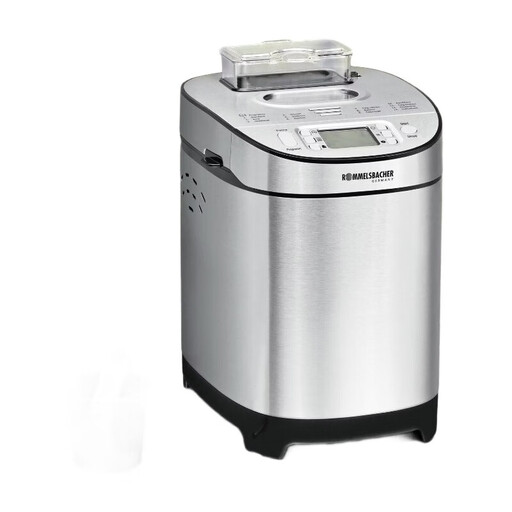
Rommelsbacher BA 550
Rommelsbacher describes a separate dough-kneading programme for the BA 550, which you can compare with the steps in your workshop.
Check the manual for the programme duration and maximum quantity for your recipe.
Joybuy
Frequently asked questions
Can I shape and bake bread rolls in a bread maker?
With a dough programme, you take the dough out to divide and shape it yourself, then bake the rolls according to your chosen recipe. The Inventum manual explicitly states that dough prepared using this setting isn’t baked in the machine.
Does a 1000-gram loaf size mean the machine can handle 1000 grams of bread roll dough?
No. Don’t treat the stated loaf size as proven capacity for every dough recipe. Check the ingredient limits and instructions for the specific model and recipe before deciding how many portions to prepare for your workshop.
Is a gluten-free programme enough for a participant with coeliac disease?
No. A programme won’t prevent gluten traces on shared equipment or work surfaces. Check the ingredients and prevent cross-contamination; the Netherlands Nutrition Centre warns that even a single breadcrumb can cause symptoms.
What consumer guarantee rights do I have in the Netherlands?
According to ACM ConsuWijzer, the statutory guarantee applies alongside any manufacturer’s warranty. If a product breaks sooner than you could reasonably expect under normal use, the seller must offer an appropriate solution. For workshops involving professional use, ask which terms and conditions apply; this consumer information doesn’t determine the terms of a business purchase.
What food rules apply if I offer bread rolls to customers during workshops?
The NVWA explains that businesses offering food to consumers must tell customers about the allergens present and follow food safety rules. Whether a particular workshop falls under these requirements depends on how it is organised and how the food is offered.


