
Vandaag of morgen in huis

Kwaliteit gegarandeerd

Welkomstaanbiedingen ontgrendelen: GRATIS bezorging | Tot 80% korting | Gratis 30 dagen JoyPlus-proefperiode
Download de app
A good bread knife makes all the difference when slicing a crisp sourdough crust, soft sandwich bread or a homemade cake. Yet the range can seem simpler than it really is. Terms such as “extra sharp”, “professional” and “durable” only tell you so much. It’s also worth looking at the serration, blade length, choice of material and care instructions.
Home bakers, keen cooks and professional bakers often come up against three common pitfalls:
A serrated bread knife saws through the crust rather than simply pressing down on it. Look at the shape and depth of the serrations. Finer serrations can work well for soft bread and cake, while coarser serrations offer more grip on a firm crust.
Some models have serrations on one side, while others have them on both. According to WMF’s product description, double serrations help the knife cut more straight through the bread. This is a manufacturer’s claim, not a universal guarantee for every type of bread.
A serrated blade is also useful for foods with a firm exterior, such as tomatoes, melons and certain types of fruit. Don’t use the knife on glass, metal or other hard surfaces, as this can damage the edge.
The right length depends on how you plan to use it:
Always check whether the stated length refers to the blade length or the total product length. For example, a product may have a 23 cm blade, while the entire knife is around 35 cm long. This difference matters when it comes to storage and ease of use.
A stainless-steel bread knife will generally stand up to everyday kitchen use and moisture, but stainless steel doesn’t automatically mean that every model is dishwasher-safe. Check:
A plastic handle can be lightweight and practical. A metal handle may offer a different balance and appearance. With a professional bread knife, long-lasting comfort and control are also important, particularly if you’re slicing several loaves in a row.
Look out for conflicting information between the title and description. Some product listings, for example, may state 20 cm in the title but give a different blade length in the specifications. Check the product specifications and measurements before you buy.
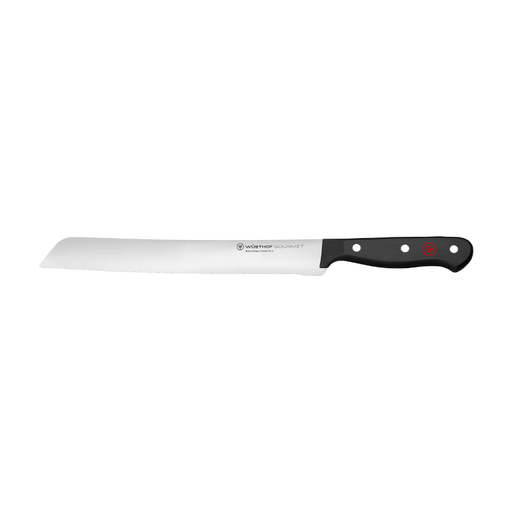
Why it suits this profile: This model has a stainless-steel blade, a plastic handle and a relatively compact size, making it practical for everyday use in a smaller kitchen.
The product description explicitly states that it has a stainless-steel blade and is dishwasher-safe. Do check the current care instructions for the item you buy.
Stainless-steel blade, plastic handle, product weight of 0.20 kg and suitability for bread with a hard crust, according to the product information.
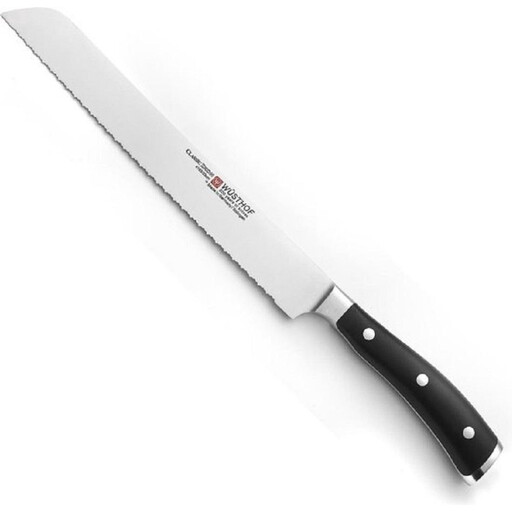
Why it suits this profile: The 23 cm blade offers a practical middle ground for home bakers who regularly slice different types of bread and cake.
The specifications list double serrations, a half bolster and hand-washing. This makes it clear that care and control take priority over the convenience of using a dishwasher.
X50CrMoV15 steel, 23 cm blade, 195 g weight and suitable for left- and right-handed use, according to the product description.
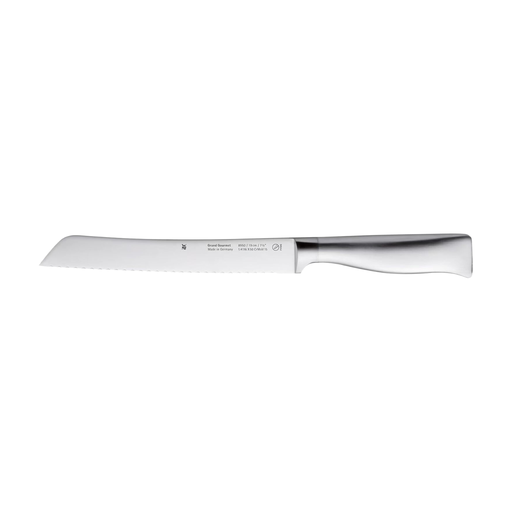
Why it suits this profile: This long version is designed for wide loaves, long pieces of cake and anyone who often slices larger items.
The product information lists the blade length, double serrations and hand-washing. This lets you check that the size and care requirements suit frequent use before you buy.
32 cm version, stainless-steel construction, double-serrated blade and Cromargan 18/10 handle, according to the product description.
We’ve put together a complete, up-to-date list of products that meet these strict selection criteria and the applicable European safety requirements.
A separate bread knife makes sense if you already have a chef’s knife and a paring knife. If you’re putting together a new kitchen, you could also consider a kitchen knife set. Don’t just look at the number of pieces: check that the set actually includes a bread knife and that the other knives suit your cooking routine.
According to the product information, a 3-piece Wüsthof set includes a chef’s knife, bread knife and paring knife. A 13-piece 5five set includes a bread knife, chef’s knife, steak knives, kitchen scissors and a knife sharpener, among other items. The 5five set isn’t dishwasher-safe, so it needs to be washed by hand.
Use a stable, non-slip chopping board and keep your fingers away from the serrated blade. A bread knife is generally sharpened differently from a smooth-edged chef’s knife. Only use a sharpening tool that’s suitable for serrated knives, or follow the manufacturer’s instructions.
Wash the knife according to the product information and dry it thoroughly before putting it away. A knife block, blade guard or safe magnetic storage solution can prevent it from coming into contact with other hard objects. According to the product information, the statutory minimum two-year guarantee applies under European consumer law; additional rights may depend on the relevant national rules.
Yes, a 20 cm bread knife can be suitable for small to medium-sized loaves, rolls and cake. A 23 cm model or longer gives you more reach for wide sourdough loaves or large cakes.
Its lifespan depends on how you use and store it, the chopping board you use and how well you care for it. Contact with glass, metal and other hard surfaces can damage the blade more quickly. A stainless-steel blade isn’t automatically maintenance-free, so follow the cleaning instructions for the model you choose.
It depends on the product. Some models are listed as dishwasher-safe, while others must be washed by hand. Always check the current product description before putting a bread knife in the dishwasher.
