
Vandaag of morgen in huis

Kwaliteit gegarandeerd

Welkomstaanbiedingen ontgrendelen: GRATIS bezorging | Tot 80% korting | Gratis 30 dagen JoyPlus-proefperiode
Download de app
There's little as disappointing as a fresh, crusty loaf of bread that you squash instead of slice. You have good bread, but the wrong tool for the job. A dull or poorly designed bread knife is a common frustration in any kitchen. Before you buy a new bread knife, it's wise to know what to look for. Many knives look great in the packaging but turn out to be a bad purchase in practice.
The most common pitfalls are:
To see through the marketing jargon, let's focus on the specifications that truly matter. A good knife is an investment in effortless slicing, whether you're cutting a sandwich daily or tackling homemade sourdough on the weekend.
The blade is the heart of any knife. For a serrated knife, three things are crucial:
How a knife feels in your hand determines how comfortably and safely you can work with it. Pay attention to the transition from the blade to the handle. A seamless design is not only more hygienic but also often indicates better construction. The 'bolster' (the thick junction between the blade and handle) provides balance and protects your fingers. A well-balanced knife doesn't feel too heavy at the tip or the handle, allowing you to slice with minimal effort.
Although a knife set with a bread knife might seem like an economical start, the quality of the individual bread knife in such a set is not always optimal. Investing in a separate, high-quality bread knife is often a smarter long-term choice.
Based on objective product features, we have selected a number of bread knives that suit different users.
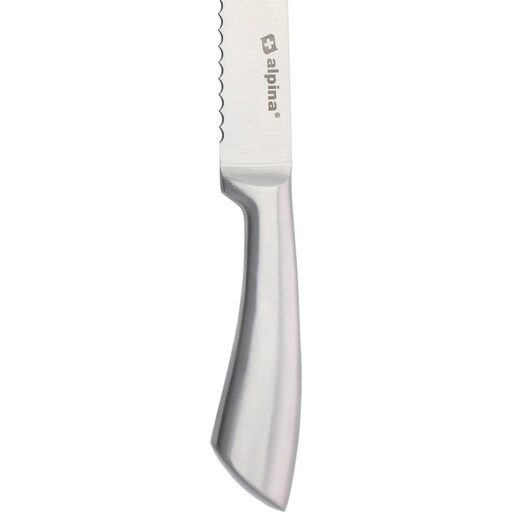
Why it's a match: For those seeking a functional and affordable no-frills knife. Ideal for daily use, slicing standard supermarket bread or soft rolls. A great starting point if your current knife is truly due for replacement.
At 33.5 cm, the blade is long enough to handle larger loaves without squashing them. The seamless stainless steel construction is hygienic and prevents the weak spots seen in cheap knives with separate handles.
Made of stainless steel and is dishwasher-safe, which simplifies maintenance. It offers excellent value for money for a knife of this length.
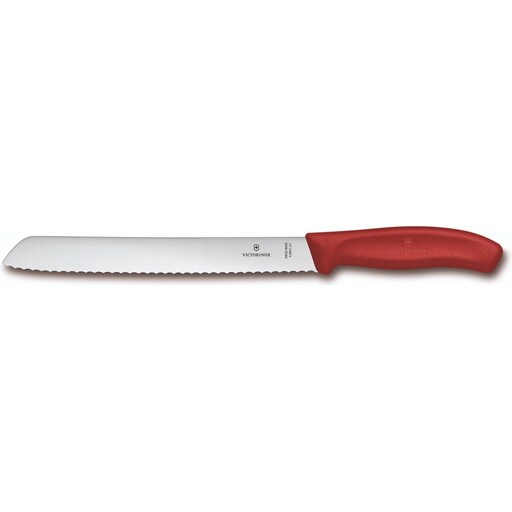
Why it's a match: For the home cook who wants a reliable, sharp, and no-nonsense knife from a renowned brand. The **Victorinox bread knife** is a workhorse known for its sharpness and durability without a premium price tag.
Victorinox knives are famous for their out-of-the-box sharpness. The serrations effectively cut through hard crusts without crushing the soft interior. Its light weight and ergonomic handle prevent the pitfall of a clumsy, poorly balanced knife.
Offers excellent sharpness and longevity for its price. The ergonomic handle ensures a comfortable and secure grip, even during intensive use.
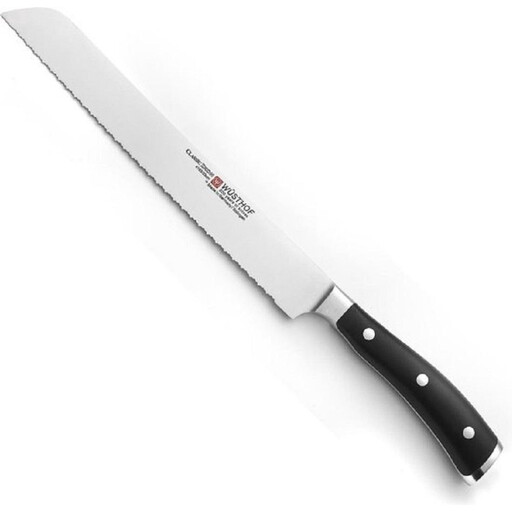
Why it's a match: For the home baker or culinary enthusiast who invests in top-tier quality. This **Wüsthof bread knife** is designed for precision, durability, and a superior cutting experience, from a crusty baguette to a delicate cake.
This knife is forged from a single piece of steel and features a bolster for perfect balance, eliminating the pitfall of an unstable knife. The double serration ensures an exceptionally clean cut, preventing the bread from tearing.
The combination of forged X50CrMoV15 steel and the precision double serration offers long-lasting sharpness and control. The ergonomic handle is designed for comfort during extended use.
A single-serrated knife has teeth on one side of the blade, similar to a saw. A double-serrated knife, as seen on some Wüsthof models, has finer teeth within the larger serrations. According to the manufacturer, this provides a smoother cut with fewer crumbs because the knife slices the bread with more precision rather than tearing it.
Although some manufacturers state that their stainless steel bread knife is dishwasher-safe, it is generally not recommended. The aggressive detergents, high temperatures, and contact with other cutlery can dull the blade and damage the handle. Washing by hand and drying immediately is the best way to guarantee the longevity and sharpness of your knife.
The ideal length depends on what you're cutting. For most loaves, from a tiger bread to a whole wheat loaf, a 20-23 cm (8-9 inch) blade is perfect. This provides enough length to slice in a smooth motion without losing control. For very large, round loaves (like an artisan country loaf), a longer knife of 26 cm (10 inches) or more can be more convenient.
