Choose fully wholemeal bread if fibre is the priority and the eater likes its taste and texture. If familiar white bread is essential, bread made with a mix of wholemeal and white flour could be a stepping stone. Compare the ingredients and nutritional information for the product you choose, as a mix is not automatically fully wholemeal.
Who are you choosing bread for?
Fussy eaters who prefer familiar bread
If taste and texture determine whether someone eats the bread, switching to a finer wholemeal loaf or a clearly labelled mix may be more practical than making a sudden change. Always compare the specific bread, not just the category.
Eaters who prioritise fibre
Fully wholemeal bread is a clear choice if the eater likes the taste. According to the Netherlands Nutrition Centre’s fibre table, wholemeal bread contains 6,7 g of fibre per 100 g, compared with 2,6 g per 100 g for white bread; the nutritional values of individual loaves may vary.
People buying for several eaters
If you’re choosing bread for different people, you need to be able to check the ingredients, allergen information and wholemeal labelling for each product. The Netherlands Food and Consumer Product Safety Authority says allergen information must also be available for unpackaged food.
What matters when choosing?
Start with what matters most to the eater: fibre content, a familiar taste or practical shopping. Then check the ingredients and allergen information for each loaf individually.
Fully wholemeal bread
When: fibre is the priority and the eater likes the taste and texture.
Consider: getting used to it may take time when switching from white bread.
Bread made with wholemeal and white flour
When: you’re looking for a stepping stone and can assess the bread’s ingredients.
Consider: the name of a mix alone doesn’t tell you how much fibre the bread contains.
White bread
When: a familiar white loaf is the deciding factor.
Consider: the Netherlands Nutrition Centre’s fibre table shows that white bread contains less fibre than wholemeal bread.
| What to consider |
What to check when buying |
Who it matters to |
| Fibre |
Compare the fibre per 100 g and check whether the bread is labelled as wholemeal. |
If I want to offer wholemeal bread more often, it also needs to suit the eater’s tastes. Around 36% of consumers say this fibre choice is their top priority. |
| Taste and texture |
Check the type of bread and, if needed, try a smaller pack or a finer-textured option first. |
A different taste or texture may put a fussy eater off bread. For around 29% of consumers, familiar, easy eating comes first. |
| Size and availability |
Choose a size that suits how much you use and check what’s available at the shop where you buy it. |
For regular bread-based meals, I want to be able to buy the right amount without having lots left over. Around 21% of consumers prioritise this practical consideration. |
| Ingredients and allergens |
Check the ingredients list and allergen information; ask about it when buying unpackaged bread. |
If I’m buying for several people, I need to be able to check what’s in each loaf before I buy it. This product information is the main concern for around 14% of consumers. |
Common mistakes
-
Assuming dark bread or a mix is fully wholemeal
The colour and names such as ‘best of both’ don’t prove that all the grain flour used is wholemeal. According to the Netherlands Food and Consumer Product Safety Authority, a product whose grain ingredients are not made entirely from wholemeal flour must not be labelled as wholemeal.
Read the product description and ingredients list. For a mix, compare the stated quantities of flour and the fibre per 100 g.
-
Making too big a change
Wholemeal bread may taste different from the white bread someone is used to. Choosing based on fibre alone won’t help with meal planning if the bread ends up being left uneaten.
Try a small amount first and see whether they’ll eat a finer-textured wholemeal option or a clearly described mix.
Bread that goes uneaten can lead to waste.
-
Checking allergens only after buying
If someone has an allergy, the information for the bread you choose needs to meet their requirements; don’t rely on the type of bread alone. According to the Netherlands Food and Consumer Product Safety Authority, allergen information must also be available for unpackaged bread.
Read the packaging or ask the bakery counter about allergen information before buying.
Brands and shops to consider
Albert Heijn
Albert Heijn lists white and wholemeal bread among its online products.
- AH Vloerbrood wit and AH Vloerbrood volkoren are examples of separate bread options.
- Assess the ingredients and nutritional information for each bread you choose; an overview of the range doesn’t tell you the ingredients of any particular mix.
Jumbo
Jumbo describes white bread and wholemeal options in its range.
- Jumbo describes Fijn Volkoren as a wholemeal wheat bread.
- Check the current ingredients and allergen information for the specific bread you’re buying.
Lidl
Lidl describes a kids’ wholemeal bread made with extra-finely milled wholemeal flour.
- That description may be useful if you’re looking for a finer-textured wholemeal option.
- Lidl itself describes it as wholemeal bread; the description doesn’t make it a mix of white and wholemeal flour.
ALDI
ALDI lists both white and wholemeal bread.
- According to ALDI, the wholemeal breads shown are made with wholemeal flour.
- Compare an individual loaf using its own ingredients and nutritional information, rather than relying on a statement about the range.
PLUS
PLUS has separate online categories for white and wholemeal bread.
- PLUS Casino wit and PLUS Rond fijn volkoren show the different types of bread available.
- Check the ingredients and availability of each product at the shop where you buy it.
Dirk
Dirk lists white bread, wholemeal bread and an extra-fibre option.
- The range includes different types of bread that you can compare by their labelling and nutritional information.
- The name ‘extra fibre’ doesn’t replace checking the fibre per 100 g and the rest of the product information.
White bread products at Joybuy
These products suit the white bread option: they’re rolls and a baguette, not a whole or sliced loaf, or a confirmed mix of white and wholemeal flour. Choose the shape and quantity that suit your meal.
 No image available
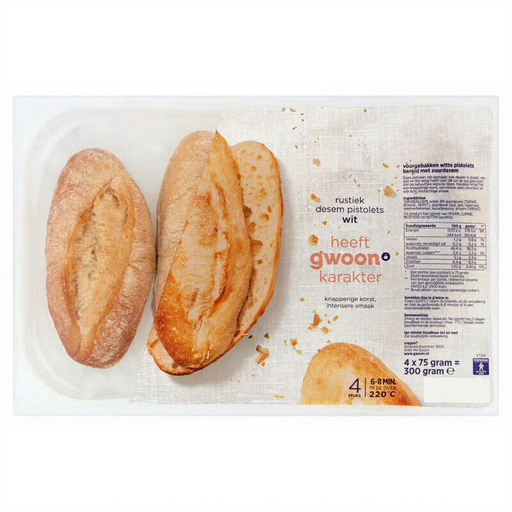
g'woon White Rustic Pistolet, 4 pieces
An option if you’d like to serve white rolls instead of a whole loaf. The pack contains four; check that this type and quantity of bread suit your meals.
If you have allergies, check the information on the current packaging.
View at Joybuy
 No image available
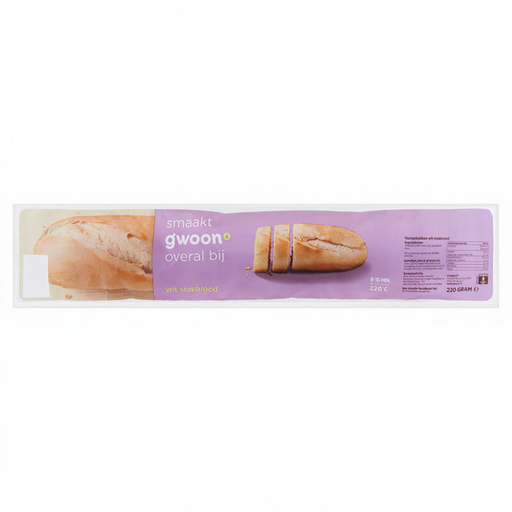
g'woon White Baguette, 220 g
An option if you’re looking for a white baguette instead of a whole or sliced loaf. This one weighs 220 g; check that its size and shape suit how you plan to use it.
If you have allergies, check the information on the current packaging.
View at Joybuy
Frequently asked questions
Does ‘best of both’ mean the bread is fully wholemeal?
No, the name doesn’t mean that all the grain flour used is wholemeal. According to the Netherlands Food and Consumer Product Safety Authority, a product can only be labelled as wholemeal if all its grain ingredients are wholemeal flour. For a mix, check the ingredients and nutritional information too.
How do I check allergens in unpackaged bread?
Ask for allergen information before buying or check the information provided with the bread. The Netherlands Food and Consumer Product Safety Authority says that sellers must inform consumers about the allergens present in unpackaged food too.
Do I need to switch from white to wholemeal bread all at once?
No. If someone is used to white bread, you can first see whether they like a finer-textured wholemeal option or a clearly described mix. The Netherlands Nutrition Centre notes that it can take time to get used to the different taste and recommends increasing fibre gradually.
Can I assume that all bread contains iodine?
No, the type of bread alone doesn’t tell you whether iodised baker’s salt was used to make it. Check the ingredients information for a specific loaf or ask the supplier.


