Try finely milled wholemeal bread if your child likes the taste and texture: according to the Netherlands Nutrition Centre, wholemeal bread is made from 100% wholemeal flour. Brown bread can be a stepping stone for a fussy eater; choose white bread if familiarity matters most at this mealtime. Whatever you choose, check the label and, if the bread is going to school or childcare, check the rules on allergens.
Who might find this choice relevant?
Parents who want to try finely milled wholemeal bread
Your child prefers soft bread, but you want to see whether they will also accept a more finely milled wholemeal loaf. Check that the bread you choose is labelled ‘wholemeal’; the grind or soft appearance alone won’t tell you what it’s made from.
Parents of fussy eaters
You’re looking for a manageable step away from familiar white bread. Brown bread could be an option, but according to the Netherlands Nutrition Centre, it contains a mixture of wholemeal flour and refined flour, so it isn’t the same as wholemeal bread.
Parents packing bread to take with them
For school, after-school care or childcare, you’ll want to know which allergens are in the specific bread and what the setting’s rules are about bringing and sharing food. Check this information again whenever you buy a different loaf.
What should you look for when choosing?
For a fussy child, the main difference between white, brown and finely milled wholemeal bread is the step you ask them to try. Then check the ingredients, nutritional information and requirements for taking it with them for each product.
Finely milled wholemeal
When: Your child is willing to try a finer texture and you’re looking for bread labelled as wholemeal.
Things to consider: Even finely milled wholemeal bread can taste or look different from white bread. Lidl describes a kids’ bread made with extra-finely milled wholemeal flour; check the label on the product you choose.
Brown bread
When: Your child isn’t ready to try wholemeal bread yet, but might be open to a different kind of sandwich from white bread.
Things to consider: According to the Netherlands Nutrition Centre, brown bread contains both wholemeal flour and refined flour, so the name doesn’t mean it’s completely wholemeal.
White bread
When: A familiar sandwich matters more than trying a new type of bread at this mealtime.
Things to consider: The Netherlands Nutrition Centre distinguishes white bread from wholemeal bread because of their composition and nutritional value; don’t treat them as the same choice.
| What to consider | What to check when buying | Who it matters to |
|---|
| Wholemeal and fibre |
Look for the word ‘wholemeal’ on the specific loaf and compare the fibre per 100 g in the nutritional information. |
I want to know whether the bread really is wholemeal, even if it looks finely textured. This is the top priority for around 45% of consumers. |
| Taste and texture |
If you like, try finely milled wholemeal or brown bread in a smaller size, and check the product name and ingredients to identify the type of bread. |
If my child quickly rejects a different sandwich, I want to see what texture they’ll accept first. This is the main concern for around 27% of consumers. |
| Allergens and school rules |
Check the latest allergen information and ask the school or childcare setting about its rules for bringing and sharing food. |
Before packing lunch, I need to be sure the bread meets the setting’s requirements. This is the top priority for around 18% of consumers. |
| Size and storage |
Check whether you can buy half a loaf, or freeze portions you won’t use soon. |
I want to try a new bread without leaving a whole loaf unused. This matters most to around 10% of consumers. |
Common mistakes
-
Assuming dark or seeded bread is wholemeal
The colour and number of types of grain don’t tell you whether a loaf is made entirely from wholemeal flour.
Check for the exact word ‘wholemeal’. According to the Netherlands Nutrition Centre, wholemeal bread is made from 100% wholemeal flour; use brown bread as a stepping stone, not as another name for wholemeal.
-
Relying on an old product description
Ingredients and allergen information can change. This is especially important when you’re packing a different bread for school or childcare.
Read the packaging of the product you’re actually buying, or ask the seller for allergen information if the bread is sold unpackaged.
-
Packing bread without checking the setting’s rules
Choosing a product and checking the rules on sharing or eating together are two separate things. If your child follows a strict gluten-free diet, you’ll also need to consider the risk of cross-contamination.
Ask the school, after-school care provider or childcare setting about its rules in advance, and choose the specific bread accordingly.
-
Buying a whole loaf for a first try
Your child may reject a new taste or texture, and bread that’s left uneaten can go stale.
If available, try half a loaf and freeze portions you won’t use soon.
Otherwise, a whole loaf could take up unnecessary freezer space or partly go to waste.
Brands to compare
Albert Heijn
Albert Heijn has separate online categories for white and wholemeal bread.
- Useful if you want to start by searching by bread type.
- Check the ingredients and allergens for the product you choose; a category won’t tell you what’s in a particular loaf.
Jumbo
Jumbo has categories for white, brown, seeded and wholemeal bread, among others.
- You can compare different types and sizes of bread side by side.
- Check the label on seeded bread if you’re specifically looking for wholemeal.
Lidl
Lidl describes a kids’ bread made with extra-finely milled wholemeal flour.
- That product description gives you a useful starting point if you want to look at a finer-textured wholemeal option.
- Lidl says its fresh bread range can vary between stores, so check the current product and label.
ALDI
ALDI stocks white, wholemeal and seeded bread, and also lists a finely milled wholemeal loaf.
- You can compare a finely milled wholemeal loaf with other types of bread.
- For ingredients, allergens and nutritional information, check the latest packaging for the loaf you choose.
PLUS
PLUS has separate online categories for white and wholemeal bread.
- The categories make it easier to browse the two types of bread separately.
- PLUS notes that product information can change, so check the packaging when you buy.
Dirk
Dirk stocks white, wholemeal and seeded bread, among other types.
- You can compare different types of bread and the sizes available.
- If wholemeal is a deciding factor for you, don’t rely on the colour or name alone.
Bread options on Joybuy
These two products suit different needs: a white bread mix for baking at home and a loaf with Whole Wheat in its name. For the latter, check the current wholemeal labelling before choosing it as wholemeal bread.
 No image available
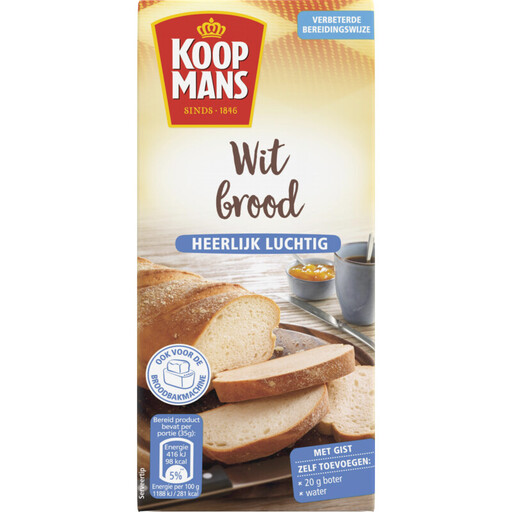
Koopmans White Bread Mix, 450 g
An option if you’d like to bake white bread yourself for this mealtime; it’s a bread mix, not a ready-made loaf. Follow the preparation instructions on the packaging, and check the latest allergen information and school rules before packing it to take with you.
View on Joybuy
 No image available
Lekhaven Bakkerij Whole Wheat Country Round Bread, 550 g
A loaf to consider alongside the white option, but the words Whole Wheat in the name alone don’t confirm that this particular bread is labelled as wholemeal. Check the latest packaging, as well as the preparation instructions and allergen information, before packing it to take with you.
View on Joybuy
Frequently asked questions
Is dark or seeded bread automatically wholemeal?
No. According to the Netherlands Nutrition Centre, wholemeal bread is made from 100% wholemeal flour, while brown bread contains a mixture of wholemeal flour and refined flour. Check for the word ‘wholemeal’ on the bread rather than relying on the colour or name alone.
Can I pack regular bread for a child who needs to eat gluten-free?
Bread made with grains that contain gluten isn’t suitable for a strict gluten-free diet. Check the allergen information for the specific product and speak to the school or childcare setting about its rules for bringing in food and avoiding cross-contamination.
How can I check allergens in fresh, unpackaged bread?
Ask the seller which allergens are present in the specific bread. The Netherlands Food and Consumer Product Safety Authority says that sellers must also inform customers about allergens in unpackaged food.
Does all bread contain baker’s salt with iodine?
Don’t assume that it does. The Netherlands Nutrition Centre highlights the importance of baker’s salt in bread for children; check the product information for the bread you buy or ask the baker which salt they used.
How should I store wholemeal bread for several mealtimes?
The Netherlands Nutrition Centre recommends keeping wholemeal bread in a kitchen cupboard for 2–4 days, or in the freezer for 1–3 months. Freeze portions you won’t use soon, and throw away any mouldy bread.


