
Hosts catering for fussy eaters
If one guest prefers white bread and another would rather have wholemeal, serving both gives everyone a familiar option to choose from.


For Friday afternoon drinks with a mix of preferences, serve white bread or white rolls alongside a loaf clearly labelled as wholemeal. This gives guests the choice between a familiar lighter option and a wholemeal one. Adjust the quantity and serving style to suit your group, and if anyone has an allergy, check the labels on the bread you’re actually serving.
If one guest prefers white bread and another would rather have wholemeal, serving both gives everyone a familiar option to choose from.
You may want to offer wholemeal bread without basing your entire selection on it. According to the Netherlands Nutrition Centre, wholemeal bread contains more fibre than white bread.
Rolls or sliced bread make it easier to put out portions. If you choose bake-at-home bread, you’ll also need to allow time to prepare it according to the pack instructions.
First decide which flavours you want to offer, then choose a quantity and format that suit the way you’ll be serving the bread. The percentages below indicate which consumers consider each factor their top priority.
| What to consider | What to check when buying | Who it matters to |
|---|---|---|
| Taste preferences | Choose a clearly white option alongside a loaf labelled as wholemeal. If you’re serving two types, consider the possibility of leftovers too. | If my guests enjoy different flavours and textures, I don’t want to limit them to one type of bread. Around 40% of consumers put having that choice first. |
| Wholemeal and fibre | Check for the ‘wholemeal’ label and compare the fibre content in the nutrition information per 100 g. ‘Multigrain’ does not automatically mean wholemeal. | I want to serve a clear wholemeal option for guests who look for one, even if others choose white bread. Around 40% of consumers rank this as their top consideration. |
| Ease of serving | Check the number of pieces, whether the bread needs slicing and whether there are any baking instructions. | When guests help themselves, I want to keep preparation to a minimum. Ease of serving is the most important factor for around 20% of consumers. |
A dark colour or the name ‘multigrain’ doesn’t, by itself, mean that a loaf is wholemeal.
Look for the explicit ‘wholemeal’ label and read the ingredients list if you want to offer a wholemeal option.
A product name won’t tell you how similar loaves compare on things such as fibre or salt.
Compare the nutrition information on the same basis, such as per 100 g, and check the ingredients list too. The Netherlands Nutrition Centre recommends looking beyond the front of the label.
Ingredients and allergen information can change. PLUS also points this out in its online product information.
If anyone has an allergy, check the packaging of the bread you’ve actually received before serving it.
Serving only white or only wholemeal gives guests with different taste preferences less choice.
Choose a suitable quantity of each and set them out separately so they’re easy to tell apart.
These supermarkets show a range of bread types in their online selection. When choosing, check the range and product information for your order or local store.
Albert Heijn’s online bread range includes white bread and tiger wholemeal bread, among other options.
Jumbo lists own-brand loaves online in white, brown, multigrain and wholemeal varieties, including half loaves.
Lidl describes a specific wholemeal loaf made with extra-finely ground wholemeal flour.
ALDI’s bread range includes white, wholemeal and multigrain loaves.
PLUS has separate online categories for white and wholemeal bread.
Dirk lists white, wholemeal and multigrain loaves, as well as rolls, among its online options.
These breads offer separate white and wholemeal options for Friday afternoon drinks. Choose from the white and wholemeal products to suit your guests, and consider the format and any preparation needed.
 Image unavailable
A wholemeal option to serve with dips, so guests can help themselves to pieces.
The product name specifies six pieces. If anyone has an allergy, check the packaging before serving.
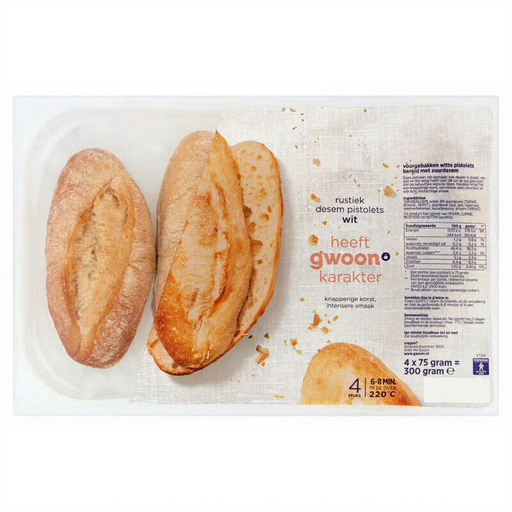 Image unavailable
A white option for guests who would rather pick up an individual roll than a slice of bread.
The product name specifies four rolls. Check the current label if anyone has an allergy.
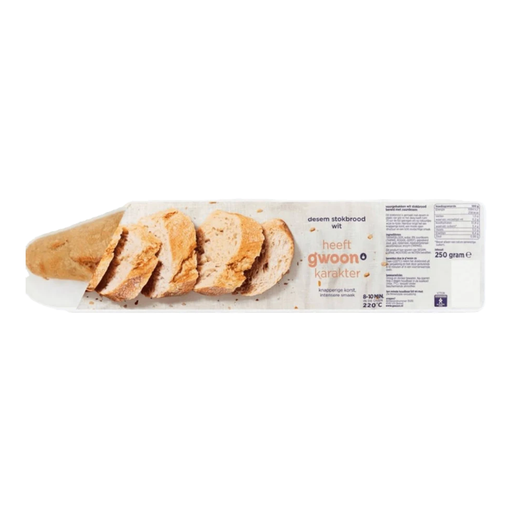 Image unavailable
A white baguette to slice for sandwiches or share around.
The product name specifies 250 g. Allow time for slicing, and check the packaging if anyone has an allergy.
 Image unavailable
A round wholemeal loaf for anyone who wants to serve a whole loaf, sliced, alongside a white option.
The product name specifies 550 g. Allow time for defrosting, baking and cooling before slicing, and follow the pack instructions for baking time.
No, those names don’t, by themselves, mean that the bread is wholemeal. Look for the ‘wholemeal’ label and check the ingredients list. The Netherlands Food and Consumer Product Safety Authority links the wholemeal designation to a grain ingredient made entirely from wholemeal flour.
Offering both lets guests choose according to their taste preferences. According to the Netherlands Nutrition Centre, wholemeal bread contains more fibre than white bread. Serving white bread too means no one has to choose the same type.
Read the ingredients and allergen information on the packaging of every loaf you plan to serve. Don’t rely solely on a product page you viewed earlier: PLUS says that product information may change.
No, don’t assume that every loaf contains a set amount. The Netherlands Food and Consumer Product Safety Authority explains that bread may contain iodine through baker’s salt. Check the information for the specific product if its composition matters to your choice.