
Parents who pay attention to the type of bread
You want to serve something special and start by choosing wholemeal or brown bread. The Netherlands Nutrition Centre recommends these types of bread for children because of their fibre content.


Choose wholemeal or brown bread if fibre is your priority for this tea-time occasion. Sourdough, seeds or a rustic shape may also suit the way you want to serve it. Check the current ingredients and allergen information for your chosen bread. If it’s going to school or childcare, remember to check their requirements too.
You want to serve something special and start by choosing wholemeal or brown bread. The Netherlands Nutrition Centre recommends these types of bread for children because of their fibre content.
You might be looking for sourdough or hearth-baked bread to serve at the table. Choose the crust, texture and quantity to suit the children who’ll be eating it.
If the bread is going to school or childcare, you’ll want to know which allergens it contains and what requirements apply there. For packaged bread, check the current label; for unpackaged bread, ask for allergen information before buying.
Start with what matters most for this tea-time occasion: the type of bread, allergens, how you’ll serve it or how much you need. Then consider names such as ‘rustic’ or ‘sourdough’.
| What to consider | What to check when buying | Who it matters to |
|---|---|---|
| Type of bread and fibre | Check whether the bread is wholemeal or brown, and compare the nutritional information per 100 g. If you wish, check whether baker’s salt is listed among the ingredients. | I want to choose bread with its fibre content in mind, even if a rustic variety looks appealing. Around 33% of consumers make this their top priority when choosing bread. |
| Allergens and requirements | Read the current allergen information and any warnings about cross-contamination. Ask for information about unpackaged bread and check the requirements at the school or childcare setting. | If I’m packing bread to take along, I need to know whether it meets the allergen requirements and the rules at the setting. This is the top priority for around 27% of consumers. |
| Crust and presentation | Choose a texture the child enjoys eating, and check whether the bread is ready to serve or needs to be baked first. | I’m mainly looking for bread that makes tea time feel special, without choosing a crust or texture the children will leave uneaten. This is the top priority for around 27% of consumers. |
| Quantity and storage | Compare the pack size with the number of people eating, and read the storage instructions and any baking instructions. | For a small gathering, I don’t want to prepare more bread than we need, and I want to be able to store any leftovers. Around 13% of consumers make this their top priority. |
These words don’t tell you on their own how much wholegrain a loaf contains. For example, the organic multigrain sourdough hearth bread described by Albert Heijn is labelled as white multigrain bread.
If the type of bread is key to your choice, check the product name, ingredients and nutritional information first.
Allergens vary from one bread to another. If a child needs to avoid certain allergens, a similar product name is no substitute for up-to-date product information.
Check the label each time, or ask about allergen information before buying unpackaged bread. Remember to check the school or childcare setting’s requirements too.
A large loaf may be more than you’ll use during one tea-time occasion. Without a plan for storing it, you could end up with leftovers.
See if a smaller pack is available, or divide the bread into portions and follow the product’s storage advice.
Lidl says its fresh range may vary by store. Jumbo states that its sourdough breads, baked in store, aren’t available to order online.
If you need a particular bread for a planned occasion, check what’s available at the store in question in advance.
One example of this type of bread is Albert Heijn’s organic multigrain sourdough hearth bread.
Jumbo describes sourdough breads with a rustic crust, suited to a more elaborate spread.
According to the product description, Lidl’s rustic wholemeal sourdough bread combines wholemeal wheat with sourdough.
ALDI offers, among other options, fine wholemeal bread and extra high-fibre wholemeal bread.
PLUS offers Korenlanders sourdough breads and hearth breads as options for a varied tea-time spread.
Dirk offers, among other options, wholemeal hearth bread and multigrain hearth bread.
These options range from individual wholemeal flatbreads to rustic multigrain baguettes for a more substantial tea-time spread. Choose based on the type of bread, the quantity and how much preparation you’re happy to do. Always check the current packaging before serving.
 Image unavailable
If you want to serve individual flatbreads with tea, this pack contains 6 pieces. The product is called Whole Wheat and is a flatbread, not sourdough or hearth bread. Check the current allergen information if you’re choosing it for a child or group.
 Image unavailable
If you’d like to serve individual baguettes, consider this pack of 4, each weighing 135 g. Allow time to defrost and bake this variety, following the instructions on the packaging. Also check the type of bread and allergen information if these are important to your choice.
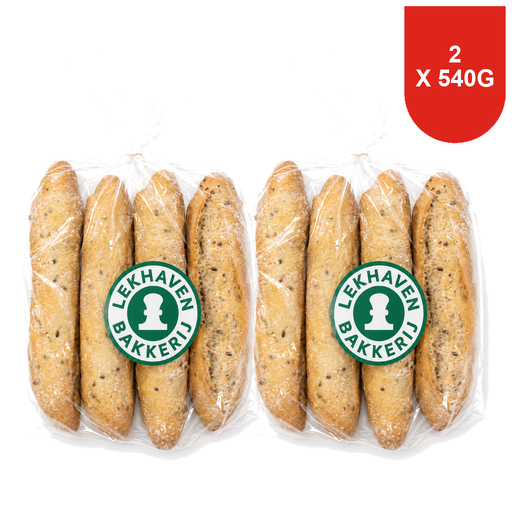 Image unavailable
For a larger gathering, this variety contains 2 packs, each with 4 baguettes weighing 135 g. Compare this quantity with what you’ll need for a small tea-time occasion. The baguettes need to be defrosted and baked; follow the instructions on the packaging and check the current allergen information.
No, sourdough on its own doesn’t tell you whether bread is wholemeal. The Netherlands Nutrition Centre recommends wholemeal and brown bread for children because of their fibre content. So check the type of bread and nutritional information for the product you’re considering.
No. According to the Netherlands Nutrition Centre, children without the conditions mentioned that require them to avoid gluten don’t need to eat gluten-free. If there’s a medical need or a requirement at the school or childcare setting, choose accordingly and check the label and any warnings about cross-contamination.
Ask for allergen information about the specific bread before buying it. The Netherlands Food and Consumer Product Safety Authority says consumers must be able to get allergen information about unpackaged food before purchase. Don’t rely solely on a previous purchase of bread with a similar name.
Divide the bread into portions you can use later and follow the storage advice on the packaging. For opened wholemeal bread, the Netherlands Nutrition Centre recommends storing it for 2 to 4 days in a kitchen cupboard, or for 1 to 3 months in the freezer. Follow the product instructions for bake-at-home bread too.
Baker’s salt is relevant to the amount of iodine bread contributes to your diet. The Netherlands Nutrition Centre highlights bread made with baker’s salt as a source of iodine. If this matters to your choice, check the ingredients for the specific bread.