Try fine wholemeal bread if a coarse texture is putting you off, but you still want wholemeal. If a familiar taste matters more, brown bread could be a stepping stone; nutritionally, white bread is not an equivalent substitute for wholemeal bread. Check the bread description and ingredients, and ask about allergens and baker’s salt if needed when buying unpackaged bread.
Who is this bread choice relevant to?
Fussy eaters who avoid coarse textures
If someone leaves coarse wholemeal bread uneaten, you could compare fine wholemeal with brown bread. Finely milled wholemeal is still wholemeal, but whether its texture appeals depends on the loaf and the person eating it.
Households keeping an eye on fibre
For these shoppers, the wholemeal description is more useful than a dark colour or the name ‘multigrain’. Compare the fibre content in the nutritional information for each loaf.
Shoppers buying packaged and unpackaged bread
At a market or bakery, not all the information will be on a packet. Before buying, ask about any relevant allergens and, if you want to know, whether the bread is made with baker’s salt.
What should you look for when choosing?
First, decide which bread description suits your needs. Then consider whether the texture and information for that particular loaf work for your household.
Fine wholemeal bread
Choose it when: you want wholemeal bread but would rather avoid a coarse texture.
Consider: finely milled doesn’t tell you whether someone will like the taste and crumb of this particular loaf.
Brown bread
Choose it when: a bread between white and wholemeal better suits your household’s preferences.
Consider: brown bread isn’t automatically wholemeal, so check the ingredients and nutritional information.
White bread
Choose it when: a familiar taste and texture are the main priority for now.
Consider: according to the Netherlands Nutrition Centre, white bread contains fewer nutrients than wholemeal bread.
| What to consider | What to check when buying | Who is this relevant to? |
|---|
| Wholemeal and fibre |
Look for the wholemeal description and compare fibre per 100 g on the packet. |
If wholemeal and fibre are my main priorities, I don’t want to judge by the bread’s colour. This is the top priority for around 40% of consumers. |
| Texture and taste |
Check whether the bread is described as fine or coarse, and distinguish between white, brown and wholemeal. |
There’s a fussy eater at home who finds a coarse crumb difficult, so I’m looking for a loaf they’ll be willing to try. This is the top priority for around 30% of consumers. |
| Size and range |
Check whether the shop offers a suitable whole or half loaf. |
For our household, I want to choose a size we can use, from a shop where we already do our food shopping. Around 20% of consumers give this the highest priority. |
| Ingredient information |
Check for relevant allergens. Look for baker’s salt on the label or ask the seller. |
I need to know which ingredients matter to us before buying, including for unpackaged bread. For around 10% of consumers, this check comes first. |
Common bread-buying mistakes
-
Assuming dark or multigrain bread is wholemeal
Colour, seeds and the word ‘multigrain’ don’t tell you by themselves whether a loaf is wholemeal. Albert Heijn describes brown and multigrain breads that use white flour as well as wholemeal flour.
Look for the white, brown or wholemeal description, then read the ingredients.
-
Assuming the nutritional value of one loaf applies to others
Jumbo lists 7.6 g of fibre per 100 g for its Fijn Volkoren. That figure applies to that product, not to every fine wholemeal loaf.
Compare the nutritional information per 100 g for the exact products you’re considering.
-
Not asking about allergens in unpackaged bread
A loaf’s name or appearance won’t tell you all the allergens it contains. According to the Netherlands Food and Consumer Product Safety Authority, allergen information must also be available for unpackaged products.
Before buying, ask the seller about any allergens that are relevant to you.
-
Assuming every loaf contains baker’s salt
According to the Netherlands Nutrition Centre, bakers aren’t required to use baker’s salt. So you can’t tell whether it’s been used just from the type of bread.
For packaged bread, check the ingredients list. If you need this information for unpackaged bread, ask the seller.
Bread ranges to compare
Albert Heijn
Albert Heijn’s wholemeal range includes different shapes and textures, including fine wholemeal bread.
- Handy for comparing fine and other wholemeal options within one range.
- Check the packet for your chosen loaf, as product information can change.
Jumbo
Jumbo offers white, brown, wholemeal and multigrain bread, including Fijn Volkoren.
- The product information for Jumbo Fijn Volkoren includes ingredients and nutritional details for that variety.
- Don’t apply the nutritional values for that loaf to other recipes or sizes.
ALDI
ALDI describes a bakery range that includes white, brown and wholemeal bread in whole and half sizes.
- The different bread descriptions give you a starting point for choosing a basic loaf.
- Check the packet for your chosen variety’s ingredients, allergens and nutritional information.
PLUS
PLUS offers several wholemeal breads, including fine wholemeal, tiger wholemeal and farmhouse wholemeal.
- The product names help you compare different types of bread within the wholemeal range.
- Check which varieties are available at the shop you choose.
Dirk
Dirk offers white, brown, wholemeal and multigrain bread, as well as sourdough products.
- Whole and half sizes make it easier to find a suitable loaf.
- Compare the recipe and weight of each specific loaf; the category alone doesn’t tell you enough.
Bread products on Joybuy
This selection includes flatbread, rye bread and bread to bake at home. If you’re choosing for a fussy eater, check the bread description and texture of each product separately: these products aren’t automatically a mix of white and wholemeal bread or a fine wholemeal loaf.
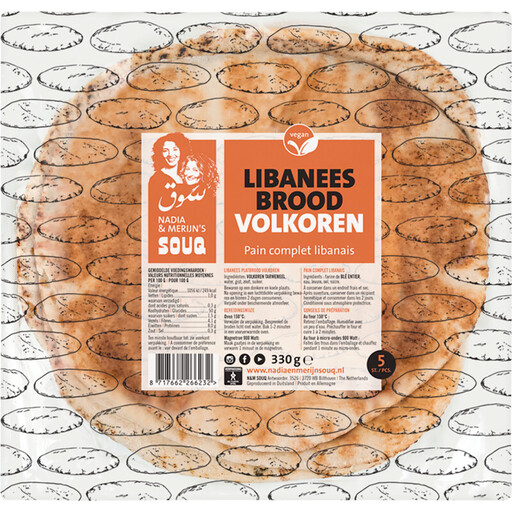 Image unavailable
Souq Lebanese wholemeal flatbread, 6 pieces
An option if you’re looking for flatbread; don’t expect the crumb texture of an ordinary loaf.
The product name lists six pieces. Check the current ingredients and allergens on the packet.
View on Joybuy
 Image unavailable
TastyBasics rye bread, 9 pieces
A good fit if you’re looking for rye bread, but it’s not necessarily a substitute for bread with a familiar, soft crumb.
The product name lists nine pieces. Check the ingredients and allergens on the current packaging.
View on Joybuy
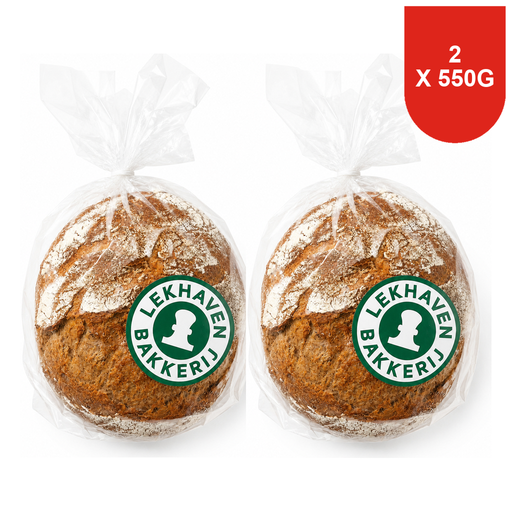 Image unavailable
Lekhaven Bakkerij Whole Wheat Country Round Bread, 2 × 550 g
A good choice if you want to buy two round loaves and have room at home to store and bake them.
The product name distinguishes this pack from the one-loaf version. Check the baking instructions and allergens on the packaging.
View on Joybuy
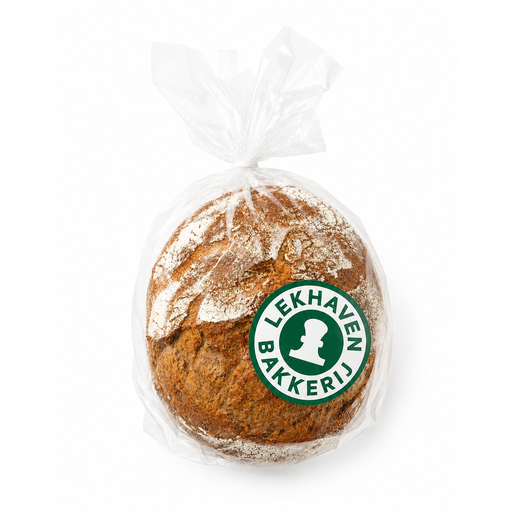 Image unavailable
Lekhaven Bakkerij Whole Wheat Country Round Bread, 550 g
A good fit if you want one round loaf rather than a pack of two.
Before baking, check the instructions on the packaging and look there for the latest allergen information.
View on Joybuy
 Image unavailable
Bolletje Rye Bread Bun, 500 g
Consider this product if you’re looking for rye bread, but check its format: the name says ‘bun’, while the description refers to sliced rye bread.
The product name lists 500 g. Check the bread description and grain composition on the packaging before assuming it’s a fully wholemeal product.
View on Joybuy
Frequently asked questions
Is dark or multigrain bread automatically wholemeal?
No. According to Albert Heijn, brown or multigrain bread can contain white flour as well as wholemeal flour. For wholemeal bread, look for the wholemeal description on the specific product and read the ingredients.
Is fine wholemeal bread less wholemeal than coarse wholemeal bread?
No. Fine or coarse doesn’t in itself tell you how much of the grain has been used. Fine wholemeal bread could be a good option if a coarse texture is putting you off; compare the labels of the loaves you’re considering to check for nutritional differences.
How can I find out about allergens in unpackaged bread?
Before buying, ask the market stallholder or baker about any allergens that are relevant to you. According to the Netherlands Food and Consumer Product Safety Authority, consumers must also be given allergen information for unpackaged products.
Does every loaf in the Netherlands contain baker’s salt with iodine?
No. According to the Netherlands Nutrition Centre, bakers aren’t required to use baker’s salt. For packaged bread, look for baker’s salt in the ingredients list, or ask about it when buying unpackaged bread.


