What should you look for when choosing?
First decide whether you’d like to serve two different types of bread or one loaf you both enjoy. Then check the bread type, quantity and any ingredients that may be relevant to a guest.
White and wholemeal side by side
When: if your preferences differ and you’d each like to choose your own type of bread.
Consider: two types give you more choice, but may leave you with leftovers; look for small rolls or half loaves.
One brown loaf
When: if you both want a bread made with a mix of white and wholemeal flour, and are happy with one type.
Consider: according to the Voedingscentrum, brown bread is a blend, not another name for wholemeal.
One wholemeal loaf
When: if you both want wholemeal; if you prefer a finer texture, look for a finely milled wholemeal variety.
Consider: this won’t give someone who wants white bread a separate white option.
| What to consider |
What to check when buying |
Who it matters to |
| Flavour and texture |
Look for small white and wholemeal loaves, or choose a brown loaf together. |
If I want soft white bread and the person I’m dining with wants wholemeal, I don’t want to risk choosing one dark loaf that doesn’t appeal to both of us. For around 44% of consumers, sharing their preferred flavour and texture comes first. |
| Wholemeal choice |
Check for the ‘wholemeal’ label on the packaging or shelf label; colour and ‘multigrain’ aren’t enough. |
I want to be sure that my own choice is wholemeal, even if there’s also white bread on the table. Being able to identify a wholemeal option is the top priority for around 33% of consumers. |
| Ingredients and quantity |
Read the allergen and salt information for the exact variety, and compare suitable small packs or individual rolls. |
When I buy bread for a guest, I want to take their dietary needs into account without having too much left over. For around 23% of consumers, this preparation is the main priority. |
Bread options on Joybuy
These two bread options are worth considering as separate choices for anyone who enjoys rye or wholemeal wheat. Neither is, on its own, a combination of white and wholemeal bread.
 Image unavailable
TastyBasics Rye Bread, 9 pieces
A rye bread option if one of you would like rye on the table; serve white bread separately if that’s what the other person prefers.
If you’re serving guests, check the latest ingredients and allergen information, as well as the type of salt listed if needed.
View on Joybuy
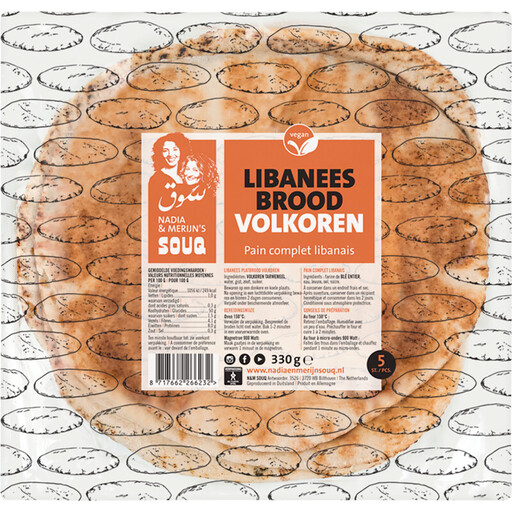 Image unavailable
Souq Lebanese Bread Whole Wheat, 6 pieces
A wheat flatbread labelled Whole Wheat for anyone who’d like to serve this style of bread with dinner; it doesn’t offer separate white and wholemeal choices.
Check that the shape and texture suit both of you, and read the latest packaging information if you have any specific ingredient requirements.
View on Joybuy
Frequently asked questions
Is brown bread automatically wholemeal?
No. The Voedingscentrum describes brown bread as a mix of wholemeal flour and white flour. According to brood.net, all the flour in bread that can be called wholemeal bread in the Netherlands must be wholemeal; so check the bread type on the label.
Is multigrain bread always wholemeal?
No. ‘Multigrain’ means the bread contains several types of grain; it doesn’t, by itself, confirm that all the flour is wholemeal. Check the label and ingredients for the exact loaf.
How can I serve both white and wholemeal bread without having lots left over?
Look for half loaves or small rolls, and choose a suitable amount of each type you’d like to serve. Jumbo and ALDI offer these smaller bread options; check what’s available at your local store.
Which allergens should I check in bread for guests?
Check the latest information for the bread you choose for any allergens relevant to your guests. The name alone isn’t enough to confirm the ingredients, especially for bread made with several grains, seeds or kernels.
Does the Dutch rule on baker’s salt mean that all bread contains iodine?
No, the rule doesn’t confirm the ingredients of every individual loaf. The Netherlands Food and Consumer Product Safety Authority explains that iodine compounds may be present in bread through baker’s salt. For a specific variety, check whether the ingredients list mentions iodised salt or baker’s salt.


