If you’d like to replace white bread with wholemeal bread for your Easter table, choose a loaf that is actually labelled ‘wholemeal’. According to the Netherlands Nutrition Centre, white bread is made with white flour, and brown bread isn’t automatically wholemeal. Then decide which bread shape suits your guests and the number of people you’re serving, and check the nutritional information, allergens and storage advice on the packaging of your chosen loaf.
Who is this choice relevant to?
Households looking for wholemeal options
You want to know whether a loaf is genuinely wholemeal for your Easter table, rather than relying on its brown colour or a name like multigrain. The Netherlands Nutrition Centre distinguishes between bread made with wholemeal flour and white bread made with white flour.
Households with different bread preferences
Alongside familiar slices or rolls, you’re looking for a wholemeal option in a shape that suits your guests. Albert Heijn and Jumbo, for example, offer sliced wholemeal loaves, while Lidl also mentions fresh rolls.
Shoppers who read labels carefully
You may need to check allergens for a guest, or want to check the salt content and whether iodised salt is listed for each product. If you’re buying unpackaged bread, ask for the allergen information before you buy.
What should you look for when choosing?
Start by asking yourself whether fully wholemeal bread is a must. Then choose a bread shape for your Easter table, and only after that compare the labels on the specific products.
| What to consider |
What to check when buying |
Who is this most important for? |
| Genuinely wholemeal |
Look for ‘wholemeal’ on the packaging. For brown or multigrain bread, check the ingredients rather than judging by the colour. |
If I want to replace white bread, I want to be sure my choice is made with wholemeal flour; this is the main priority for around 36% of consumers. |
| Shape and texture |
Choose between soft bread, denser bread and individual rolls, depending on how you plan to serve them. Check each specific variety separately. |
When people at the table have different bread preferences, I want to choose a shape my guests will enjoy. This is the most important consideration for around 29% of consumers. |
| Quantity and storage |
Choose a whole loaf, half loaf or individual rolls to suit the number of people you’re serving. Check the storage and freezing advice on the packaging. |
For a single meal, I don’t want to have lots of bread left over that I can’t use in time; around 21% of consumers therefore prioritise portion size and storage. |
| Label information |
Read the allergen and ingredient information; compare salt content on the same basis, such as per 100 g. If you’re buying unpackaged bread, ask for the allergen information. |
If I need to cater for a guest or have a specific question about the label, I want to know the details of the exact loaf I’m buying. For around 14% of consumers, this check comes first. |
Common mistakes
-
Assuming dark or multigrain bread is wholemeal
A brown colour or the word ‘multigrain’ doesn’t tell you whether a loaf is made entirely with wholemeal flour. According to the Netherlands Nutrition Centre, white bread is made with white flour, while wholemeal bread is made with wholemeal flour.
Check for the word ‘wholemeal’ on the packaging and read the ingredients list if you’re unsure.
-
Checking allergens only once you’re at the table
If a guest has an allergy, you need to know which allergens are listed for your chosen bread before you buy it. The Netherlands Food and Consumer Product Safety Authority distinguishes between the information on the label of pre-packed bread and the information that must be made available in a different way for unpackaged bread.
Read the label or ask in store for the allergen information for unpackaged products.
-
Buying a whole loaf without a plan for leftovers
A whole loaf may be more than you need for a small Easter gathering.
Consider buying a half loaf or individual rolls, or follow the storage and freezing advice for your chosen bread to make the most of any leftovers.
Bread that you don’t use or store in time may be left over and go to waste.
-
Assuming the salt or iodine content from the type of bread
A general bread name doesn’t tell you how much salt a specific product contains or what type of salt is listed in its ingredients.
Compare the salt content per 100 g, and check the current packaging for baker’s salt or iodised salt if that’s relevant to your choice.
Brands and shops to consider
Albert Heijn
If you’re looking for a sliced wholemeal loaf for your Easter table, Albert Heijn offers options including a whole Zaans wholemeal loaf.
- The product page lists 62% wholemeal wheat flour, 6.9 g of fibre and 0.9 g of salt per 100 g.
- Albert Heijn warns that ingredients, nutritional values and allergen information may change. Check the packaging of the loaf you buy.
Jumbo
Jumbo offers a range of wholemeal breads, including fine and coarse varieties and half loaves.
- Jumbo lists 7.6 g of fibre per 100 g for its Fine Wholemeal Bread.
- Check the nutritional values and allergen information for each variety; the details for Fine Wholemeal Bread don’t automatically apply to other Jumbo loaves.
Lidl
Lidl lists oven-fresh loaves and rolls as an option if you’d like to choose shortly before serving.
- Its fresh range includes wholemeal bread and a wholemeal roll.
- Lidl says its fresh range may vary by store, so check the variety in store.
ALDI
ALDI offers fresh wholemeal bread each day, as well as a separate extra-high-fibre wholemeal variety.
- ALDI describes the whole extra-high-fibre loaf it reviewed as wholemeal bread.
- Claims about less salt and more fibre apply to that specific variety compared with standard wholemeal bread, not the entire range. Check the current nutritional information on the packaging.
PLUS
PLUS offers wholemeal bread and wholemeal rolls for delivery or collection.
- The online category lets you choose a bread shape in advance.
- PLUS says product information may change, so check the ingredients, nutritional values and allergen information for your chosen variety.
Dirk
Dirk lists wholemeal, multigrain and sourdough breads in its range, including a wholemeal hearth loaf.
- The different bread shapes give you a starting point for choosing a loaf for your Easter table.
- Compare fibre, salt and allergen information for the specific loaf you’re considering.
Bread options at Joybuy
These options are rye bread and Lebanese flatbread for anyone considering a different shape of bread from sliced bread for the table. If fully wholemeal bread is a must, check the current packaging for both products before choosing.
 No image available
TastyBasics Rye Bread – 9 pieces
A rye bread option if you’d like to serve something different alongside sliced bread for the table.
The product name lists 9 pieces. Check the packaging for ingredients, allergens and nutritional information if these are important to your choice.
View at Joybuy
 No image available
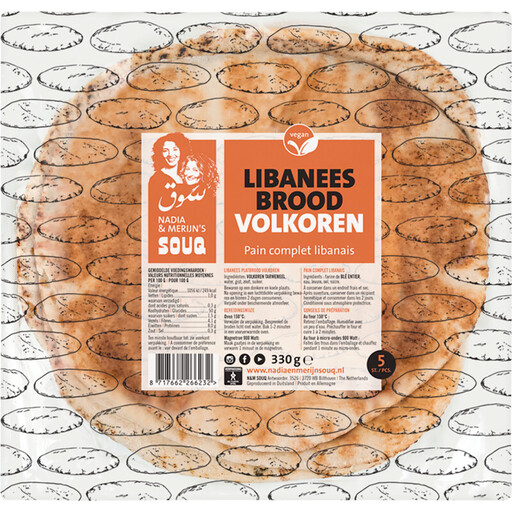
Souq Lebanese Bread Whole Wheat – 6 pieces
This Lebanese flatbread is a good fit for an Easter table where you’d like to serve individual breads instead of traditional sliced sandwiches.
The product name lists 6 pieces. If fully wholemeal bread is a must, check the ingredients and nutritional information on the packaging.
View at Joybuy
Frequently asked questions
Is white bread with a reference to wholemeal the same as wholemeal bread?
No. According to the Netherlands Nutrition Centre, white bread is made with white flour, while wholemeal bread is made with wholemeal flour. If you want to buy a wholemeal loaf, check that ‘wholemeal’ actually appears on the packaging; colour alone doesn’t tell you.
How do I check allergens in bread for guests?
For pre-packed bread, read the allergen information on the label. If you’re buying unpackaged bread, ask for the information for that specific product before you buy it. The Netherlands Food and Consumer Product Safety Authority says it must be made available in a different way.
Does all bread contain iodised salt?
Don’t assume it does without checking. Look for baker’s salt or iodised salt in the ingredients list of the loaf you want to buy. For example, Albert Heijn’s product information lists iodised salt for one specific wholemeal variety.
How should I store wholemeal bread after my Easter meal?
Follow the storage advice on your bread’s packaging. The Netherlands Nutrition Centre’s Storage Guide recommends keeping opened wholemeal bread in a kitchen cupboard for 2 to 4 days, or in the freezer for 1 to 3 months. Don’t eat bread if it has gone mouldy.


