
Vandaag of morgen in huis

Kwaliteit gegarandeerd

Welkomstaanbiedingen ontgrendelen: GRATIS bezorging | Tot 80% korting | Gratis 30 dagen JoyPlus-proefperiode
Download de app
Buying a new pair of boys’ shoes seems simple until your child complains about pressure points after a few days, cannot fasten the shoes independently or quickly gets them dirty and unusable. Marketing phrases such as “extra comfortable” or “ideal for active children” do not say much on their own. The relevant information is usually found in the details about size, material, sole and fastening.
This guide helps parents and carers compare boys’ shoes objectively for everyday wear, school, play and outdoor activities.
An age indication is useful as a starting point, but children do not all grow at the same rate. Shoe sizes can also vary between brands and models. For example, a sandal for 6 to 9 months may be offered in size code 190, while another brand uses a different size notation.
Always check:
With boys’ shoes in sizes 15 to 33, it is particularly important not to automatically order a size larger “to allow for growth”. Too much space can cause the foot to slide around and make your child less stable when walking.
Red boys’ trainers, fuchsia boys’ sandals and grey boys’ sandals each have a different look. A bold colour can be appealing, but also consider where the shoes will be worn. Grey often coordinates easily with everyday clothing. Red or fuchsia stands out more and may be a good choice if colour is important to your child.
Colour says nothing about fit, support or care. Assess these features separately.
Laces can provide a good fit, but they are not practical for every child. Velcro shoes are often easier to put on and take off, particularly for toddlers and children who want to get changed independently at school. Do check that the Velcro strap is long enough to secure the shoe firmly without pulling or folding.
Measure both feet at the end of the day, as feet can be slightly larger then than in the morning. Use the larger foot as your reference. Have your child try the shoes on with the socks they normally wear.
When trying them on, check for:
For babies and toddlers, baby shoes for boys and toddler shoes for boys are particularly suitable when they do not pinch and can be adjusted easily. An age range shown on a product page is not a substitute for checking the actual size.
Look beyond the name of the material. A synthetic upper and rubber sole have different properties from a cotton sandal with coated support. Also check the care instructions.
For example, the range includes Chicco boys’ sandals with different material compositions:
According to the product information, these sandals are intended for everyday use and are easy to care for. Always follow the washing and care label. The Skechers models, for example, should not be washed in a washing machine, but can be cleaned with a damp cloth and mild soap. Leave them to air-dry away from direct heat.
A rubber sole can be practical for everyday use, but check that the tread is suitable for the surfaces your child walks on. For indoors, the playground and outdoor use, grip, flexibility and a secure fit are more important than a striking design.
The width and type of fastening are also relevant when choosing boys’ trainers. The Skechers models in this selection have a standard fit, D width and a Velcro fastening. These are verifiable specifications, but they do not guarantee that the shoes will fit every child’s feet in the same way. Trying them on remains the most reliable check.
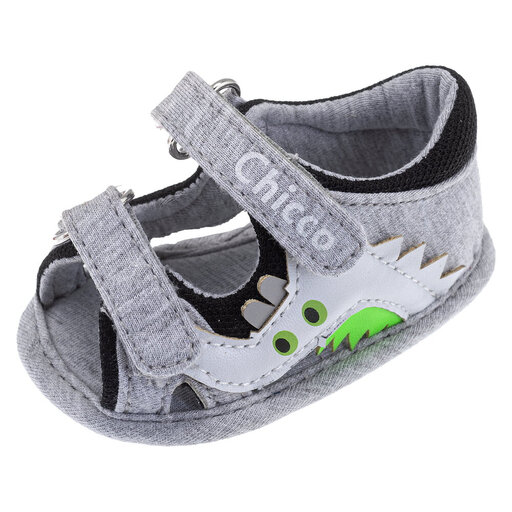
Why this suits the profile: These grey boys’ sandals have a subtle colour and, according to the product information, are intended for everyday use. Size 190 is listed for an age range of 6 to 9 months.
The product page lists the material, size and care instructions rather than using only general comfort claims. Compare these details with your child’s foot size beforehand.
Grey colour; 70% polyester and 30% polyurethane-coated support according to the product information; care according to the label.
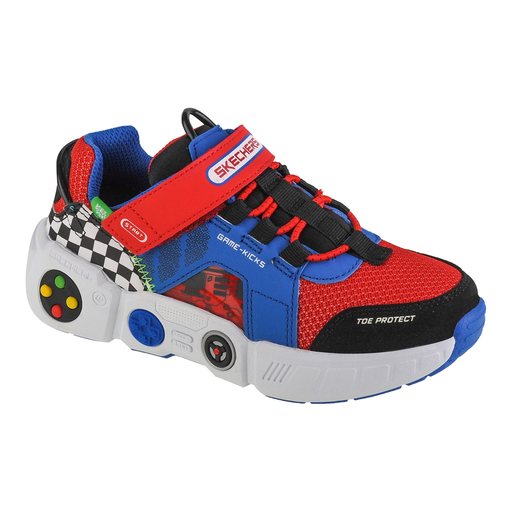
Why this suits the profile: These boys’ trainers are designed for everyday use and come in red. The stated size is 33, with a standard fit and D width.
The fastening, width, fit and materials are listed separately. This allows you to check more precisely whether the shoe suits your child’s foot and daily routine.
Velcro fastening; synthetic leather upper; rubber sole; non-removable insole.
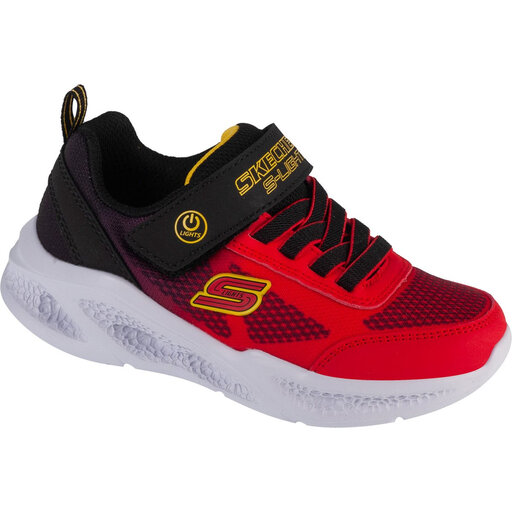
Why this suits the profile: This red model is a high-top trainer with Velcro for school, play and everyday use. The stated size is 32 and the fit is standard.
The description specifies the trainer style, fastening, width and care instructions. This makes it easier to compare practical features.
High-top trainer; Velcro fastening; synthetic upper; rubber sole; D width.
Choose boys’ sandals when ventilation and easy dressing are important in warm weather or for indoor use. A cotton Chicco sandal may appeal to parents who pay close attention to the material composition. The fuchsia versions are available in sizes including 190, 200, 210, 250 and 270. Check each product page to see whether your preferred size is still available.
Choose boys’ trainers when your child needs a closed shoe for school, cooler days or playing on different surfaces. A Velcro model is practical if your child cannot yet tie laces independently.
For every purchase, consider the combination of fit, fastening, sole, material and care. An attractive colour or well-known brand can help complete your decision, but does not replace these checks.
We have compiled a complete, up-to-date list of products that fully meet these strict selection criteria and the applicable European safety regulations.
Measure both feet and compare the larger foot with the size guide for the specific product. Do not rely solely on age. With baby and toddler shoes, size codes and age indications can vary between brands.
They can be practical because toddlers can often operate the fastening more easily themselves than laces. Check that the Velcro secures the foot properly and that the shoe does not come loose while walking or playing.
Their lifespan depends on growth, frequency of wear, the surface they are used on and how well they are cared for. Regularly check the room around the toes, the condition of the sole, wear on the upper and whether the fastening still works properly. Clean shoes according to the manufacturer’s instructions and replace them when they no longer fit properly or are visibly damaged.
