
Vandaag of morgen in huis

Kwaliteit gegarandeerd

Welkomstaanbiedingen ontgrendelen: GRATIS bezorging | Tot 80% korting | Gratis 30 dagen JoyPlus-proefperiode
Download de app
Buying boys’ shoes might seem straightforward – until you have to choose between boys’ sandals, boys’ trainers and shoes for toddlers. An attractive colour or a well-known brand name doesn’t automatically tell you about the fit, the fastening or whether they’re suitable for everyday wear. With the right checks beforehand, you can avoid a bad purchase.
These pointers will help parents and carers compare boys’ shoes for playing, school, walking and outdoor activities.
Age labels are a guide, not a substitute for measuring your child’s foot. Children don’t all grow at the same rate, and the shape of the foot varies from child to child. What’s more, size codes can differ from one brand or product line to another.
Measure both feet while your child is standing. Use the longer foot as your reference, then check the product’s size chart. For Geox children’s trainers, for example, it’s recommended to allow around 0.5 to 1 cm of extra space for toe movement. Treat this as a product-specific guideline, not a universal rule.
A shoe might feel flexible, yet still be too loose or offer insufficient support when walking. So don’t just check the material – also look at:
For young children, shoes with Velcro fastenings are practical because they’re quick to put on and take off. However, a single Velcro strap can fit differently from a model with multiple adjustment points. So check whether the fastening is adjustable enough for your child’s foot.
“Durable”, “breathable” or “comfortable” aren’t fixed quality standards. Instead, look at the concrete product specifications. According to the product description, the Skechers Meteor-Lights has a synthetic upper, a rubber sole, a regular fit and shoe width D. The Geox Kiddartah is described as a combination of nubuck, polyester textile and rubber.
According to the brands’ own information, certain materials or constructions may contribute to features such as ease of use or wearing comfort. That’s no guarantee for every foot or situation. Fit and user experience remain personal.
For children’s shoes in sizes 17 to 32, it’s important to measure the foot length in centimetres. Stand your child upright with their heel against a wall and measure to the longest toe. Repeat for both feet.
Then pay attention to these points:
For example, the age indications on some Chicco boys’ sandals range from 3 to 8 years, but the product page also lists a specific size code. So always use the size and product information shown before you order.
For toddlers, Velcro, elastic laces or a combination of the two are often easier than traditional laces. A child can put the shoes on more quickly, and parents can easily adjust the fit.
The Skechers Meteor-Lights is a high-top trainer with a Velcro fastening. The Geox Kiddartah uses a single Velcro strap combined with elastic laces. That makes these models practical for everyday use, but do check whether your child can fasten them properly on their own.
Choose material based on use. For summer days, boys’ sandals can be a logical choice. For school, cycling or playing outside, boys’ trainers are often more versatile. Check the care instructions for each model:
Navy blue boys’ sandals are practical to combine with everyday clothing. Fuchsia boys’ sandals stand out more and can be a colour choice for parents and children looking for a striking design. Colour doesn’t change the fit or technical features.
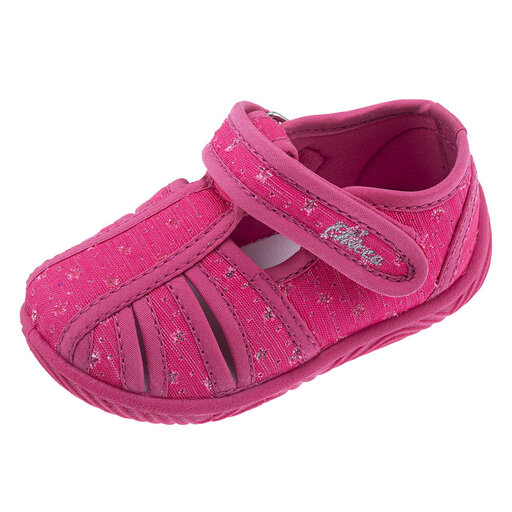
Why this fits the profile: These Chicco boys’ sandals are designed for the smallest sizes and are linked in the product information to an age of 06M-09M. The fuchsia colour makes the model easy to spot.
The product page clearly states the material, size and age indication. Do check these details against your child’s measured foot length.
100% cotton according to the product information; care according to the wash and care label.
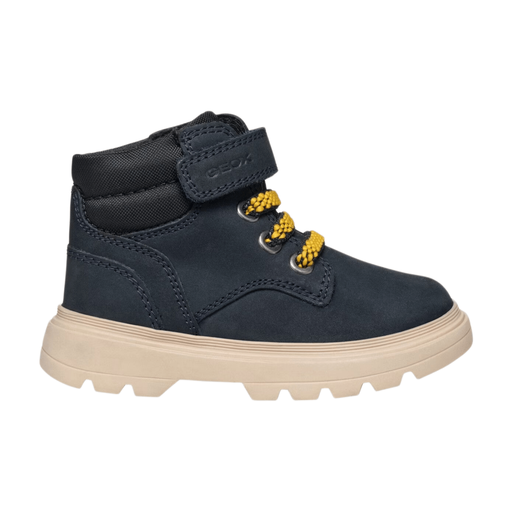
Why this fits the profile: According to the product specifications, this model combines nubuck, woven polyester, a rubber outsole and a removable insole. That suits parents who value material information and care.
The composition and care rules are specified. This means you can see in advance that nubuck should not be submerged in water.
Removable insole; single Velcro fastening with elastic laces; rubber outsole.
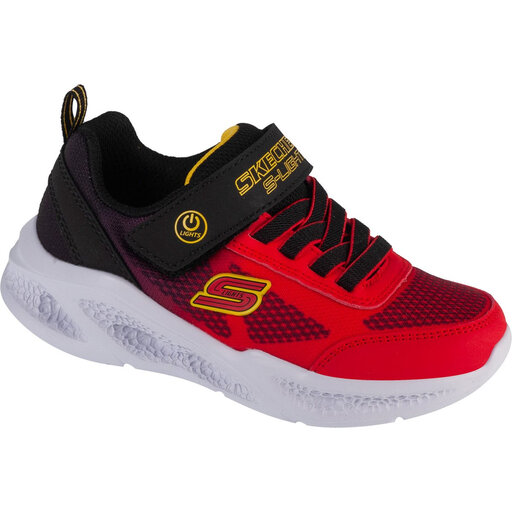
Why this fits the profile: According to the product description, this high-top trainer is designed for school, play and active days. The red version has a regular fit and shoe width D.
The fit, width, size and fastening are all clearly stated. That’s more useful than just a general claim about comfort or durability.
Synthetic upper; rubber sole; Velcro fastening; size 32 according to the product page.
We’ve put together a full, up-to-date list of products that fully meet these strict selection criteria and comply with current European safety regulations.
Measure both feet in centimetres while your child is standing. Compare the longer foot with the size chart for the chosen model. Allow for a small amount of extra room for the toes, but don’t buy shoes that are clearly too big. A size code such as 190, 240 or 300 should always be checked against the official size information for the product.
The lifespan depends on your child’s growth rate, how many hours they’re worn, the surfaces they’re played on and how well they’re cared for. Check the sole, seams, fastening and inside regularly. Replace shoes when they’re visibly worn or no longer fit properly, even if the outside still looks tidy.
That depends on the model and the activity. Sandals can be suitable for warm weather and gentle everyday use. For cycling, running or wet conditions, the fastening, protection and sole are especially important. So look at the concrete product specifications and choose shoes that match the planned activity.
