
Vandaag of morgen in huis

Kwaliteit gegarandeerd

Welkomstaanbiedingen ontgrendelen: GRATIS bezorging | Tot 80% korting | Gratis 30 dagen JoyPlus-proefperiode
Download de app
Buying boys’ clothing and boys’ shoes seems straightforward until a pair of trousers fades after a few washes, a T-shirt turns out to be too tight or shoes do not fit properly. The requirements also vary by age and activity for babies, toddlers and young boys.
When comparing products, do not focus only on colour or brand name. Sizing, material, fastening, care and intended use often determine whether a purchase works well. Below, you can read about common pitfalls and the product specifications you should check in advance.
Age indications are useful as a starting point, but children do not all grow at the same rate. For example, a product listing may suggest that size 074 fits a child of around 12 months, while children’s builds can vary. Always check the size chart and compare the size with your child’s current height.
This also applies to boys’ clothing sizes 50 to 098. Size 050 is intended for a much smaller baby than size 098, but the fit can vary by brand and model.
A label such as ‘cotton’ does not tell you everything about the composition. A garment may be made from 100% cotton, but it may also contain 95% cotton and 5% elastane. Elastane can provide extra stretch, while a completely cotton item has a different structure and fit.
A brand’s own research may suggest that a material has certain properties, but this is not a general guarantee for every child or situation. Check the exact composition in the product information and follow the care label.
A striking trainer or sandal is not automatically suitable for school, outdoor play or long walks. Check the fastening, sole, width and internal length, among other details. With children’s shoes, allowing suitable room for growth is important, but a shoe that is clearly too large may be less stable.
For children’s shoe sizes 17 to 33, it is advisable to measure the foot rather than relying solely on age or current clothing size.
For clothing, measure your child’s height and compare it with the stated size. For shoes, measure both feet, as the left and right foot may differ slightly. Use the longer foot as your reference. The Geox model in this selection states that there should be approximately 0.5 to 1 cm between the length of the foot and the length of the shoe. Treat this as a product-specific guideline, not a universal rule for every model.
For babies, also ensure there is enough room around the body and at the fastening. Baby bodysuits that are too tight can make changing more difficult. For older children, an adjustable waist or elasticated waistband is often practical.
For everyday use, cotton boys’ clothing and blends containing elastane are common choices. Check:
A boys’ T-shirt and shorts set can be useful because the two pieces are designed to go together. Depending on the model, the Chicco sets in this selection are made from 100% cotton or 95% cotton and 5% elastane. The product page remains the definitive source for the exact size and composition.
For babies and toddlers, poppers, elasticated bands or hook-and-loop fastenings can make dressing and undressing easier. For school and outdoor play, shoes with an easy-to-adjust fastening are often practical. A model with laces and hook-and-loop fastening requires a different routine from a slip-on style.
With boys’ sandals, also check that the foot is sufficiently enclosed for the intended use. A sandal for warm days is not the same as a closed trainer for rainy weather.
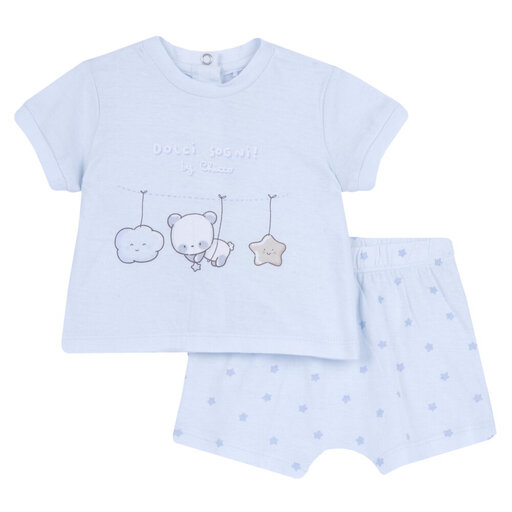
Why it suits this profile: This two-piece set is a straightforward choice for a young baby. The product listing states size 050, a light blue colour and 100% cotton.
The size, age indication and fibre composition are listed separately. This means you do not have to rely solely on the photograph or colour.
Set with T-shirt and shorts; 100% cotton according to the product information; suitable for creating a complete outfit.
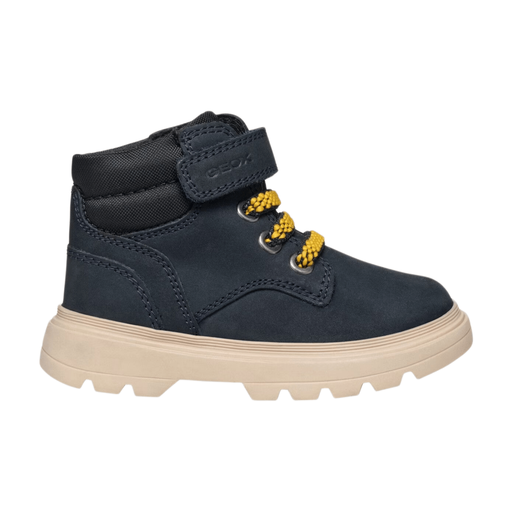
Why it suits this profile: For parents who consider specific shoe materials and an adjustable fastening important. The listing mentions nubuck, woven polyester, a rubber sole and one hook-and-loop fastening.
The product information provides material percentages, care advice and specific guidance on measuring the foot. This makes comparison easier.
Nubuck and textile upper; rubber outsole; removable insole according to the product listing.
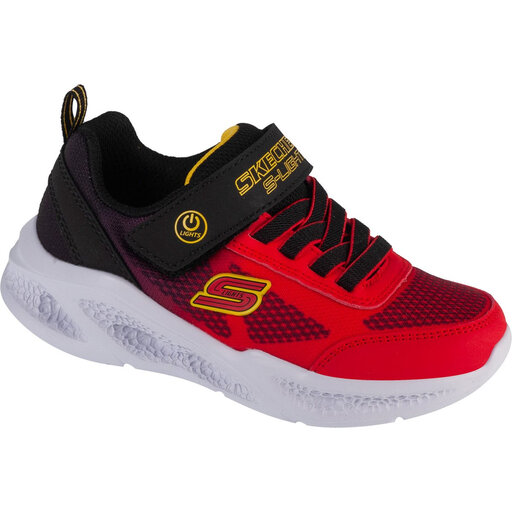
Why it suits this profile: These boys’ trainers are designed for everyday use and active play. The listing mentions a standard width, synthetic upper, rubber sole and hook-and-loop fastening.
The fastening and width are clearly specified. This allows you to assess in advance whether the model is suitable for children who dress and undress independently.
Size 32; hook-and-loop fastening; rubber sole; cleaning advice using a soft, damp cloth.
We have put together a complete, up-to-date list of products that fully meet these strict selection criteria and the applicable European safety regulations.
If you are mainly looking for Chicco boys’ clothing, you will find various categories in the range. These include baby boys’ clothing, toddler boys’ clothing, boys’ shorts, boys’ shirts and baby bodysuits. When choosing sets, check the individual size details carefully: the same product line may be available in 050, 056, 062 or 074.
Boys’ sandals are a natural choice for warm weather, while boys’ trainers offer more protection at school or during outdoor play. With brands such as Skechers boys’ shoes and Geox children’s shoes, always check the specific product page. The brand name alone does not tell you enough about the fit, material or care requirements.
Measure your child’s height and compare it with the brand’s size chart. Use age only as an additional indication. If you are unsure between two clothing sizes, the larger size may be more practical, but check that the sleeves, trouser legs and waist are not too loose.
Measure both feet while your child is standing. Compare the longer foot with the internal measurement or size chart for the model. Take account of the growing room specified by the manufacturer. A shoe should not pinch, but it should not be so loose that the foot constantly slips around either.
This depends on growth, frequency of use, material and care. Clothing that is washed frequently may wear out more quickly at the seams and fastenings. Shoes tend to wear most on the sole, heel and fastening. Regularly check the fit and condition of the product, even when it still looks good.
