
Buffet planner keeping an eye on sugars
You want to know how much total sugar the toast itself contains. So compare ‘of which sugars’ per 100 g, rather than treating a ‘no added sugars’ claim as a substitute for that figure.


For a Boxing Day buffet, compare total sugars per 100 g rather than relying on claims such as ‘plain’ or ‘no added sugars’. Jumbo lists 3.0 g of sugars per 100 g for Van der Meulen Rice Toast Original; Albert Heijn lists 3.2 g of sugars and 9.7 g of fibre per 100 g for Van der Meulen Melba Toast Wholemeal. The right toast also depends on its salt content, allergens and what you plan to serve with it.
You want to know how much total sugar the toast itself contains. So compare ‘of which sugars’ per 100 g, rather than treating a ‘no added sugars’ claim as a substitute for that figure.
You’re looking for a separate option for guests who need to avoid gluten or certain allergens. The current ingredients list and any ‘may contain’ warnings will help you decide whether a product is suitable for them.
You want to know whether the toast will work with the toppings you have planned. So, as well as comparing sugars, check salt and fibre, and think about when you’ll add the toppings.
Start with the nutrition information per 100 g, then check which toast suits your guests’ dietary requirements and the toppings you plan to serve.
| What to consider | What to check when buying | Who it matters most to |
|---|---|---|
| Total sugars | Compare ‘of which sugars’ per 100 g. Check separately for any added sugars. | I want the toast itself to add little sugar, even if it’s served with a sweet topping; for around 42% of consumers, total sugar content comes first. |
| Gluten and allergens | Check both the allergens and any ‘may contain’ warnings on the current packaging. | If a guest needs to avoid gluten or another allergen, I want to choose a suitable toast option first; for around 25% of consumers, suitability is the top priority. |
| Toppings and nutrition information | Compare salt and fibre per 100 g, and think about when you’ll add the toppings. | For generously topped toast, I want to know how well it stays crisp and how salt and fibre factor into my choice; for around 33% of consumers, it’s this combination that decides it. |
Albert Heijn lists 0 g of added sugars for AH Melba Toast Plain, but also 3.2 g of total sugars per 100 g. These are different figures.
Use the ‘of which sugars’ figure per 100 g to compare the total sugar content of toast.
Jumbo and Albert Heijn list between 1.5 and 1.93 g of salt per 100 g for the rice toast and melba toasts discussed here. Toppings can also contain salt.
Compare the salt content of the toast as well as its sugar content, and factor in the toppings you plan to serve.
Albert Heijn lists wheat, gluten, sesame and soya, among other ingredients, for Van der Meulen Melba Toast Wholemeal. A low sugar content doesn’t automatically make toast suitable for someone with an allergy.
Check the current packaging, clearly label the buffet options and use separate serving utensils if cross-contact is a concern for a guest.
The products discussed are rice toast and wholemeal melba toast, with different ingredients and nutritional values.
AH Melba Toast Plain is a plain melba toast for anyone looking for a neutral base.
Jumbo’s Knapperige Toast discussed here is a flavoured variety rather than a neutral toast base.
Bolletje’s range includes rusks and crackers; these are different product categories from party toast.
This rice toast is an option for a separate toast platter on the buffet. Check the current packaging if you’re choosing based on sugars, gluten or other allergens.
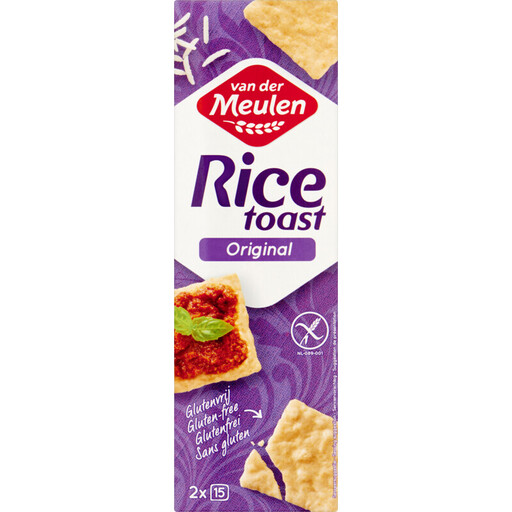 Image unavailable
A rice toast option for the buffet. Check the current packaging for sugars and allergens before serving it to guests with dietary requirements.
No. Albert Heijn lists 0 g of added sugars for AH Melba Toast Plain, but 3.2 g of total sugars per 100 g. To compare toast bases, look at the ‘of which sugars’ figure.
No. Comparing two sugar figures alone isn’t enough to substantiate that nutrition claim. According to the European Union, nutrition claims in commercial communications are covered by Regulation (EC) No 1924/2006. Check the conditions for the specific claim before using it on a label or in advertising.
No. Jumbo and Albert Heijn also list salt and allergens for the rice toast and melba toasts discussed here, which may affect your choice. Also check the ingredients in the toppings and your guests’ dietary requirements.
Add moist toppings shortly before serving and follow the storage instructions on the packaging. Jumbo describes Haust Krokant Toast as a product that stays crisp for longer under toppings; this is a product description, not a guarantee for every type of toast or topping.